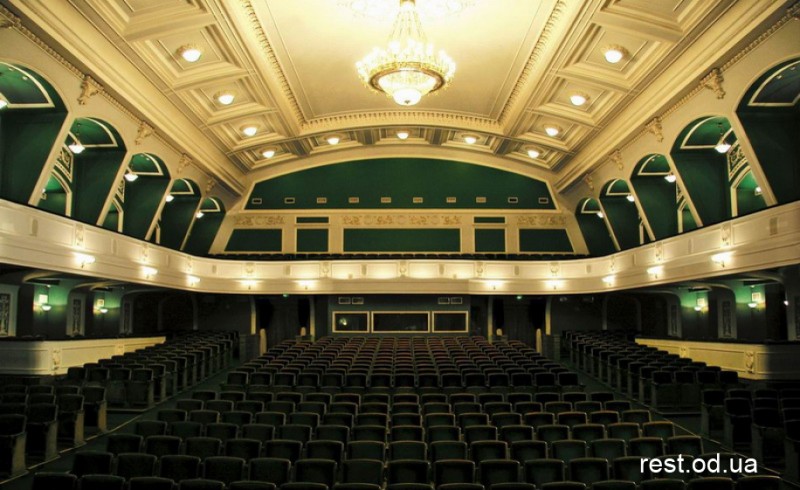

Translate from Ukrainian to English: “By the 1870s, Odessa had achieved such remarkable success that, in terms of maritime trade turnover, population density, merchant capital wealth, vibrant cultural centers, and outstanding achievements in charity and education, it confidently held its place among the most significant cities in Europe.
If the then assess achievement town traditional measure of the “seven wonders” that to them in the “golden age” of prosperity of Odessa, most certainly included:
– The port and its well-known throughout the maritime world Quarantine harbor with bread overpass;
– Tabloid giant staircase leading his ten marches of the 192 stone steps to the harbor of Porto;
– Primorsky Boulevard, in the spirit of the high Italian Renaissance, the grand facade of the Southern Palmira, as the capital of the fertile Steppe Ukraine;
– The grain-export exchange, unmatched at the time in terms of trade turnover, to the pulse of which the grain markets of all Europe and the Levant listened, especially in difficult years of poor harvests;
– The largest university at that time;
– The most modern water supply system in the empire at that time, which also rightfully constituted the pride of our city.
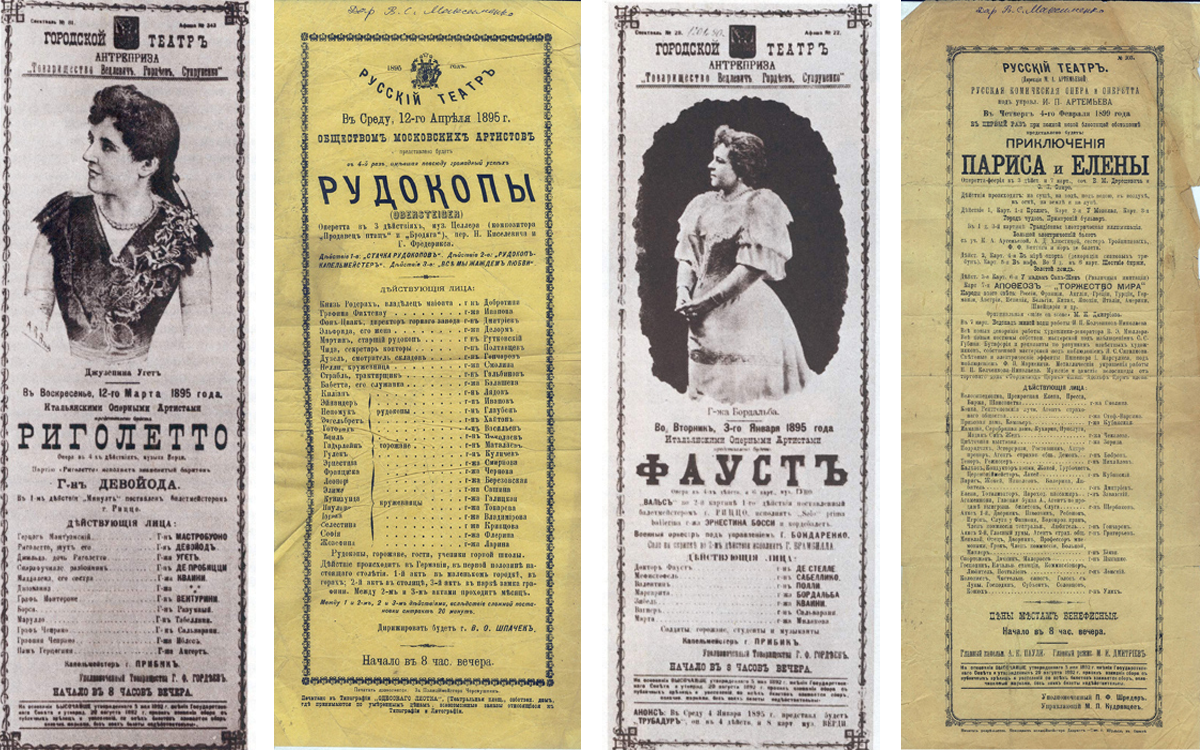
Unfortunately! Among the wonders of Odessa, its famous City Theater, renowned both in the empire and in Europe, was no longer listed. The theater was a temple not only to Melpomene but also to Thalia and Terpsichore. On the night of January 2, 1873, the sky of Odessa was lit by a sinister glow, and the next morning, the people of Odessa could only mourn the loss of their theater. But Odessa could no longer imagine itself without the captivating fervor of theatrical life.
The corner of Odessa at the intersection of Hretska Street and Kolodyaznyi Lane had long been famous as a place frequented by many generations of the city’s merchants. In the years preceding the events described, the renowned grain warehouses, which we would call storage facilities today, rightfully held their place in the aforementioned hierarchy of the ‘seven wonders’ of the city. These warehouses were the granaries of Odessa, a global breadbasket, handling up to 80 percent of the entire grain harvest of the Steppe Ukraine in the best harvest years during a single navigation season in the port’s harbors. Therefore, in addition to all its illustrious names and titles, the Southern Palmira bore the significant and symbolic title of ‘bread city’ in international stock exchange circles for more than a century.
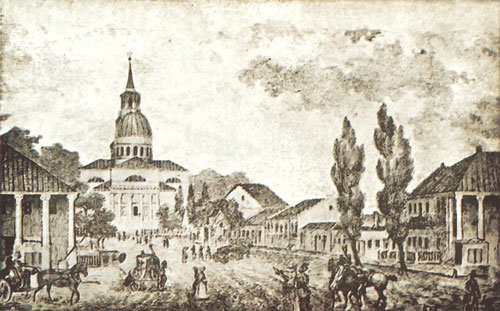
One of these warehouses was established in the aforementioned location and belonged to the Velikanov family, Odessa merchants, bringing in enviable profits annually and ensuring their high standing in the city’s merchant world. However, in the mid-1850s, the newly invented electromagnetic telegraph connected Odessa ‘at the speed of an electric spark’ with the international markets of Paris and London. In just a few days, the speculative grain trading of the Steppe Ukraine, which had previously allowed the ‘Odessa Rothschilds’ to amass fortunes, became nothing more than a matter of endless memories in the merchant casino of the Southern Palmira’s stock exchange world. Even half a century later, the descendants of noble merchants—from cunning brokers to small-time speculators, the ‘lapecutniks’—lamented the golden days of the ‘grain boom’ at the tables of the Fanconi café, as famously noted by Ilf and Petrov. With the arrival of railways in Odessa and the construction of huge grain elevators on the outskirts, using central Odessa land for warehouses became completely unprofitable.
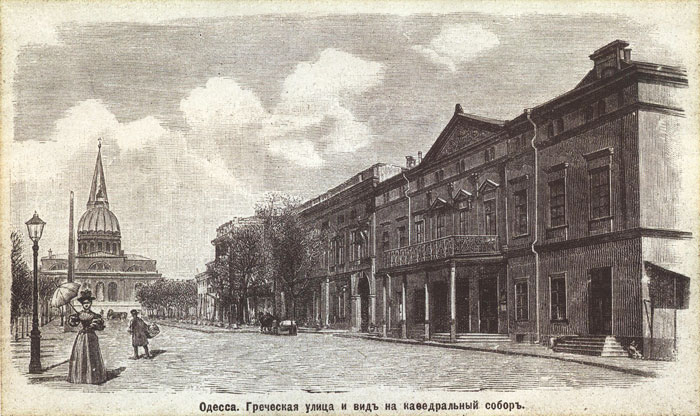
And so, merchant Oleksandr Velikanov initiated the ‘theater venture.’ To do this, he needed to convert his grain warehouse into a venue for dramatic theater troupes. While the design for the new theater building was drawn up by architect Felix Gonsiorovsky, the construction contractor was the merchant’s son, Viktor Velikanov.

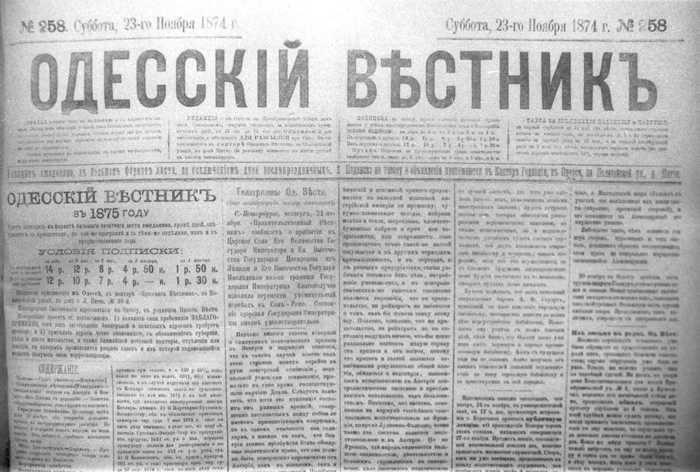
And so, the newspaper Odeskyi Visnyk from November 23, 1874, finally pleased the public: ‘Today will be the first performance… of the dramatic troupe in the newly built Velikanov Theater.’ In the next issue of the newspaper, there was a review of the event: “As for the theater building itself, most of the audience was quite satisfied with it; they were involuntarily amazed at how such a theater could be arranged in such a short time. The public will undoubtedly remain grateful to A. S. Velikanov for building such a theater in the city center”.
However, Velikanov remained the theater’s manager for only a short time. The developing global economic crisis, if not completely ruining our merchant, significantly impacted his finances and forced him in 1875 to hand over the theater business to his old acquaintance, partner, and neighbor on Hretska Street, Fedor Rafalovich. This esteemed merchant, out of respect for his predecessor’s achievements, did not rename Velikanov Theater to Rafalovich Theater, but instead registered his acquisition in all city records as the Russian Theater.
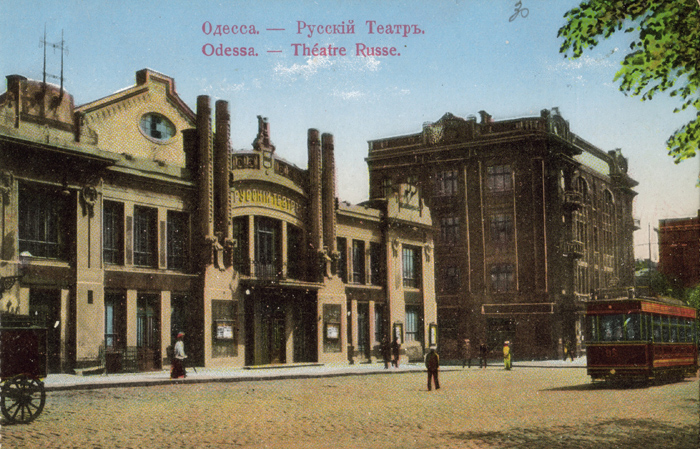
Rafalovich invited Miloslavsky and his troupe, which included quite well-known actors of the time such as N. Kiréev, M. Hlebova, N. Novikov-Ivanov, P. Nikitin, M. Ivanov-Kozelsky, and others, to grace the stage of the newly established theater with their performances.
In the fall of 1875, the theater welcomed audiences to its first premieres.
Miloslavsky’s troupe served in the theater for several seasons. In 1882, Miloslavsky passed away. Unfortunately, he did not leave a worthy successor as the creative head of the theater, and the regular troupe dispersed into various ventures.
The next segment of the theater’s history can be called the “era of great guest performers.” Many first-rate stars gave performances and concerts here. This era was inaugurated by the legendary Frenchwoman Sarah Bernhardt. Her tour, which included a series of performances, triumphantly took place on the theater’s stage in November 1881. In 1885, the theater applauded the legend of German theater, Ernst Possart, and in 1891, the brilliant Italian Eleonora Duse. These are just a few examples: besides them, the theater’s stage witnessed the performances of Ludwig Barnay, Jean Mounet-Sully, Benoît-Constant Coquelin, Maria Savina, Marko Kropyvnytskyi, Maria Zankovetska, Panas Saksahansky, Vladimir Davydov, and others. The internationally famous silent film comedian Max Linder also graced this stage. The number of guest actors, whose names history has not bothered to preserve, is simply uncountable.
In 1882 Miloslavskii passed away. Unfortunately, he did not leave a decent receiver to post the creative head of the theater, and a regular troupe dispersed to entreprise.
The next segment of the history of the theater can be called “the era of great guest artists.” It gave many performances and concerts of the stars of the first magnitude. And opened the era of the legendary French Sarah Bernhardt. Her tour, includes a variety of performances, triumphantly held at the theater in November 1881. In 1885, in the theater applauded legend Ernst Possartu German theater, in 1891 – the brilliant Italian Eleonora Duse. And that’s just a few examples: In addition to them the stage of the theater recall tread Ludwig Bar, Jean Mun-Sully, Benoit Coquelin senior, Maria Savina, Mark Kropivnitskogo, Mary Zankovetska, Panas Saksaganskogo and Vladimir Davydov … At this stage there is a world-renowned comedian silent film Max Linder. But the number of guest artists, actors, whose names Madame Historical deigned to leave descendants, simply incalculable.
The performances of various artists traditionally took place in the theater in the evenings. However, one of the most spectacular dramas that Odessa remembered for a long time happened in the theater not in the evening, but in the deep night of September 19, 1906. A fire broke out in the theater. The author and director of this drama was fate itself, or rather cruel fate, with the theater’s walls serving as the scenery and the night watchmen and fighters of the Voluntary Division of the Odessa Fire Society as the actors. For three of the brave firefighters – M. Kalyshevsky, A. Voronin, and D. Rapoport – the fire in the theater ended in a tragic finale, claiming their lives.
But the fire was conquered, and the theater was rebuilt. Its future was defined by the appearance of the Sibiryakov Theater on Kherson Street, where the dramatic troupe stayed for a good ten years. The development of technological progress and the fashionable trends of the early 20th century turned the temple of Melpomene on Greek Street into an arena for trade and commercial events and semi-sporting social entertainments, such as skating rinks. In 1910, Odessa hosted a grand Art and Industrial Exhibition. The theater owners responded to this event by holding a grand Automobile Salon in 1912 at the theater, one of the first in the empire.
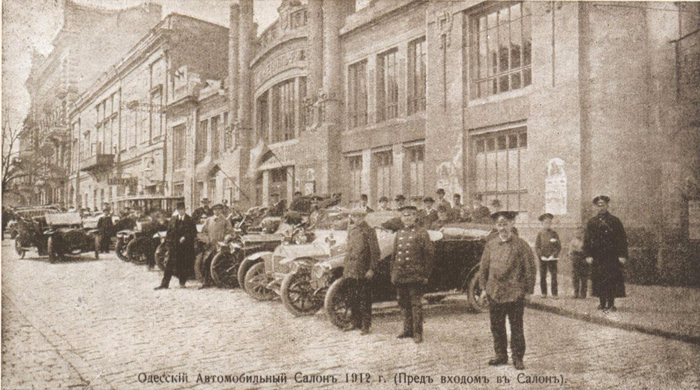
In the same 1912, the theater building was finally transformed into a skating ring: now the audience came here not to watch performances, but to roller-skating and find love.
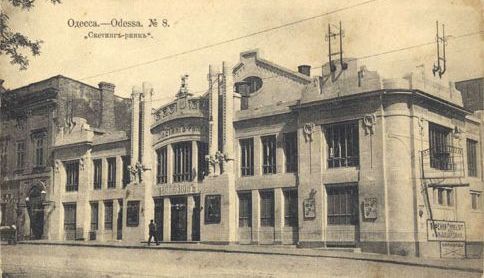
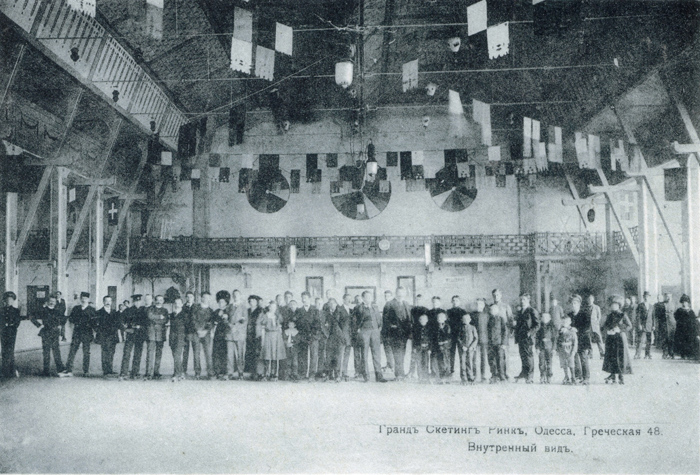
However, the walls that remember the voices of great actors withstood this trial. The theater did not die. It could not die – after all, it was born in a fertile place. It was merely waiting for the return of its muse, the beautiful Melpomene, but this wait extended over many years. The theater lay dormant for a time, only to resoundingly proclaim itself in a new era.
However, this is a different story. And its name is the period of the massive upheavals that the 1917 revolution has brought with it.
Text: Alexander Surilov
Altered and freed from Russophilic and imperial narratives in 2024 – WH
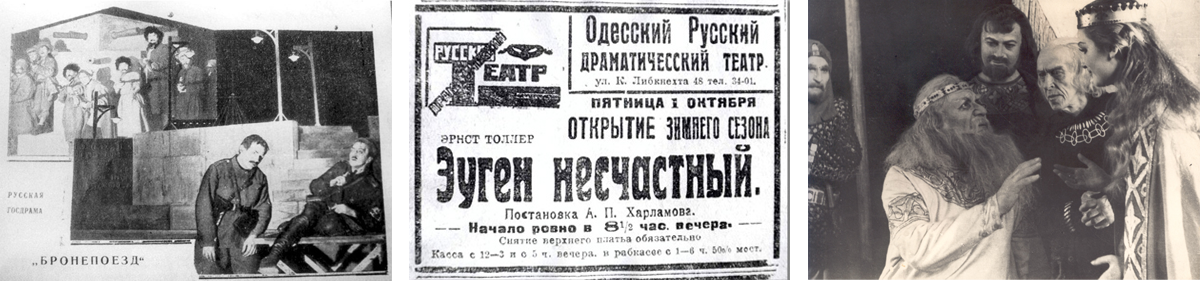
In the first years of the Soviet Union, several new theaters were opened in Odesa: “The Red Torch” theater, the First Workers ‘and Peasants’ Theater, the Youth Theater, the Futuristic Theater, and many others.The Massodrama Theater (Workshop of Socialist Drama) is the most successful and viable among them, was created in 1920. A lot of great artists were grown here. Here the prima of Moscow Maly Theatre in the future Daria Zerkalova played her first role. Besides working in Massodrama theater, Daria Zerkalova participated in repertory plays.The most bright roles of the Odesa period of Zerkalova’s life were Anyutka (“Power of Darkness” by Lev Tolstoy), Maryushka (Tale of Woe and Misfortune by Krylov), Kollet (“The Dead Girl” by L. Lamyur), Julia Tugina (“The Last Victim” by Alexander Ostrovsky).
The Massodram theater changed its address several times: for some time this theater was located in a small space in Krasniy Pereulok, then on Khersonskaya Street 17 (in the building where the Ukrainian Theater is now located). In August 1926, by the decision of the City Executive Committee, the Massodrama Theater was merged with the Region Drama Theater of Taras Shevchenko, which occupied a room on the corner of Greek Street and Kolodezny Lane. The alliance received a new name – The Odessa Russian Dramatic Theatre.
On October 1, 1926, the premiere of “The Hinkemann” based on the play by Ernst Toller and directed by A. Kharlamov took place at this theater. This play was the starting point in the new period of Russian Theater history in Odesa. In 1927, the theater became a state enterprise and received the name of Andriy Ivanov, who passed away in the same year. He was directly related to revolutionary actions but was distant from theatrical art. Anyway, the theater carried the name Andriy Ivanov for eight decades.
From 1933 until the beginning of the war, the artistic director of the theater was the prominent director Abraham Treplev. Treplev’s first production in Odessa was Lev Slavin’s “Intervention.
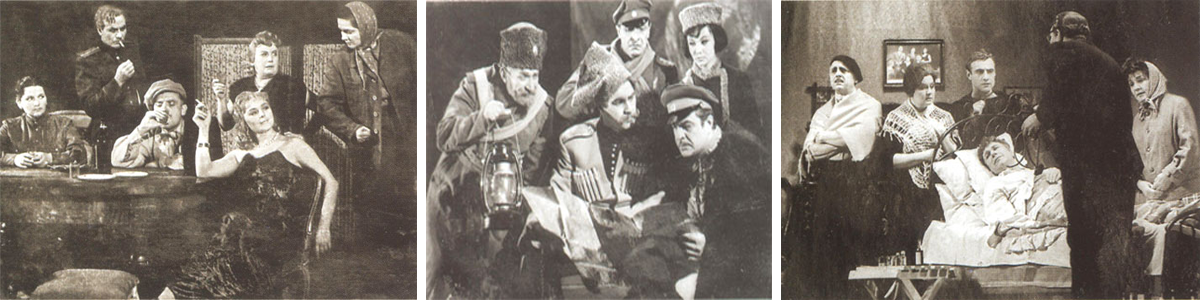
In the summer of 1941, after the outbreak of the Second World War, the theater troupe was disbanded. However, the theater was not empty even during the years of occupation. On its stage, the famous Russian singer Pyotr Leshchenko gave his concerts and Russian drama troupe of famous actor Vasily Vronsky performed here.
Shortly after the liberation of the city in 1944, the theater resumed its work and presented to Odesa new performances on the relevant military theme.
In the 1950s and 1960s, the theater gained fame not only for its outstanding acting and directing work but also for its superb production design: renowned theatrical artists worked here. At the end of the 20th century, the theater predominantly focused on contemporary drama in its productions, staging detailed psychological and analytical performances dedicated to issues of human, romantic, and family relationships
Text: Yuri Volchanskiy.
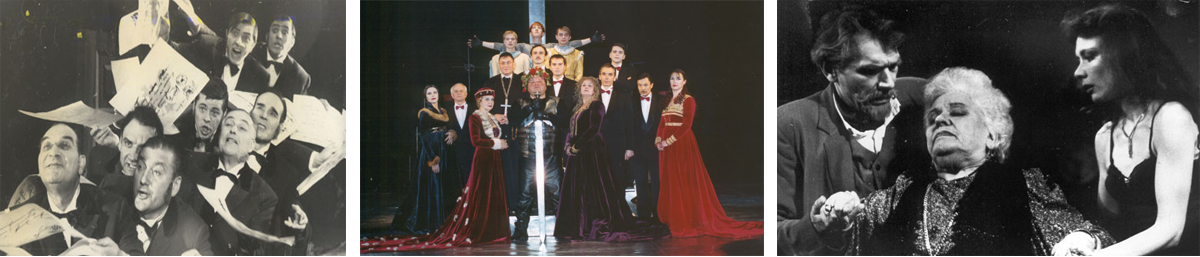
In 2002, the theater opened after two years of reconstruction. Not only the building was renewed – the troupe was refreshed. Young people joined the “old guards”: during this period 24 new actors joined the troupe of the theater.
The theater has earned recognition not only in Odesa but also far beyond its borders: more than 15 awards at international theater festivals in Ukraine, Kazakhstan, and Poland indicate this.
In 2008, the theater was awarded a Scroll of Honor Diploma of the Cabinet of Ministers of Ukraine. In December 2009, the theater received the status “ACADEMIC”
On March 2, 2022, in response to Russia’s large-scale military invasion, the theater’s collective decided to rename the theater. The word “Russian” was removed from its name.