Previous section (click the link to return):
←4.1.Odessa (Odesa). Period 1794-1822♦
←4.2.Odessa (Odesa). Period 1823-1899↓
←4.3.Odessa (Odesa). Period 1900-1914↓
←4.4.Odessa (Odesa). Period 1914-1917↓
←4.5.Odessa (Odesa). Period 1917-1920↓
←3.1.Northern Black Sea Region XV-XVIII centuries♦
←3.2.Hocabey-Khodzhabey (Khadzhibey). Period of XV-XVIII centuries↓
←3.3.Khadzhibey-Odessa. Period XVIII century. Northern Black Sea Region XVIII century↓
←2.1.Kotsubey (Kochubiyiv). Period XV century. Eastern Europe II-XV centuries♦
←1.1.Ancient cities in the place of modern Odesa♦
De Facto Annexation of the Ukrainian Socialist Soviet Republic (UkrSSR). “Entry” into the USSR
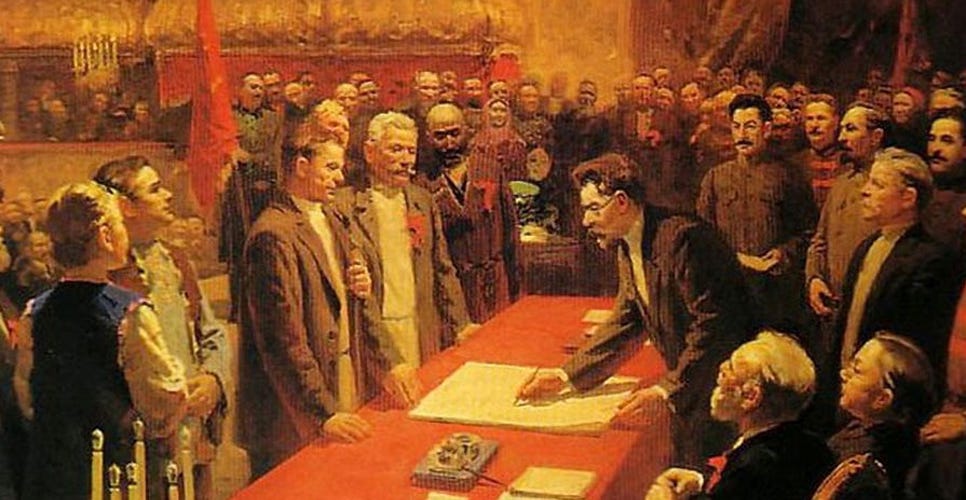 The UkrSSR was proclaimed on March 10, 1919, at the 3rd All-Ukrainian Congress of Soviets in Kharkiv, concerning the territory under the control of the Red Army of the RSFSR. By the beginning of 1923, it had the formal characteristics of an independent state, but from December 1920, it had allied relations with the RSFSR, BSSR, and ZSFSR. At the time of the UkrSSR’s creation, the ruling force was declared to be the Communist Party (Bolsheviks) of Ukraine, which was part of the Russian Communist Party (Bolsheviks) as a regional organization and relied on the armed forces of the Red Army of the RSFSR. The CP(B)U was then a small party (4,364 members, including 130 Ukrainians, out of tens of millions of Ukrainians) and, as a result, did not represent either the Ukrainian working class or Ukrainian peasantry. Vladimir Zatonsky, People’s Secretary for Education of Soviet Ukraine, stated: “They called themselves a government, but they treated it with a bit of humor. And indeed: what kind of government are we without an army, practically without territory, as even the Kharkiv Soviet did not recognize us? There was no apparatus…” Vasily Shakhray, People’s Secretary for Military Affairs of Soviet Ukraine, said in a conversation with Georgy Lapchinsky: “…What kind of Ukrainian government is it when its members do not know and do not want to know the Ukrainian language at all? Not only do they have no influence among the Ukrainian public, but it had never even heard their names before? What kind of ‘military minister’ am I when I have to disarm all the Ukrainianized units in Kharkiv because they do not want to follow me in defending Soviet power? The only military support we have in our fight against the Central Rada is the army that Antonov brought to Ukraine from Russia and that views everything Ukrainian as hostile and counter-revolutionary?…“. According to historian Ivan Rybalka: “…The declaration by the Kharkiv assembly as the All-Ukrainian Congress of Soviets, representing less than a third of the existing soviets in Ukraine, cannot be considered legitimate. Consequently, the declaration of Soviet power and the formation of a government, which consisted almost entirely of Bolsheviks, also lacked proper legal foundations, especially since only 10% of Ukrainian voters supported the Bolsheviks in the All-Russian Constituent Assembly elections of November 1917. The Central Executive Committee of the Soviets of Ukraine and the People’s Secretariat were effectively created by Lenin to justify and legitimize their war against the UNR, the Central Rada, depicting it as an internal struggle of revolutionary forces against the ‘bourgeois’ policies of the Central Rada in Ukrainian society for establishing Soviet power. The Soviet government, which had only three Ukrainians (Skripnik, Zatonsky, Terletski), included people unknown to the broad masses of the Ukrainian people… To present Soviet power in Ukraine as Ukrainian, the Bolsheviks also appropriated the name ‘Ukrainian People’s Republic’, and the government was named after the example of the General Secretariat as the People’s Secretariat. They declared Ukraine as a federative part of Russia, although there was no federal government there: the Soviet ‘UNR’ was effectively an administrative region, with its authorities implementing the orders of the Soviet People’s Commissariat of Russia and, above all, directives of the RSDLP(b) Central Committee.“.
On December 28, 1920, during the VIII All-Russian Congress of Soviets in Moscow, the “Union Treaty between the RSFSR and the UkrSSR” was signed concerning the “military and economic alliance”: from the RSFSR side, by Chairman of the RSFSR Soviet of People’s Commissars V. Lenin and People’s Commissar for Foreign Affairs of the RSFSR G. Chicherin; from the UkrSSR side, by Chairman of the UkrSSR Soviet of People’s Commissars and People’s Commissar for Foreign Affairs H. Rakovsky. To achieve the declared goal, the following “Commissariats” were unified: 1) War and Naval Affairs, 2) Supreme Council of the National Economy, 3) Foreign Trade, 4) Finance, 5) Labor, 6) Transport, and 7) Post and Telegraph. From that time on, all decisions concerning economic activities in Ukraine were made by the RSFSR government, and the UkrSSR government became its executive body.
On December 14, 1922, at the evening session of the fifth (final) day of the VII All-Ukrainian Congress of Soviets, the resolution “On the All-Union Congress and Election of Delegates” proposed by Frunze was adopted (in Russian: “Об общесоюзном съезде и выборе делегатов на него”), in the third (final) point of which it was stated: “3) The delegates elected to the All-Russian Congress are to be granted delegate powers on behalf of the UkrSSR for the Union of Soviet Socialist Republics“. It should be emphasized that no other powers were granted to the delegates from the UkrSSR to the First All-Union Congress of Soviets.
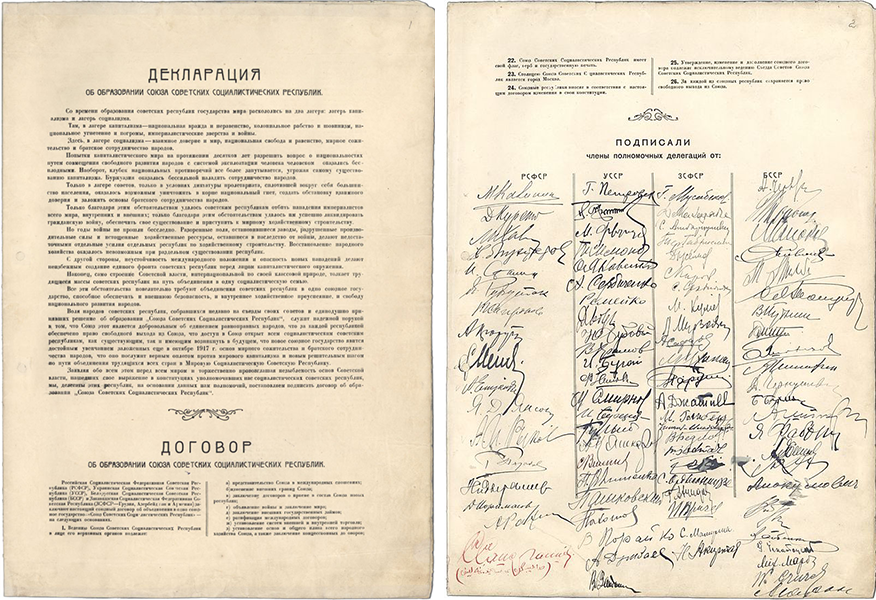 On December 30, 1922, the congress in Moscow opened its session. Stalin read the Declaration and the Treaty on the formation of the USSR and proposed their approval. However, the spokesperson on behalf of the delegations of the republics, Frunze, emphasized the premature nature of final approval of the submitted documents. The delegations of the autonomous states deemed it necessary to introduce additional guarantees. To this end, the authorized delegations proposed adopting the Treaty as a basis, sending it for approval to the republics, and ultimately ratifying it at the Second All-Union Congress of Soviets. The resolution to approve the Treaty in principle was adopted by the congress. The text of the Treaty, provided by Stalin, was subsequently presented to the delegates for signing, with 23 out of the 352 delegates elected from Ukraine signing it.
All of the above provides grounds to assert that on December 30, 1922, the UkrSSR did not de jure join the Soviet Union. This is because, firstly, the delegates from Ukraine to the union congress were authorized only to draft and finally approve the Constitution (and did not have the authority to accept, draft, or finally approve other union documents—Declaration and/or Treaty); secondly, the Treaty, at Frunze’s request, was approved only in principle; and thirdly, only 23 delegates from Ukraine signed the legally ineffective document for the UkrSSR.
Thus, from December 30, 1922, the Ukrainian SSR was de facto annexed, losing the nominal independence it had until then. However, the republic’s independence was still enshrined in amendments to Article 6 of the UkrSSR Constitution until 1929, introduced in 1925.
In October 1924, the Taganrog and Shakhty districts were transferred to the RSFSR. In October 1925, by the decree of the Central Executive Committee of the USSR “On the Regulation of the Borders of the Ukrainian SSR with the Russian SFSR and the Byelorussian SSR“, the Ukrainian SSR acquired territory with a population of 278,000, while territory with a population of approximately 479,000 was transferred from Ukraine to other republics, primarily to the RSFSR. At the same time, Kuban, which was predominantly populated by Ukrainians, did not join the Ukrainian SSR and was gradually russified.
At the time of the formation of the USSR, the name of the Ukrainian SSR was the Ukrainian Socialist Soviet Republic. According to the 1936 Constitution, the order of words in the republic’s name was changed to Ukrainian Soviet Socialist Republic (UkrSSR). The territory of the Ukrainian SSR/UkrSSR underwent a series of changes and was finally settled in 1954.
Establishment and Consolidation of the Bolshevik Regime. Repressions. Holodomor
In April 1923, the XII Congress of the RCP(b) announced the policy of indigenization. Its goal was to strengthen Bolshevik control and influence in national regions by promoting the development of national culture in form. The Ukrainian variant of indigenization was known as Ukrainization. It involved the inclusion of Ukrainians in the state apparatus and leading public organizations, and the introduction of the Ukrainian language into all aspects of public life, institutions, and educational establishments. Although Ukrainians made up 80% of the population of Ukraine, less than 30% were represented in the leadership of the Communist Party (b) of Ukraine. The Soviet authorities in Ukraine were 95% composed of Russian or Russified employees. Consequently, a significant portion of the leadership of the Communist Party (b) of Ukraine, led by Dmytro Lebed, opposed Ukrainization. It was resisted by a group led by Mykola Skrypnyk, Oleksandr Shumsky, and Volodymyr Zatonsky.
On July 27, 1923, the Council of People’s Commissars of the Ukrainian SSR issued a decree “On Measures for the Ukrainization of Educational and Cultural Institutions,” which defined the procedures and deadlines for switching teaching to the Ukrainian language in educational institutions. On August 1 of the same year, a resolution “On Ensuring the Equality of Languages and Promoting the Development of Ukrainian Culture” was issued, proclaiming the equality of all languages in the Ukrainian SSR and the official status of Ukrainian as the primary language for official communications. The goal was to Ukrainize the entire state apparatus to strengthen the union between the authorities and the population. Throughout 1924–1925, the Ukrainian language was introduced in most schools and institutions of the republic. Oversight of the Ukrainization process was managed by Vladimir Zatonsky, Secretary of the Central Committee of the Communist Party (b) of Ukraine. On April 30, 1925, the Presidium of the All-Ukrainian Central Executive Committee and the Council of People’s Commissars of the Ukrainian SSR established the All-Ukrainian Central Commission for Ukrainization, headed by the head of government, Vlas Chubar. From November 20 to 29, 1927, in Kharkiv, the X Congress of the Communist Party (b) of Ukraine was held, which noted “huge achievements” in national policy. At that time, Ukrainians made up 54.5% of the Communist Party (b) of Ukraine, and 65% of the Komsomol. More than 50% of responsible workers and employees of district party committees were Ukrainians, with 35% in the Central Committee of the Communist Party (b) of Ukraine and 66% in the Politburo of the Central Committee. Teaching and the publication of newspapers, magazines, and literature were conducted in Ukrainian. The leadership of the Ukrainian SSR provided cultural assistance to Ukrainians in Kuban, Kursk and Voronezh provinces, the Far East, and Kazakhstan.
The development of Ukrainian culture was negatively affected by the activities of one of Stalin’s closest associates, Lazar Kaganovich, who was the General Secretary of the Central Committee of the Communist Party (b) of Ukraine from 1925 to 1928. He engaged in discrediting the leaders of the Communist Party (b) of Ukraine, was prejudiced against Ukrainian intellectuals, resisted Ukrainization, and searched for nationalist deviations. On April 26, 1926, Stalin sent a letter to Kaganovich and other members of the Politburo of the Central Committee of the Communist Party (b) of Ukraine, criticizing the policy of Ukrainization. This document was used against the leaders of Ukrainization, including Oleksandr Shumsky. On February 2, 1927, under Kaganovich’s pressure, the Politburo of the Central Committee of the Communist Party (b) of Ukraine dismissed Shumsky from his position as People’s Commissar of Education of the Ukrainian SSR. At the joint plenum of the Central Committee and the Central Control Commission of the Communist Party (b) of Ukraine, which worked from February 26 to March 3, 1927, Kaganovich initiated a campaign against “Shumskyism,” “vulgarism,” and “Volobuevism,” which slowed down Ukrainization. In the early 1930s, Stalin and his supporters completely halted Ukrainization. Active Ukrainizers were repressed by the Bolshevik regime.
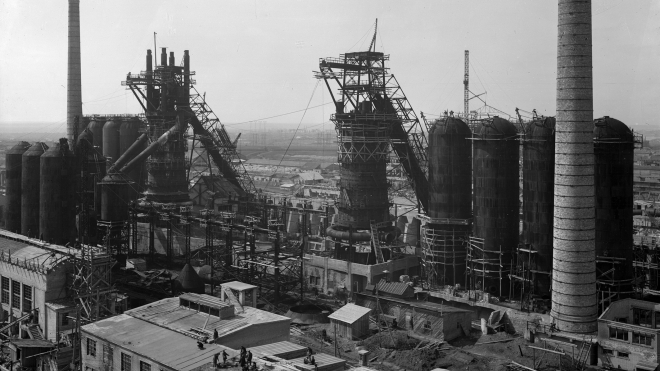
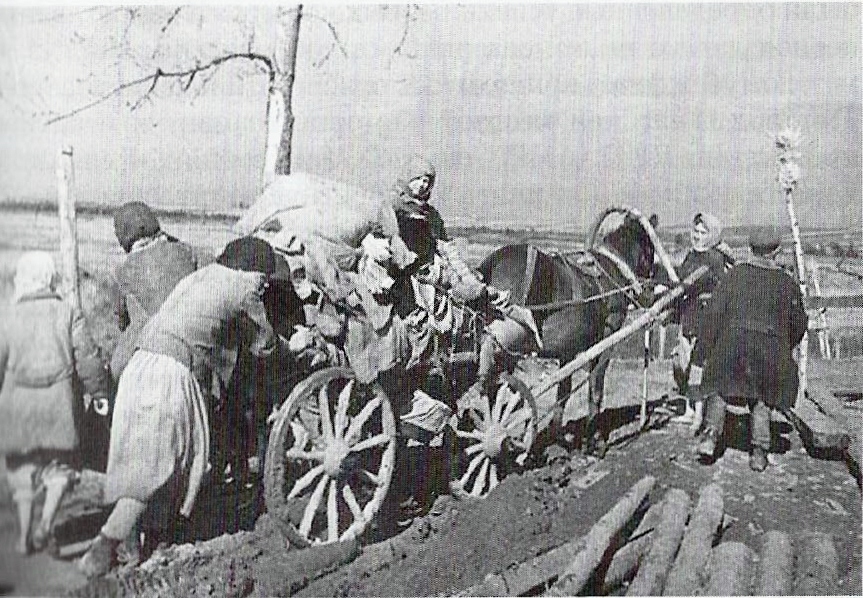 After Lenin’s death in 1924, internal party struggle for power began. Joseph Stalin, having systematically dealt with Trotsky, Kamenev, Zinoviev, Bukharin, Rykov, and Tomsky, began an era of establishing a totalitarian regime—complete control over all spheres of human life and societal activity. Stalin viewed the Soviet state as a fortress surrounded by enemies ready to attack at any moment. Consequently, the Bolsheviks shifted from the ideas of world revolution to building communism in a single country. In 1928, Stalin gained full political power and began implementing his ideas. The first Five-Year Plan for the development of the national economy was announced. Domestic policy focused on forced industrialization. To create a stable food base in rural areas, collectivization was decided upon—to create collective farms (kolkhozes) and transform independent peasants into state agricultural proletarians. In the first year, a high-profile trial (the Shakhty Trial) was held against “bourgeois wreckers” in the coal industry. A rationing system was introduced, socialist competitions were established, and propaganda for asceticism and “tightening the belts” began.
In 1928, for the first time in the USSR, the journal “Bolshevik of Ukraine” (No. 2-3) published an article by economist-geographer Mykhailo Volobuev titled “On the Problems of the Ukrainian Economy,” exposing the colonial nature of the Russian leadership’s policy towards Ukrainian lands within the USSR. The article outlined the phases of colonial policy of the tsarist regime in Ukraine up to 1917 and refuted the version of complete unity of pre-revolutionary Russian economy. According to Volobuev, the economy was unified on an antagonistic imperialist basis, but from the perspective of the centrifugal forces of the colonies it suppressed, it represented a complex of national economies. Ukraine, in particular, was seen as a single economic complex. However, under Soviet rule, these circumstances were ignored by both Russian economists and Moscow’s governing institutions (including the State Planning Committee of the USSR), which generally avoided even using the name “Ukraine,” preferring terms such as “South,” “Southern District,” “South-Western,” “South of European Russia,” “Southern Russian Economy,” and also considered Ukraine a European-type colony that had joined the USSR. Volobuev stated that Ukraine had all the characteristics of a Russian colony and was economically exploited by it. During the first decade after the revolution, issues of conflicts between Ukraine and Russia, Ukrainian claims, and opposition movements were raised about ten times before the Comintern leadership—at international congresses and plenum meetings.
In rural areas, with the support of the village councils (komnezams), 70% of the wealthier households were dispossessed, leading to unrest and uprisings throughout the Ukrainian SSR. In total, in 1930, the Ukrainian DPU recorded 4,098 mass protests. Stalin shifted the blame for this onto local activists. In the fall of 1931, forced collectivization was resumed, and kulaks were expelled and deported from the villages. Due to passive resistance and crop failures, the inflated grain procurement plans were disrupted, and the Soviet authorities decided to extract the surplus from the peasants “according to the plan.” In Ukraine, this plan was implemented by Vyacheslav Molotov, Lazar Kaganovich, and Stanislav Kosior. 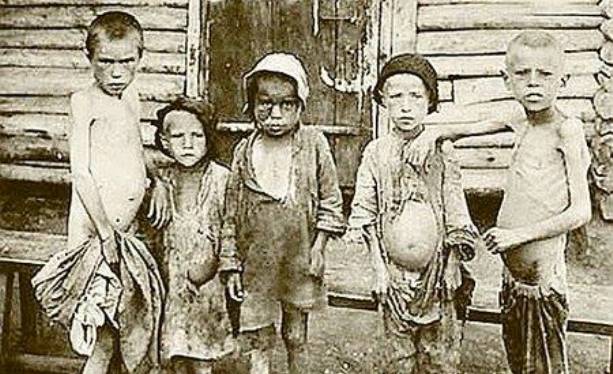
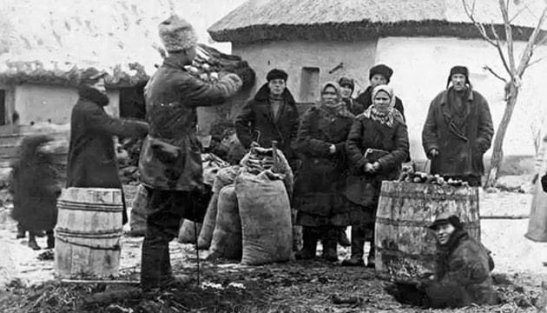
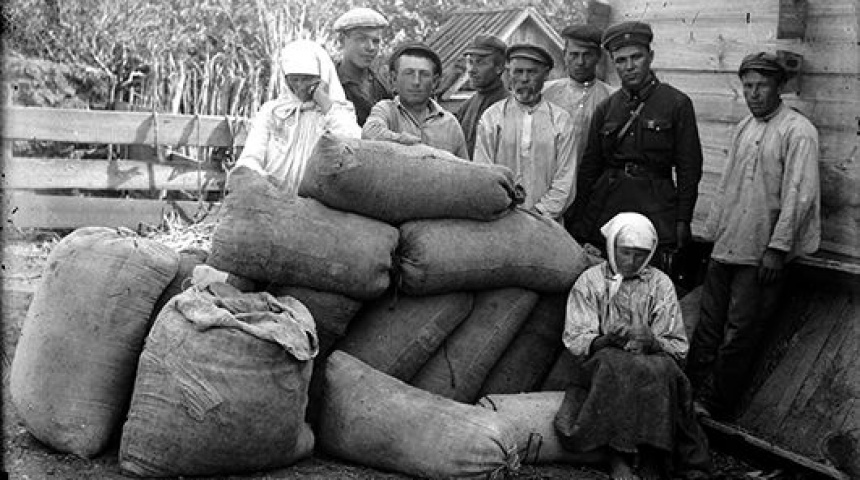
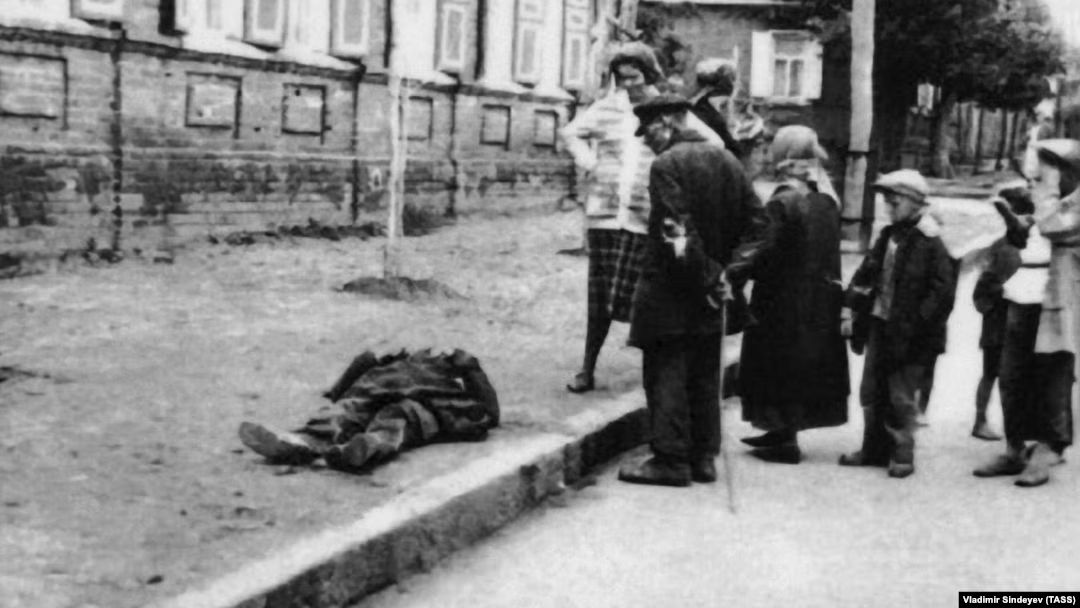 In 1932, the “Law of Five Ears of Grain” was enacted, special commissions for grain requisition were created, and “sabotaging enterprises” were placed on “blackboards“, where the last of the food was taken from the starving. Simultaneously, a passport system with mandatory registration was introduced, and military and police units blocked the possibility of leaving certain villages and the territory of the Ukrainian SSR and Kuban for peasants without passports. As a result of the Holodomor of 1932-1933, approximately 4.65 million people (15% of the population) died. The demographic losses were compensated by settlers from Russia; for example, the largest stanitsa in Kuban, Uman, became Leningradskaya. The very fact of the famine was kept secret and concealed both from the international community and from the rest of the Soviet citizens. At the same time, enterprises that form the backbone of Ukraine’s industry to this day (Dnieper Hydroelectric Station, Kryvorizhstal, Zaporizhstal, Azovstal, Kharkiv Turbine and Tractor Plants, Luhansk Locomotive Plant) were put into operation. The Great Depression in the USA and the global economic crisis convinced the Soviet leadership of the correctness of the course the country was taking.
By the decision of the Central Committee of the All-Union Communist Party (Bolsheviks) on January 24, 1933, Pavlo Postyshev was appointed the second secretary of the Central Committee of the Communist Party of Ukraine (Bolsheviks), with dictatorial powers. Simultaneously with him, about 30 “political commissars” were sent to each district in Ukraine, totaling about 15,000 people. This action marked the beginning of Moscow’s violent intervention in Ukraine’s internal affairs.
Simultaneously with the organization of the Holodomor of 1932-1933, the destruction of Ukrainian national culture and the intelligentsia of all nationalities was carried out. Taras Hunczak cites the calculations of Hryhoriy Kostiuk:
- The Ukrainian Autocephalous Orthodox Church was destroyed along with all its bishops, clergy, and many believers.
- The founder and creator of the modern Ukrainian historical school, academician Mykhailo Hrushevsky, all his students, and all the scientific institutions where they worked were destroyed.
- The historical school of academician Matviy Yavorsky, along with all his students and the Institute of History he founded, was destroyed.
- The philosophical school of academician Yurynets, all his students, and the Institute of Philosophy were destroyed.
- The Shevchenko Institute of Literary Studies was destroyed, and its director, Serhiy Pylypenko, along with most of the staff, was imprisoned or executed.
- The Dmytro Bahaliy Institute for the History of Ukrainian Culture, along with all its employees, was destroyed.
- The Institute of Linguistics of the Academy of Sciences was crushed, and the majority of its staff were destroyed.
- The Agricultural Academy and the Research Institute of Economics and Organization of Agriculture, along with its leaders and employees, were destroyed.
- The Ukrainian Research Institute of Oriental Studies was crushed, and its director, L.I. Velychko, along with most of the scientific staff, was arrested.
- All literary and artistic associations and organizations were destroyed, and all key writers and critics were arrested (according to incomplete data, 97 people).
- The significant artistic school of the Boichukists, led by the outstanding artist Mykhailo Boichuk, was destroyed.
- The “Berezil” Theater was crushed, and its leader, Les Kurbas, along with several prominent actors, was imprisoned. Kurbas died in a concentration camp.
- The publishing house and editorial board of the Ukrainian Soviet Encyclopedia were crushed, and its leadership and editors were destroyed.
- The study of the history of the Communist Party of Ukraine (Bolsheviks) based on archival sources was banned, and prominent historians M. Ravich-Cherkassky and M. Popov, along with their colleagues, were destroyed.
- Almost the entire faculty of all Ukrainian higher educational institutions was arrested and destroyed..
World War II (September 1, 1939 – September 2, 1945)
German-Soviet War (June 22, 1941 – May 8, 1945)
Who started World War II? How did it begin? Watch the video below↓
The video is provided in Ukrainian, but if desired, you can enable subtitles (the “Subtitles” option) in any language that is convenient for you (the “Settings” option)
The German-Soviet War (1941-1945) took place largely on Ukrainian lands, and Ukraine suffered significant destruction and damage. The territory of Ukraine, occupied by German forces, was again administratively divided into western (Distrikt Galizien, part of the General Government of Poland) and eastern (Reichskommissariat Ukraine) parts. The rights of the indigenous population were severely restricted, despite occasional, purely symbolic, gestures of “sympathy” towards Ukrainians (for example, the prohibition of the Russian language in administrative institutions in some cities). In 1943-1944, the Red Army liberated the territory of the Ukrainian SSR from the Germans and began restoring Soviet order.
Initially, a somewhat different policy was pursued in Western Ukraine (for example, the implementation of collectivization was postponed until 1948-1950). However, the liquidation of the Greek Catholic Church (1946) and the struggle against the armed underground of the Ukrainian Insurgent Army (UPA) (1944-1952) turned the western Ukrainian lands into a pacified zone with mass deportations and arrests.
The initial hopes that autonomy and external prestige (such as the Ukrainian SSR’s admission to the United Nations) would increase after the war were not realized. Stalin and the party leadership in Moscow pursued a “firm hand” policy.
Odessa (Odesa). Period 1921-1941
1922 – 1941 – Union of Soviet Socialist Republics
1920 – 1936 – Ukrainian Socialist Soviet Republic
1936 – 1941 – Ukrainian Soviet Socialist Republic
1920 – 1925 – Odessa Governorate
1932 – 1941 – Odessa Region
1921 – 1923 – Odessa County
1923 – 1925 – Odessa District
1923 – 1932, 1937 – 1941 – Odessa Raion
In the early years following numerous military confrontations in Odessa, the city fell into decline. This was largely due to the policies of the authorities, which led to a mass exodus of the city’s intelligentsia abroad. The first years under Soviet rule were marked by the opening of several cultural, educational, and scientific institutions. For example, in the summer of 1920, the Museum of Western and Eastern Art was opened; in 1925, the “State Drama” (now the V. Vasylko Odessa Academic Ukrainian Music and Drama Theater) was founded; in 1926, the Odessa Drama Theater was established (which for a time was the Russian Drama Theater, now the Odessa Academic Drama Theater); in 1930, the Institute of Marine Engineers (now the Odessa National Maritime University) was opened, as well as the Popov Electrotechnical Institute of Communications (now the O.S. Popov Odessa National Academy of Telecommunications); in 1931, the Odessa Youth Theater was established; and on May 18, 1936, the Kosior Stadium (now the Chornomorets Central Stadium) was inaugurated. At the opening of the stadium, the first match between the Odessa city team and the USSR national team took place, ending in a 0-0 draw. Also, in 1936, the Institute of Experimental Ophthalmology was founded (now the V. P. Filatov Institute of Eye Diseases and Tissue Therapy of the National Academy of Medical Sciences of Ukraine).
In the late 1930s, mass executions of people arrested by the NKVD took place near Odessa. One of these execution sites, near the village of Tatarka, was discovered by the Romanian authorities during the occupation. The investigation commission included renowned Romanian pathologist Alexandru Birkle and local specialists K. Shapochkin and Ivan Fidlovsky from the Odessa Medical Institute.
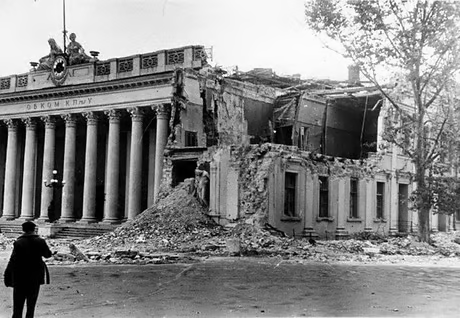
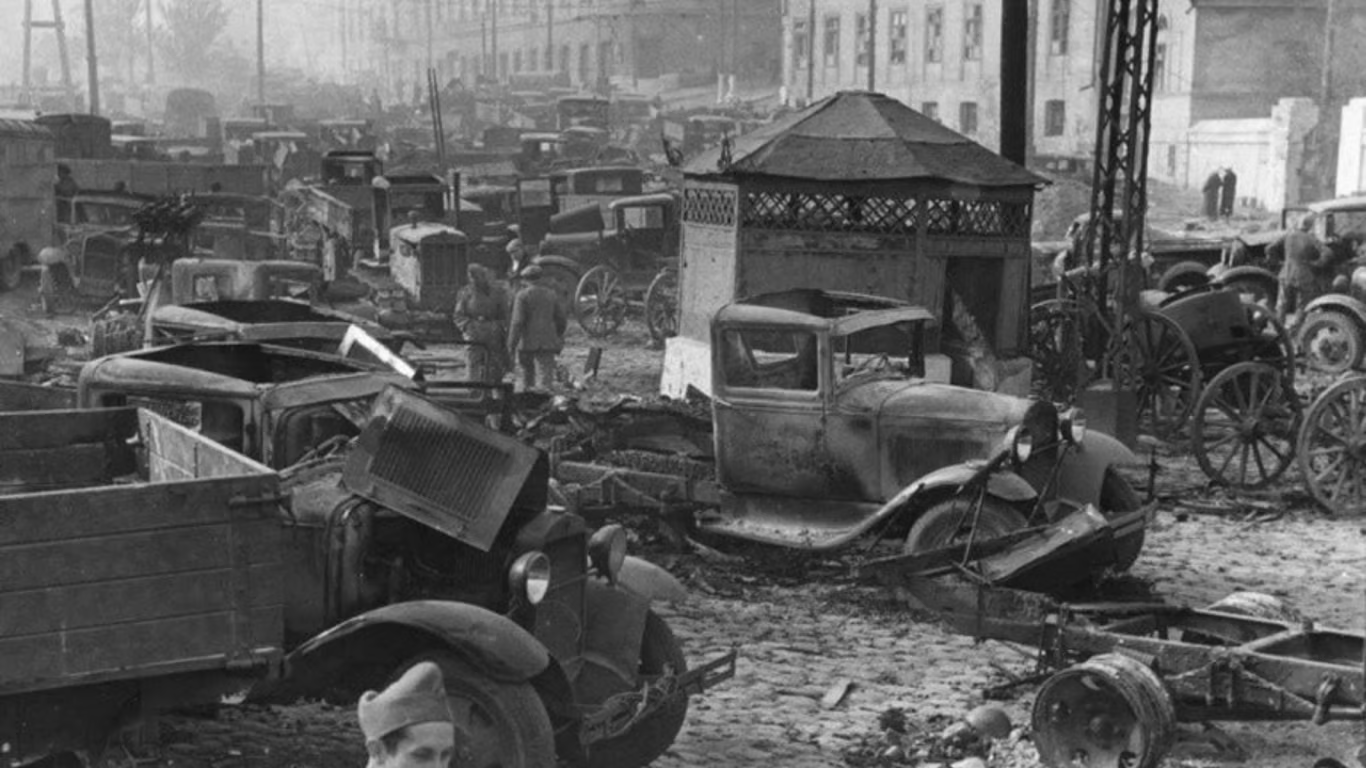
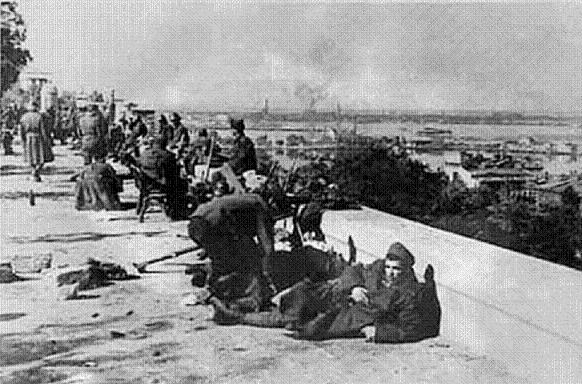
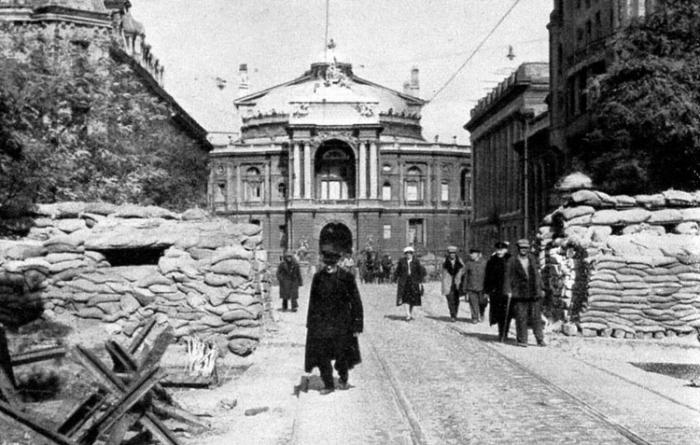 At the start of the German-Soviet War, Odessa found itself near the frontlines. The city’s defense lasted 73 days, from August 5 to October 16, 1941. It was led by Lieutenant General Georgiy Sofronov of the Black Sea Fleet’s Primorsky Army (from August 5 to October 5) and Major General Ivan Petrov. Throughout this period, the city was bombed 12 to 15 times a day, yet local enterprises continued to support the army by producing equipment and weapons. On August 8, 1941, the city was officially placed under siege, resulting in approximately 100,000 local workers being sent to build defensive lines. During this time, about three major defensive lines and 243 barricades were constructed. The German-Romanian forces had a significant advantage over Odessa’s defenders, with roughly five times more artillery and over six times more personnel. Their command planned to capture Odessa quickly and hold a military parade on August 10 in its honor. By that time, the 11th Army of the Third Reich had nearly captured all of Bessarabia, and the Romanians bypassed the right flank of the Soviet Primorsky Army, beginning their advance toward the Black Sea. On August 11 and 12, the citizens of Odessa repelled nine major enemy attacks, disabling 14 tanks and killing about four thousand soldiers and officers. However, on August 13, the Germans managed to reach the sea near the village of Adzhyiska (now Rybakivka), encircling the city in a semicircle and isolating its defenders from the mainland. On August 15 of that year, the 4th Romanian Army launched its first offensive in the direction of Sychiavka-Buldynka, placing significant pressure on the citizens of Odessa, but the Romanians failed. Each new attack by the German-Romanian forces ended in defeat, but they caused heavy losses among Odessa’s defenders. In some units and formations, these losses reached 40% or more of the total number of fighters. For example, in just 19 days in August, the 2nd Cavalry Division of the Primorsky Army lost 742 soldiers. Due to poor management of such a large defensive line and poor coordination with the Black Sea Fleet, a directive was issued on August 19 to create the Odessa Defensive Region, with Rear Admiral Gavriil Zhukov appointed as its commander.
The city’s evacuation was poorly executed, with some Soviet troops unaware of the retreat and subsequently captured. On October 15-16, NKVD groups blew up a large number of buildings, including the dam, which caused the flooding of the Peresyp district and resulted in civilian casualties.
On October 16, Romanian troops entered the city. A significant number of Soviet troops were successfully evacuated to Sevastopol, where they later played a crucial role in the city’s defense. Subsequently, the Soviet government issued a special award, the “Medal for the Defense of Odessa“, and awarded Odessa the title of “Hero City“.
 Odesa. Period 1941-1944
1941 – 1944 – România
1941 – 1944 – Guvernământul Transnistria
1941 – 1944 – Județul Odesa
1941 – 1944 – raionul Odesa
Already on October 17, 1941, immediately after the Romanian-German forces entered Odessa, the city became the administrative center of the Governorate of Transnistria. For almost three years, Odessa was part of the Kingdom of Romania.
Transnistria was an administrative-political unit in the southwest of modern Ukraine and on the left bank of the Dniester River in present-day Moldova. According to the Bender Agreement of August 30, 1941, the Germans temporarily transferred it to Romanian civil administration. The Romanian region of Transnistria was divided into 13 counties (judets) (August 19, 1941 – January 29, 1944).
Unlike Bessarabia and Bukovina, Transnistria was not formally part of Romania. Ion Antonescu received only a German mandate to carry out temporary governance and economic exploitation.
Germany retained its supreme authority in Transnistria, which allowed it to control the railways and seaports, and introduced its currency, the German mark (Reichskreditkassenscheine, XDEK), as the only “legal” currency in the occupied Soviet territory.
Nazi Germany also exerted its control in Bessarabia and Bukovina under the guise of consulates, commandants, “advisors,” and “experts,” who actively interfered in the activities of the Romanian occupation administration.
Gheorghe Alexianu was appointed as the Governor of Transnistria, with his headquarters in Odessa (initially in Tiraspol). He reported to the “Military-Civil Cabinet for the Administration of Bessarabia, Bukovina, and Transnistria” under the Romanian Council of Ministers.
 The administration of Transnistria was composed of Romanian nationals. Special commissions for “Romanization and colonization” implemented policies to Romanianize the Transnistrian counties, with Romanian, Russian, and German as the official languages.
The Romanian administration in Transnistria attempted to manage the region during the occupation. As part of this effort, all churches previously closed by Soviet authorities were reopened. In 1942-1943, 2,200 primary schools were organized in the region, including 1,677 Ukrainian, 311 Romanian, 150 Ruthenian, 70 German, and 6 Bulgarian schools. Additionally, 65 secondary schools, 29 technical colleges, and 23 academic institutions were opened. Theaters were opened in Odessa and Tiraspol, as well as several museums, libraries, and cinemas throughout the region. On December 7, 1941, six faculties were opened at Odessa University—medical, polytechnic, law, science, philology, and agrarian.
Odessa, with a then population of 80-90 thousand, saw the deportation of 180 thousand Jews. On October 22, 1941, a bomb exploded at the Romanian military headquarters, triggering a massive massacre of Jews, with many burned alive. In October and November 1941 alone, around 30,000 Jews were killed in the city.
The secretary of the underground regional committee, O. Petrovsky, did not establish a resistance movement and was soon arrested by the Romanians. After his release, he did not engage in active underground work. However, NKVD operatives who remained in the city managed to carry out two major acts of sabotage: on October 22, 1941, they blew up the building where Romanian General Glogojanu and his staff were located, and later destroyed a Romanian train. These were some of the only significant achievements of the underground during the occupation.
The NKVD and Soviet partisans were not the only underground forces in occupied Odessa. In late 1941, the Southern “campaign group” of the Organization of Ukrainian Nationalists (OUN) arrived in the city. OUN members established an underground printing press and engaged in anti-Romanian agitation among students and intellectuals. Some were even arrested by the Romanian police.
During this period, the city mayor of Odessa was Herman Pyntia. His main accomplishment as mayor was the rapid restoration of Odessa’s economic life. Among the more unusual decrees associated with Pyntia was his attempt to legally prohibit the cracking of sunflower seeds on the streets of Odessa. Pyntia also saved the relatives of Marshal Tymoshenko from the Nazis, which may have led to his acquittal by the Soviet court after the war, allowing him to move to Romania. He was later tried again on charges of crimes against humanity during World War II but was also acquitted. He died under mysterious circumstances in 1967. A street in Chisinau is named after Herman Pyntia.
The situation on the front in January 1944, with the Soviet forces approaching the borders of the governorate, led to significant changes—the civil administration in Transnistria was abolished. Authority in the region between the Bug and Dniester rivers was transferred to the Romanian military command, resulting in a reduction of the administrative apparatus. All governorate and city directorates were dissolved. In their place, only two remained, responsible for administration and economic issues. Following the German model, the county structure was replaced by districts.
On March 18, 1944, the Germans forced their Romanian allies to sign a protocol transferring the territories between the Dniester and Bug rivers to General Auleb, the representative of the Supreme High Command of the German army. The territory came under German command and remained so until early April 1944.
The troops of the Third Ukrainian Front, under the command of Odessa native Rodion Malinovsky, liberated the city on April 10, 1944, during the Odessa Offensive.
UkrSSR. Peaceful times
In 1945, the Ukrainian SSR became one of the co-founders of the United Nations (UN), alongside the Belarusian SSR and the USSR.
On October 30, 1943, the United States, the United Kingdom, the USSR, and China (represented by the Chinese ambassador to the USSR on behalf of the Chinese government) signed the Declaration on General Security—a document that first recorded the decision to establish the United Nations, which later became the basis for the future UN Charter. On March 4, 1944, a directive was sent from Moscow to Kyiv, based on which the sixth session of the Supreme Soviet of the Ukrainian SSR adopted the law “On the Establishment of the Union-Republican People’s Commissariat for Foreign Affairs of the Ukrainian SSR” and made corresponding amendments to its Constitution. One of the main reasons that compelled Stalin and the Soviet leadership to expand the powers of the Ukrainian SSR on the international stage was the desire to increase their influence in the new international structure by securing additional votes.
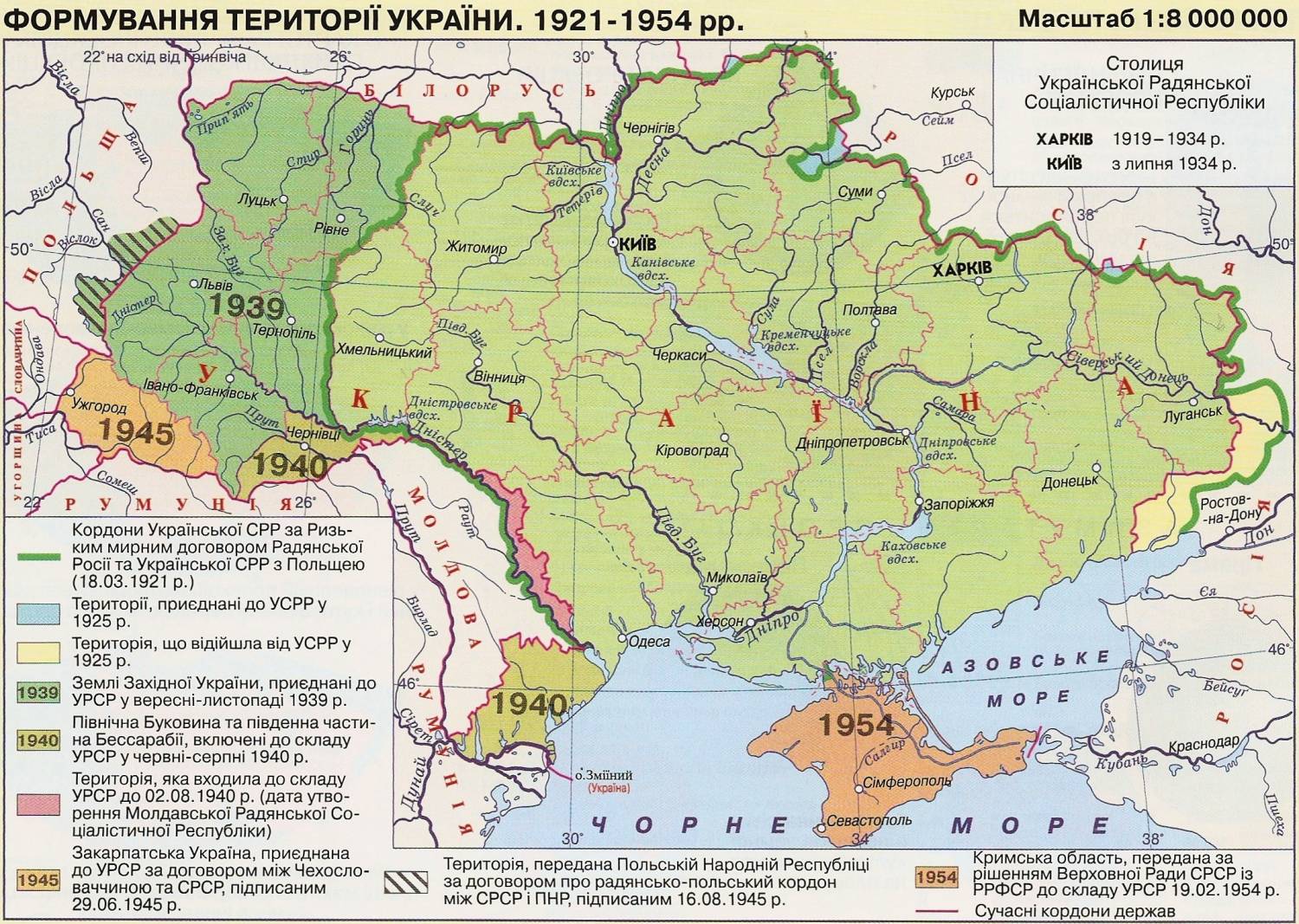 In 1945, a treaty was signed establishing the Soviet-Polish border, roughly along the Curzon Line, and the annexation of Transcarpathia. Along the border with Poland, a “population exchange” took place until 1946, and in 1947, the Polish authorities conducted the deportation of border Ukrainians to newly acquired German lands in the west—an operation known as “Operation Vistula“, while the Soviet authorities deported 78,000 “unreliable” Ukrainians to Siberia. That same year, according to the Soviet-Romanian treaty, Northern Bukovina and Southern Bessarabia were officially annexed, though the left bank of the Dniester remained part of the Moldavian SSR. Overall, in the post-war years, 43,000 people under the age of 25 were arrested for “anti-Soviet political crimes,” of which 36,300 were from the western regions, and about 500,000 western Ukrainians were sent into exile. As a result of numerous relocations, migrations, and deportations in the first half of the 20th century, the ethnic composition of Ukraine’s population significantly shifted, with a decrease in the proportion of national minorities and a simultaneous increase in the proportion of people born in Russia. While most ethnic lands were incorporated into the Ukrainian SSR, other regions—Northern Bessarabia, Lemkivshchyna, Nadsiannia, Kholmshchyna, Pidliashshia, Brest Region, Starodub Region, Podonia, and Kuban—remained outside its borders and later underwent significant assimilation. In 1945, Metropolitan Josyf Slipyj was sent to a labor camp, and in March of the following year, at the Lviv Synod, the “self-liquidation of the Ukrainian Greek Catholic Church (UGCC)” took place, forcing the Greek Catholic Church to go underground and become a “catacomb” church.
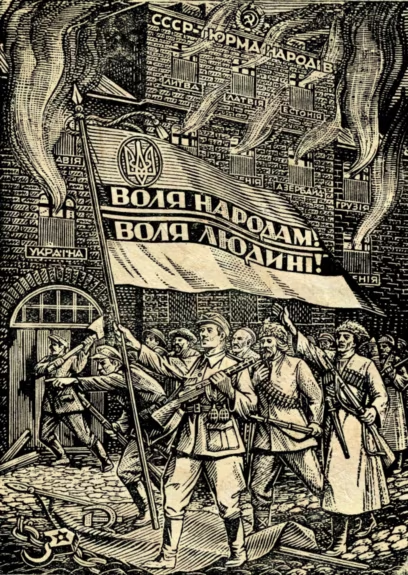 Between 1947 and 1949, Nikita Khrushchev rapidly implemented the Sovietization of the western regions, with cities becoming industrialized and collective farms being established in the villages. Those who disagreed were relocated to the east or Siberia. The fighters of the Ukrainian Insurgent Army (UPA), still hoping that the Cold War between the West and the USSR would turn into a hot one, continued their resistance against Soviet rule, shifting to guerrilla warfare tactics with small groups against the overwhelming forces of the NKVD. Simultaneously, the Soviet authorities attempted to discredit the insurgents in the eyes of the population through mass deportations, provocations, and propaganda. In 1950, UPA commander Roman Shukhevych was killed, and the resistance gradually faded.
The Soviet Union decided to rely on its own resources for the reconstruction of the national economy, refusing the “Marshall Plan” and even beginning to support pro-Soviet governments in Eastern Europe, including with food supplies. For Ukrainian peasants, this resulted in a new Holodomor of 1946-1947 (carried out by the temporarily appointed Lazar Kaganovich), which claimed 1 million lives. In 1949, Leonid Melnikov was appointed First Secretary of the Communist Party of Ukraine. In the social sphere, an ideological struggle against “Ukrainian bourgeois nationalism” and “rootless cosmopolitans” was launched, led by Andrei Zhdanov, along with the establishment of Stalin’s “cult of personality”—a period known as the “Zhdanovshchina”.
Science developed rapidly: near Kharkiv, in Pyatikhatky, where the first nuclear reaction in Europe had been carried out before the war, the first particle accelerator was built; in Kyiv, the first computer in the USSR was created. However, the traditions of authoritarianism and the voluntarism of certain individuals took their toll here as well. For personal gain and to eliminate opponents, Trofim Lysenko initiated a campaign to destroy Soviet genetics—known as “Lysenkoism“. In 1952, a campaign against Jews in medicine, known as the “Doctors’ Plot“, unfolded.
On March 5, 1953, Stalin died, and gradually, power shifted from the “collective leadership” of former Stalin loyalists (Lavrentiy Beria, Georgy Malenkov, Lazar Kaganovich, Vyacheslav Molotov) to Nikita Khrushchev. In this power struggle, Khrushchev mainly relied on Marshal Georgy Zhukov and Ukrainian Communist Party members. Khrushchev initially chose a course of liberalizing the totalitarian system through de-Stalinization, marking the beginning of the “Thaw” era. In 1953, Oleksiy Kyrychenko was appointed First Secretary of the Communist Party of Ukraine, and in 1957, he was succeeded by Mykola Pidhorny. During Khrushchev’s time, the Ukrainian party nomenklatura would take second place in leading the Union, after the Russian one. By 1964, Ukrainians made up half of the Central Committee of the Communist Party of the Soviet Union, including figures like Leonid Brezhnev. In 1954, the Crimean region of the Russian Soviet Federative Socialist Republic (RSFSR) was transferred to the Ukrainian SSR to commemorate the “300th anniversary of the reunification of Ukraine with Russia” and to facilitate economic recovery. The republic undertook the construction of the North Crimean Canal on the peninsula. In 1956, at the 20th Congress of the Communist Party of the Soviet Union, Khrushchev delivered a report titled “On the Cult of Personality and Its Consequences,” denouncing Stalin’s “cult of personality.” This marked the beginning of the process of dismantling the GULAG system, reviewing cases, and rehabilitating victims of political repression. However, this rehabilitation only partially affected Ukrainian fighters against Soviet rule, with mass amnesties granted mainly for criminal offenses. During 1953-1954, Ukrainian political prisoners staged a series of uprisings in labor camps: the Vorkuta, Norilsk, and Kengir uprisings.
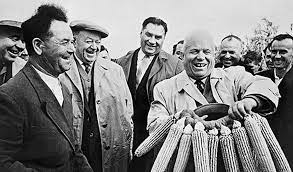 Economic life also underwent liberalization. Eleven economic regions were established in Ukraine, and full planning authority in these regions was transferred to the regional economic councils (sovnarkhozy), but the bureaucratic machine undermined all processes of economic self-governance. On the Dnipro River, vast agricultural lands were flooded to create a cascade of hydroelectric power stations. Dnipropetrovsk became a major center for missile production (Yuzhmash). In 1957, thanks to the Ukrainian engineer Serhiy Korolyov, the first artificial Earth satellite was successfully launched. In 1961, Yuri Gagarin made the first space flight, and the following year, Pavlo Popovych became the first Ukrainian in space.
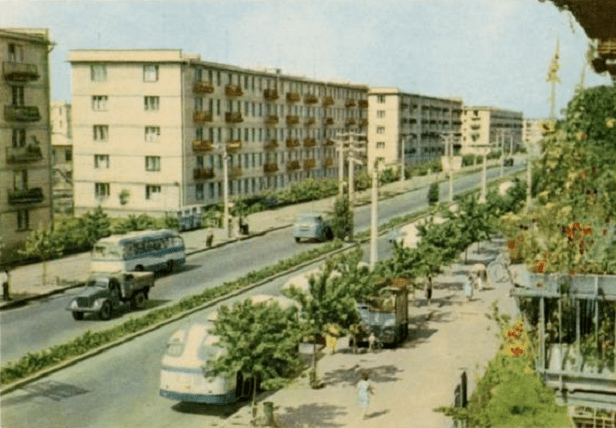
A mass housing construction campaign, resulting in the so-called “Khrushchyovkas“, began, allowing many urban residents to move from barracks and communal apartments into their own homes. A pension reform was carried out, decoupling workers from their enterprises and peasants from collective farms by issuing them passports. In an effort to “catch up and surpass America,” it was decided to actively introduce corn into crop rotation, intensify livestock farming, and develop virgin lands in Kazakhstan, to which a significant number of young Ukrainians relocated. To achieve these ambitious production goals, widespread falsification and outright fraud were employed, leading to disruptions in planned food supply deliveries to stores, price increases, and, as a result, “hunger riots” in Kryvyi Rih, Odesa, and Novocherkassk. Another famine caused by the drought of 1963 was averted by importing grain from abroad.
 In cultural and artistic life, liberalization sparked a new wave of Ukrainization and the emergence of the “Sixtiers“, a movement that opposed the norms of “socialist realism.” A “samizdat” of works that had not passed official censorship in publishing houses emerged. Simultaneously, a new educational reform increased the number of schools with Russian as the language of instruction. The dissident movement sought to achieve the democratization of the political regime and society through peaceful means. In 1959, a young lawyer, Levko Lukyanenko, founded the underground Ukrainian Workers and Peasants Union in Lviv, for which he was sentenced to death (the sentence was commuted to 15 years of imprisonment). In 1963, Petro Shelest was appointed First Secretary of the Central Committee of the Communist Party of Ukraine. Shelest openly opposed Russification, even in his book “Our Soviet Ukraine,” but to strengthen his power, he consciously oppressed patriots with a different vision of “Ukrainianism.” Under his initiative, a multi-volume work titled “The History of Cities and Villages” was published. On September 4, 1965, at the premiere of Serhiy Parajanov‘s film “Shadows of Forgotten Ancestors” at the “Ukraina” cinema in Kyiv, Ivan Dziuba, Vasyl Stus, and Vyacheslav Chornovil publicly spoke out against the arrests of dissidents.
In 1964, a group of opposition party members led by Leonid Brezhnev removed Khrushchev from his posts and sent him into retirement. In 1965, the “Kosygin reforms” began in agriculture and industry, which reinstated strict centralization and transitioned enterprises to a cost-accounting system. In the countryside, this led to the consolidation of collective farms and the disappearance of many small “non-prospective” villages and hamlets. Overall, during the eighth five-year plan, the social welfare of the population improved, but by the 1970s, a systemic crisis of the extensive economic development path began. Attempts to overcome the ideological and economic crisis of the state’s development led to the emergence of ideas for building “developed socialism” instead of the “primary base of communism” by 1980, and to the “stagnation” in economic and social life. On the international stage, the mid-1970s marked an attempt to improve relations between the ideological camps of East and West and to ease the tension of the expected nuclear war—known as “détente“.
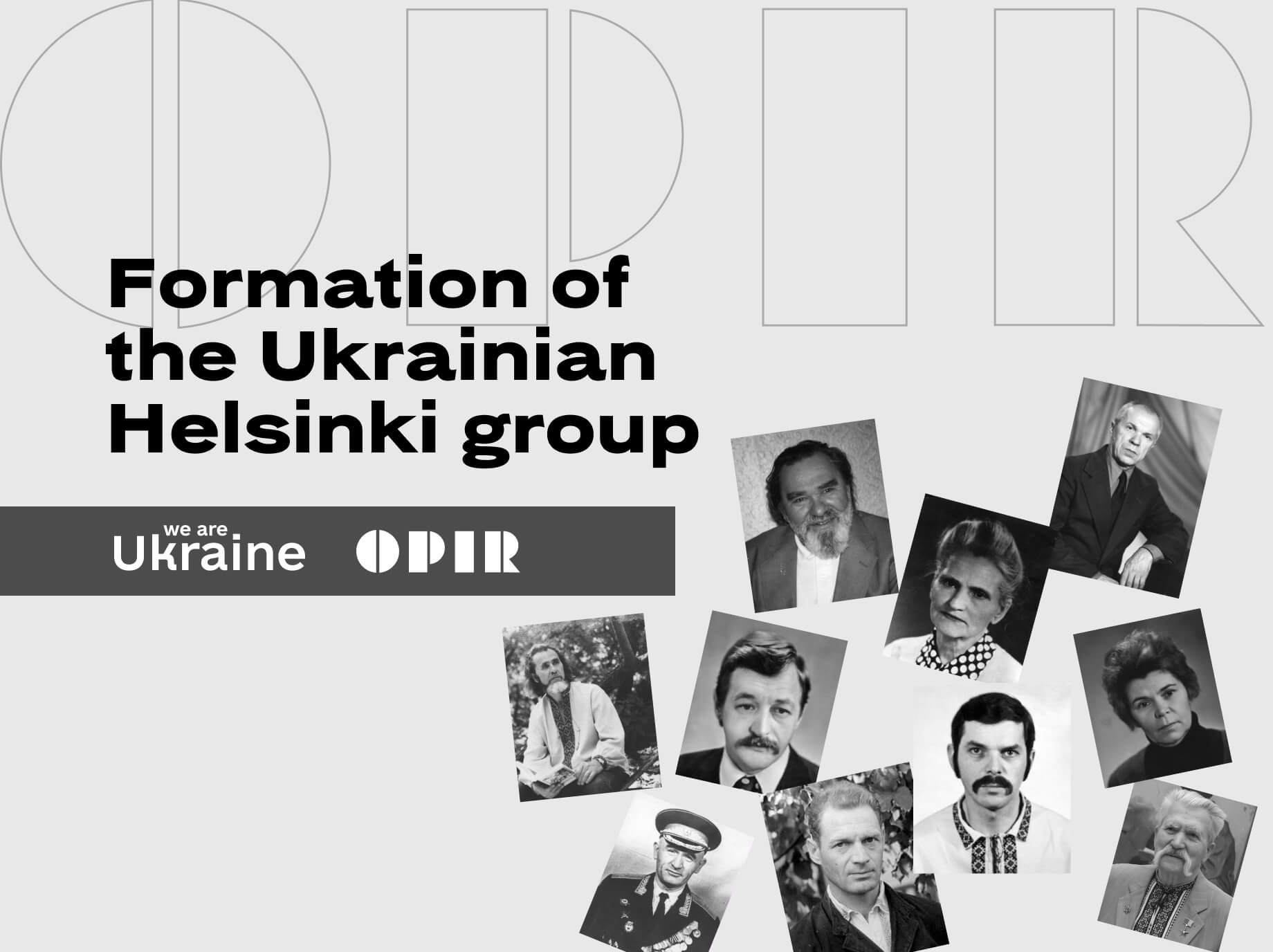 In 1972, Volodymyr Shcherbytskyi, a protégé of Brezhnev, was appointed First Secretary of the Central Committee of the Communist Party of Ukraine. He focused on purging the party apparatus and initiated a new wave of arrests of intellectuals. Some were sentenced, others sent to psychiatric hospitals, and many were simply fired from their jobs. In 1976, the Ukrainian Helsinki Group was established to monitor the USSR’s compliance with the 1975 Helsinki Accords (members included Mykola Rudenko, Petro Hryhorenko, Levko Lukyanenko, Ivan Kandyba, Vasyl Stus, Vyacheslav Chornovil, and others). By the following year, most of its members had been imprisoned. Russification was spreading in society, and in the scientific community, there were persecutions, particularly against those in the humanities, while “techies” who supported the material base of the military-industrial complex were favored.
In 1977, a new Constitution of the USSR was adopted, and in 1978, a new Constitution of the Ukrainian SSR followed. To obtain foreign currency from the sale of natural resources, oil and gas fields in Siberia were actively developed, and a network of pipelines (“Druzhba“, Urengoy—Uzhhorod) was laid through Ukrainian territory by the countries of the socialist bloc. The centralization of economic flows depleted Ukraine’s resources, leaving no opportunity to even renew production capacities (more than half of the production assets in the 1980s had exhausted their resource). Urbanization accelerated, with 4.6 million Ukrainian peasants moving to cities. Simultaneously, birth rates slowed, leading to an overall aging population. Most food and consumer goods became scarce. At the end of 1979, the USSR deployed troops to Afghanistan to support pro-Soviet forces and found itself in international isolation against the backdrop of falling global hydrocarbon prices, whose revenue had previously covered the problems of an inefficient economy. The income from these sales was halved.
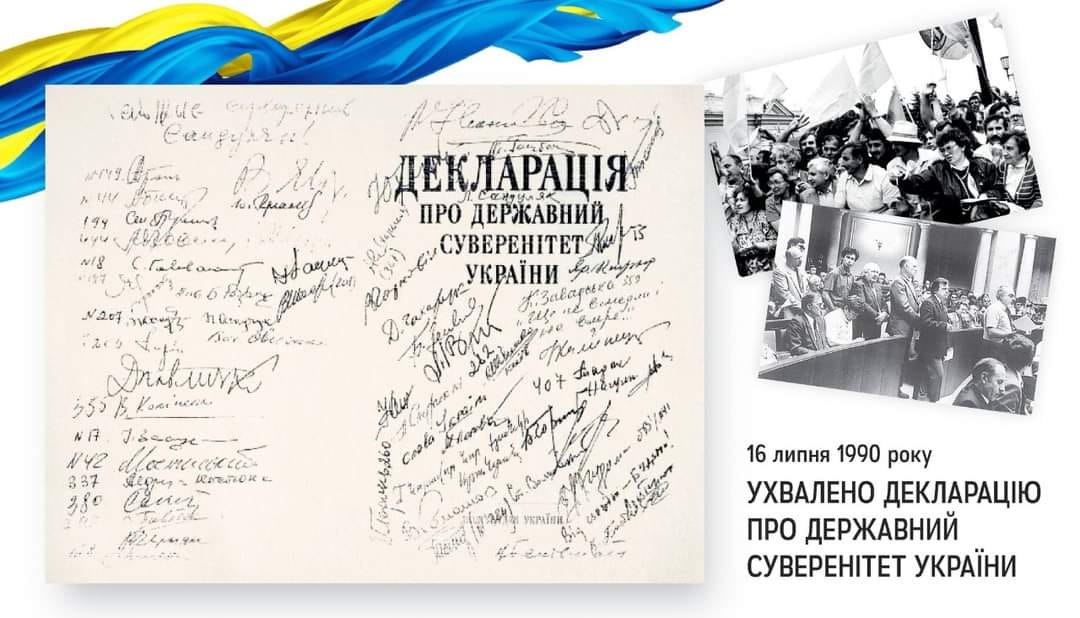
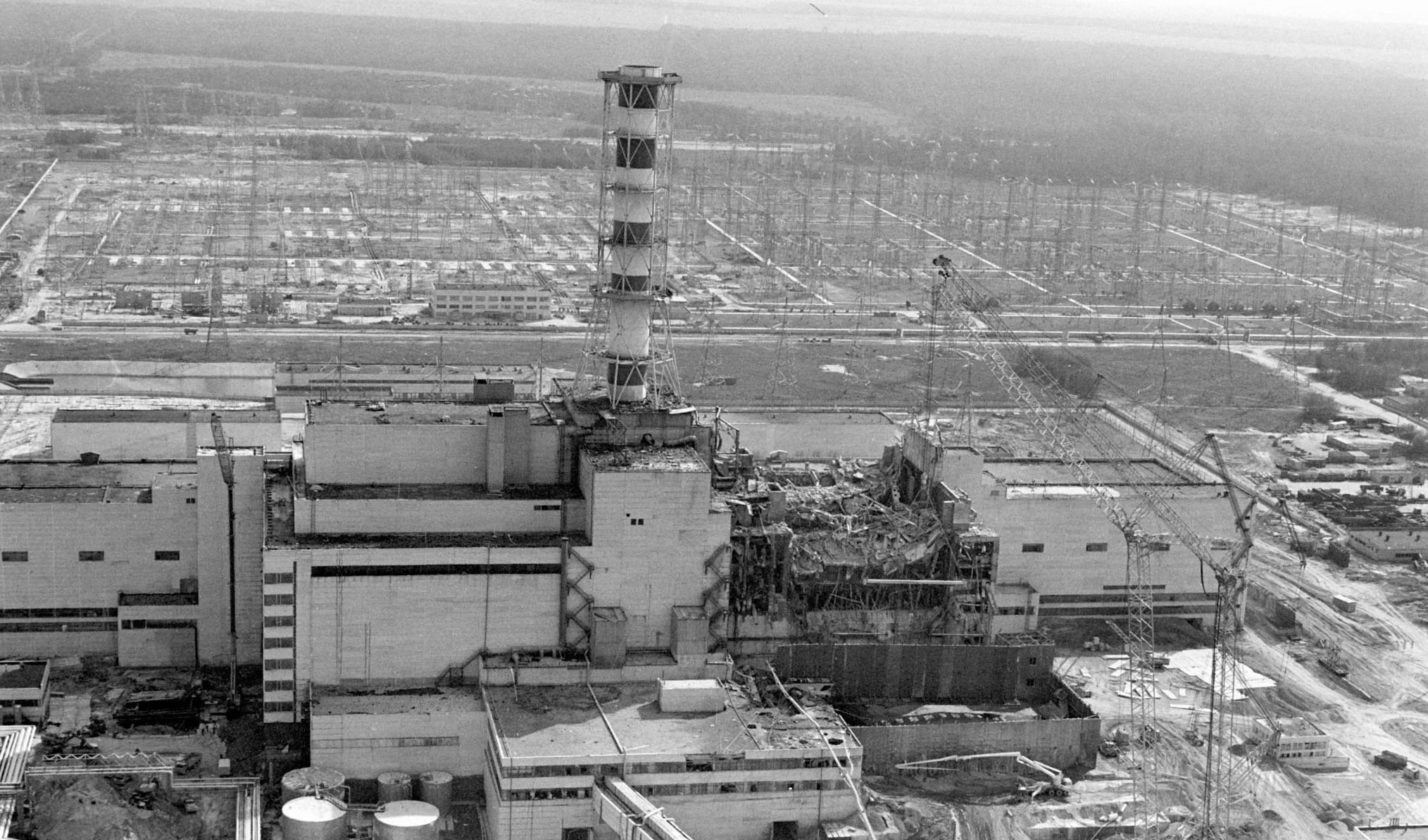 After Brezhnev’s death in 1982, there was a “parade of general secretaries,” who died year after year while in office, until in 1985, the young reformer Mikhail Gorbachev came to power. He eagerly began to court capitalist countries in search of saving his own, halting the “arms race“, withdrawing troops from Afghanistan, and allowing the integration of East and West Germany. Domestically, he initiated a program to reform the economy (“self-accounting”) and liberalize public life (“glasnost”). These processes became known as Perestroika. On April 26, 1986, the Chernobyl nuclear disaster occurred, and its invisible “radioactive flames” seemed to illuminate all the accumulated problems in Soviet society. As a result, more than 50,000 square kilometers of Ukrainian territory were contaminated, hundreds of settlements were fully evacuated, and 100,000 local residents were relocated (from Pripyat to Slavutych). As during Khrushchev’s time, the reforms were carried out in a voluntaristic manner; for instance, during the anti-alcohol campaign, historic vineyards in Crimea and Zakarpattia were destroyed. On the other hand, freedom of speech rapidly filled in the “blank spots” in the people’s historical consciousness and awakened national feelings. The intelligentsia began to rally around various organizations (“Ukrainian Cultural Union,” “Lion Society,” “Memorial,” “Society of Ukrainian Language”). In 1988, the Ukrainian Helsinki Union was established, led by Levko Lukyanenko. In 1989, the “People’s Movement for Perestroika” was formed, miners’ strikes swept across the country, and Shcherbytskyi was replaced by Volodymyr Ivashko. On October 28, the Verkhovna Rada restored the official status of the Ukrainian language. On January 21, 1990, to commemorate the Act of Unification between the Western Ukrainian People’s Republic and the Ukrainian People’s Republic, a “human chain” stretched from Ivano-Frankivsk through Lviv to Kyiv. In March of the same year, the Communist Party lost its leading role, political pluralism and multipartyism emerged, and the first alternative elections to the Verkhovna Rada took place. The first Ukrainian political party was the Ukrainian Republican Party led by Levko Lukyanenko. In the newly formed Rada, 125 newly elected deputies formed the “People’s Council” bloc led by Ihor Yukhnovskyi, while 239 sovereign-communists, led by Leonid Kravchuk, who also became the head of parliament, formed the “For Soviet and Sovereign Ukraine” bloc. In 1990, due to a severe food shortage and to prevent its outflow to other regions, Ukraine introduced a rationing system that allowed only the republic’s citizens to make purchases. That same year, the “catacomb” Ukrainian Greek Catholic Church was legalized. During the “parade of sovereignties” of the Soviet republics, Ukraine also declared the Declaration of State Sovereignty on July 16, 1990, one month after Russia declared its sovereignty on June 12.
 Unable to suppress the national uprisings in various parts of the USSR by military force, reactionary forces began preparing a new Union treaty. In response, in October, Kyiv students took to the Maidan and staged a hunger strike. They were supported by the public, and the head of the government, Vitaliy Masol, resigned—this event became known as the “Revolution on Granite“. In March 1991, a referendum with ambiguous questions was held in support of the new Union, with 70% voting in favor of preserving the Union.
In May-June 1991, in the town of Nosivka, which was then the district center of Chernihiv region, teachers staged a hunger strike and mass protests that gained national attention in the Ukrainian media and led to the replacement of the leaders of the Nosivka district.
In September 1991, in his speech (the so-called “Chicken Kiev speech“) in the Verkhovna Rada, the new Union course was advocated by U.S. President George Bush. Losing hope for a political resolution, the Moscow party elite resorted to a conspiracy. On August 19, the State Committee on the State of Emergency (GKChP) was formed, Gorbachev was imprisoned at his dacha in Foros, Crimea, and troops were deployed on the streets of Moscow. However, the Russian leader, Boris Yeltsin, instead brought people to the streets, and on August 21, the GKChP collapsed, and the Communist Party was banned in Russia. In Ukraine, the Communists initially took a wait-and-see position, but on August 24, at an extraordinary session of the Verkhovna Rada, “faced with the mortal danger” of being outlawed in Ukraine as well, they supported the democratic forces and voted for the “Act of Declaration of Independence”.
 Odessa (Odesa). Period 1944-1991
1944 – 1991 – Union of Soviet Socialist Republics
1944 – 1991 – Ukrainian Soviet Socialist Republic
1944 – 1991 – Odessa Region
1944 – 1962 – Odessa Raion
In the years following the liberation of Odessa, significant efforts were made to restore the structures that had been destroyed during the war. By 1948, all the most important port and industrial facilities in Odessa had been rebuilt. New large enterprises began operations, including the Kirov milling machine plant, the radial drilling machine plant, the experimental mechanical plant, “Presmash,” “Poligrafmash,” the auto assembly plant, the cable plant, “Autogenmash,” and others. The subsequent years in Odessa’s history, starting from the 1950s, were largely connected with the development of the construction industry. For example, in 1968, a modern seaport was built on the New Mole. By 1950, the cargo handling level in the port had doubled compared to the pre-war period.
As of 1975, the city’s housing stock reached a record number of square meters—12 million, which was twice as much as in 1940. During this time, new urban districts emerged: Southern, Southwestern, Northeastern, and Tairovo districts. However, alongside the development of industry and construction, Odessa lost the significance it had held since its so-called “founding” in 1794. The city unofficially acquired the status of a provincial town. Moreover, while new residential areas were being built, the historical city center was almost entirely neglected, leading to the decline of many architectural monuments. The same neglect affected the city’s infrastructure.
In addition, the Soviet authorities attempted to change the values of the local residents by any means possible. Cemeteries and churches were barbarically destroyed, history was rewritten, facts about notable figures were distorted, and the myth was created that in a short time, a great European city—the “Southern capital of the empire”—had been “founded” on the site of the small settlement of Khadzhibey. The Communist Party’s policies also significantly contributed to the decline of culture and human values in Odessa, leading to the mass emigration of nearly all the cultural and scientific elite. After the war, the Soviet authorities did not allow the restoration of the Lutheran church at St. Paul’s Cathedral, which had been a religious center. The building was initially used as a sports hall. After several fires, the architectural monument was nearly reduced to ruins, with the most destructive fire occurring on the night of May 8-9, 1976, on Victory Day. In 1977, the Literary Museum was ceremoniously opened in the Gagarin Palace.
READ MORE→
_______________________________
The text was translated from Ukrainian by Artificial Intelligence