
Previous section (click the link to return):
←3.1.Northern Black Sea Region XV-XVIII centuries♦
←3.2.Hocabey-Khodzhabey (Khadzhibey). Period of XV-XVIII centuries↓
←2.1.Kotsubey (Kochubiyiv). Period XV century. Eastern Europe II-XV centuries♦
←1.1.Ancient cities in the place of modern Odesa♦
Russian Expansion. Russian-Turkish Wars
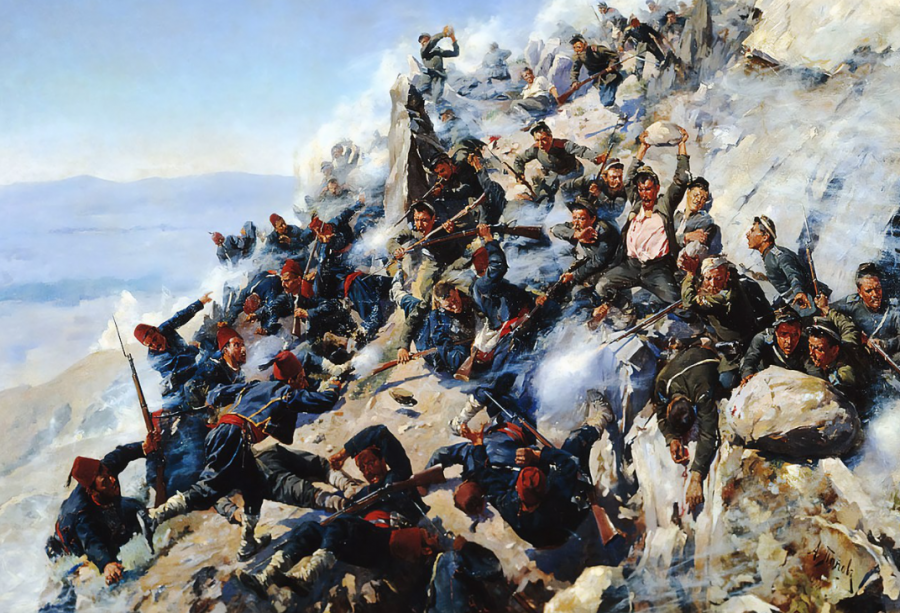 Since the late 17th century, the Russian Empire engaged in active military and political efforts to strengthen its position in the Black Sea basin and increase its influence on the Balkans and Europe in general. This included forming temporary military and political alliances with other European countries against the Ottoman Empire. On its part, Turkey also actively prepared for war with Russia. Although the peak of the Ottoman Empire’s military and political power had passed, it still remained a formidable opponent.. It should be noted that these wars were openly imperialistic and expansionist on both sides, lacking any elements of liberation or attempts to restore historical justice. At one time, the Ottoman Empire actively engaged in aggressive expansionist activities, and by the late 17th century, it was time for clashes over conquered territories with another aggressive and expansionist power, the Russian Empire. This character of aggression and expansionism has been inherent in Russia throughout its post-Tatar-Mongol period, continuing into the 21st century. Here, it is necessary to add the longstanding pathological desire of the “titular nation” of the Russian Empire “to spin” European peoples: in the 18th-19th centuries, it was in the Balkans (hence the primary motivation for supporting the liberation struggles of subjugated peoples in the Balkan region, though the Russians are still seen as “liberators” there); in the early 21st century, it was through the “gas pipeline” (which is why, for Russia, trading gas has never been purely a commercial matter); and a little later, through the nuclear “Sarmat” (as it is clear that the “Ukrainians” insolently refused to disappear from the political and geographical map of the world, with European peoples helping them in this). And now, it is quite simple: the Russo-Turkish wars were about lands, resources, and influence between two empires.
We will not delve into the detailed history of all the Russo-Turkish wars here. Those who wish to learn more about the causes, developments, and consequences of this prolonged “toad and viper” struggle, which also involved the peoples subjugated by these empires, can refer to the link below:
RUSSIAN-TURKISH WAR 1710–1711
RUSSIAN-TURKISH WAR 1735–1739
RUSSIAN-TURKISH WAR 1768–1774
RUSSIAN-TURKISH WAR 1787–1791
RUSSIAN-TURKISH WAR 1806–1812
RUSSIAN-TURKISH WAR 1828–1829
RUSSIAN-TURKISH WAR 1877–1878
The Conquest of Khadjibey. The Early Years Under Russian Rule
From the beginning of the Russian-Turkish War (1787–1791), Khadjibey was drawn into the sphere of military actions as an important port for supplying provisions to the Russian-besieged Ochakov. Notably, on October 5, 1787, when a Russian floating battery was driven by the wind from Ochakov to Khadjibey, its commander, Andrey Veryovkin, “saw up to 15 merchant ships under the Turkish shore“, which had evidently come to Khadjibey for grain. Following orders from the Russian command, the Black Sea Cossacks (former Zaporozhians) conducted reconnaissance from Ochakov towards Khadjibey during the summer and autumn of 1788. For instance, on August 12, 1788, the Black Sea Cossack chieftain, Zakhar Chepiga, captured two Ottoman prisoners there who reported that “in the town of Adjibey… there were up to 200 cavalrymen, and ships came daily for water and bought vegetables“. To stop the supply of provisions by sea from the port of Khadjibey to Ochakov, the Black Sea Cossacks, led by Z. Chepiga, during their raids on October 29 and November 7, 1788, burned down the “shore storehouse” and the food warehouses in Khadjibey, “where there were several thousand quarters of flour, millet, and oats“.
After the capture of Ochakov on December 7, 1788, Khadjibey became a target of military interest for Major General Joseph de Ribas. Lieutenant General Ivan Gudovich, a Cossack descendant from the Hetmanate, was appointed commander of the Russian corps tasked with capturing Khadjibey. Joseph de Ribas was to command the vanguard of the corps, which consisted of six regiments of Black Sea Cossacks led by Zakhar Chepiga and two battalions of the regular Russian army. Notably, in preparation for the campaign, in a letter dated August 31, 1789, to the head of Grigory Potemkin’s office, Vasily Popov, the future so-called “founder of Odessa,” Joseph de Ribas, referred to the Ottoman Khadjibey as a city.
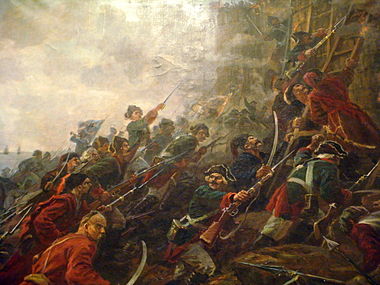 The assault on Khadjibey was carried out primarily by the vanguard of the corps led by Joseph de Ribas (who apparently did not want to share the victory with Ivan Gudovich) on the morning of September 14, 1789. The forces under de Ribas were divided into three parts: one to capture the fortress, the second to take the city itself, and the third to cut off the Turks’ escape route from the fortress to their ships. The assault lasted about half an hour. A significant Turkish fleet anchored in the Khadjibey (Odessa) Bay opened heavy fire on the already captured city, and only the arrival of a battery from Gudovich forced the Turkish ships to retreat from the shore. Two enemy ships were captured by the Black Sea Cossacks. De Ribas’s unit lost 5 soldiers and Cossacks killed and 33 wounded. The Turks lost about 200 men killed. From the Turkish side, the following were taken prisoner: the two-bunchuk pasha Ahmed, Bim-pasha, 5 aghas, 5 bayraktars, a ship captain, and 66 lower-ranking soldiers. Gudovich believed that the relatively small number of prisoners was due to the fact that many Turks escaped by sailing to their ships on four barges that left the shore during the battle. Joseph de Ribas was congratulated on his victory at Khadjibey by Grigory Potemkin and Alexander Suvorov. De Ribas’s wife, Anastasia de Ribas, wrote to her husband from St. Petersburg that the capital was greatly impressed by his success in capturing the city. Later, on October 3, 1789, de Ribas received the Order of St. George, 3rd Class, “for the storming of the fortress of Khadjibey on September 14, 1789, in view of the entire enemy fleet“. A. Krasnozhon published a series of plans and diagrams of the 1789 assault on Khadjibey drawn by Russian military personnel. His analysis allowed for a clearer localization of the Ottoman fortress’s location on what is now Odessa’s Primorsky Boulevard. As a leading researcher on the region’s fortifications, Krasnozhon also analyzed the well-known plan of the Khadjibey fortress created by engineer Freygang after the assault. Krasnozhon concluded that the fortress (castle) stormed by de Ribas’s troops in 1789 was typologically similar to the fortresses of the Grand Duchy of Lithuania from the 15th century. “The 15th-century castle (of the Podolian type) remained largely unchanged“, noted the researcher. Therefore, the Turkish claim that in 1765 they were only repairing the fortifications at Khadjibey, which likely dated back to the Polish-Lithuanian period, was justified. Unlike the Ottomans, Russian policy in the region largely involved destroying conquered fortresses, and Khadjibey was no exception. On October 3, 1789, Ivan Gudovich reported that “by order of the commander-in-chief, the Khadjibey castle was destroyed by two mines“. The assault significantly damaged many private buildings in Ottoman Khadjibey (what a fatal surprise! – note by WH). According to V. Yakovlev, at the end of the war, seventeen individuals, mostly residing in Istanbul, claimed “their rights to the houses in Khadjibey that had been destroyed during the assault and subsequently abandoned” The houses of those who did not flee in time, including Greeks, were also looted (yes, the destruction of civilian buildings is an old Russian pastime – note by WH). The aforementioned S. Asporidi later recalled how, after the assault, he resumed “business in his looted coffeehouse“, receiving gratitude from Russian commanders who became its new patrons. Local historian Alexander de Ribas believed that it was in S. Asporidi’s coffeehouse where Joseph de Ribas celebrated the successful storming of Khadjibey in 1789. Until the end of the war, Russian regular troops were stationed in Khadjibey, causing devastation to the local population. A known complaint from 1791 by Ukrainian peasants mentioned that Russian soldiers from Khadjibey even kidnapped their women (of course!… as washing machines and toilets did not exist back then, they had to steal whatever was available… – note by WH). Evidently, the Black Sea Cossacks were also present here. In particular, in September 1790, a “colonel of Khadjibey” within the Black Sea Cossack army reported to the Council on the situation in this settlement.
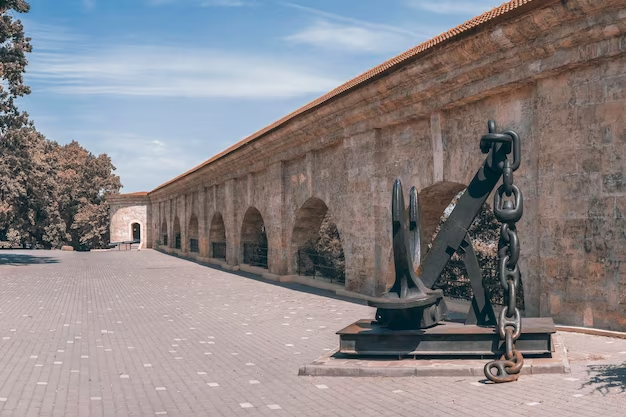 According to the Treaty of Jassy signed on December 29, 1791, the territory between the Southern Bug and the Dniester was ceded to the Russian Empire. Ottoman rule in Khadjibey (Odessa) officially ended. In 1792, an engineer-colonel Frans de Volan created a description of the annexed territory. “Before the war,” he noted in the description, “there were four cities here—Ochakov, Adzhibey, Adzhider, and Dubossary, and 150 villages, well-populated and equipped primarily by Tatars“. In January 1792, the annexed lands of the so-called “Ochakov region” were handed over to the governance of Vasily Kakhovsky, the governor of Ekaterinoslav (well, of course, who else? After all, “DPR” wasn’t invented back then: “Novorossiya” will appear later, sorry for the spoiler – note by WH). Under Russian rule, Khadjibey was to serve only as a military post. Plans included the construction of barracks, a fortress, and a settlement for Greek sailors who had fought on the Russian side during the previous war. “There is a lot of stone from the ruins of the former buildings. It will be enough for the construction at first for those expected to settle in this place“, wrote V. Kakhovsky about Khadjibey in May 1792. It should be noted that “inherited” from the Ottomans, the Russian authorities received not only the building stones but also the sea pier (which was used in the same year of 1792), a lighthouse, warehouses, wells, and more. In 1793, 800 soldiers under the leadership of engineer-captain Fyodor Kaiser began constructing the Russian fortress (in the present-day Taras Shevchenko Park in Odessa) based on F. de Volan’s project.
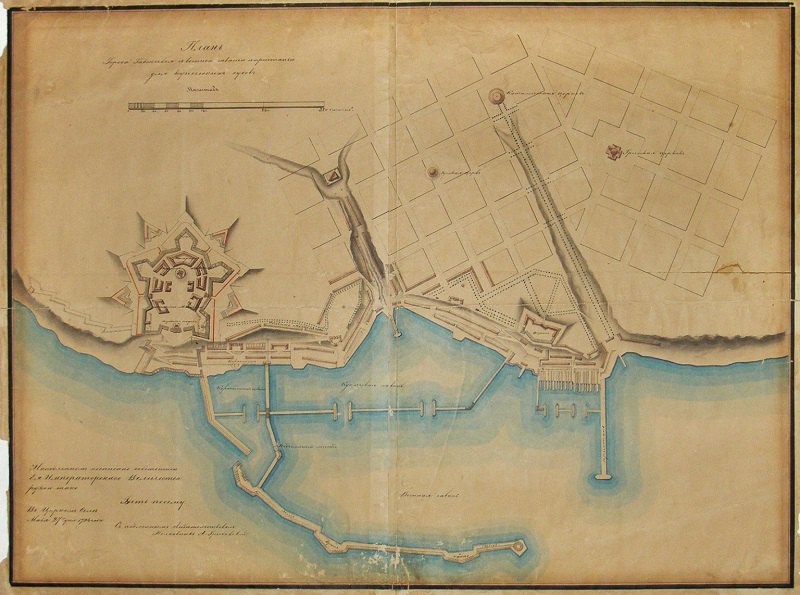 Unlike the official Russian authorities, merchants recognized the commercial significance of Khadjibey. On January 23, 1793, following the second partition of the Polish-Lithuanian Commonwealth, the lands of Right-Bank Ukraine, which had long been known as the “breadbasket of Europe“, were ceded to the Russian Empire. Merchants understood that now the grain from Kyiv, Podolia, and Volhynia could be exported not through Gdańsk but through one of the ports of the “Ochakov region.” A native of Genoa, Bartolomeo Gallera, wrote to the Russian government in 1793, stating that “the annexation of the former Kyiv, Bratslav, and Podolia voivodeships” was “destined by nature to be attached to the territory of Ochakov for their mutual prosperity“, as “these lands are rich in hides, lard, wax, honey, livestock, and grain of all kinds“, and that the warehouses and port for exporting these goods to Europe “could not be better situated than in Khadjibey [Hozia Bey]” (translated from French by O. Polevshchikova). It appears he managed to “interest” Empress Catherine’s favorite, Platon Zubov, with his proposal, resulting in decrees issued on May 27, 1794, to P. Zubov and J. Deribas regarding the construction of a military harbor “together with a merchant pier” in Khadjibey. At that time, the development plan for Khadjibey and its port, created by F. de Volan, was approved. The complete collection of imperial laws included only the decree addressed to P. Zubov, officially titled: “On the Opening of Free Access to Merchant Ships in Khadjibey Harbor“. Thus, it was not about founding a city and port (notably, Empress Catherine II already referred to Khadjibey as a “port” in her decree of January 16, 1794), but about restoring Khadjibey’s functioning as not only a military but also a commercial port. The port was to be developed by the regiments stationed in Khadjibey: the “Dnieper and Nikolaev Grenadier Regiments, and the Vitebsk and Nizhny Novgorod Musketeer Regiments“. Additionally, J. Deribas decided to use the Black Sea Cossacks, who were reluctant to move to the Kuban, for the construction. In July 1794, he issued an order to gather them “at the city of Khadjibey” (apparently, the “founder” was unaware that the “city” did not yet “exist”), and by the end of the summer, a separate Cossack unit was formed (initially consisting of over 400 Cossacks, but later their number increased) under the command of Esaul Fedor Chernenko, who was involved in developing Khadjibey (Odessa). According to one of the documents, work at the Khadjibey port began on August 22 (September 2), 1794. “Whether willingly or unwillingly, one has to admit, – wrote V. Nadler on this matter – that in 1794 there was no grand laying of the city’s foundation in Khadjibey, and that the date of June 22, which Odessites have become accustomed to celebrating with such pomp, has only the significance that on this day the preparation of materials for port works was completed and the works themselves began. Moreover, as far as can be judged from the documents, there were no ceremonies“. In late summer 1794, the allocation of lots for construction in the center of Khadjibey began, and some already erected buildings had to, as empty, be transferred to other owners (this is indeed the favorite pastime of Russian imperialists – note by WH). In particular, the previously mentioned coffee house and the house of S. Asporidi, which had been in Khadjibey since Ottoman times, were given to another Greek, Koutesku, who quickly resold this place to Captain Nesterov. However, S. Asporidi managed to defend his buildings (an incredible story in the Russian Empire – note by WH), and they remained in the city until the 1820s (it is believed that the last building of Ottoman Khadjibey, a Turkish bath, was demolished in 1840). In early 1795, Khadjibey received a new name — Odessa. On January 27 (February 7), 1795, the decree “On the Establishment of the Novorossiysk Governorate” was signed, where among the points of the Tiraspol district it was stated: “4th Odessa, called by the Tatars Khadjibey, 5th Ovidiopol, called by the Tatars Adjidera“. Renaming places into ancient Greek or Russian style was a typical phenomenon at that time. The most likely author of renaming Khadjibey to Odessa was Y. Deribas’s friend, Andrian Grybovsky (he later mentioned this in his personal diary). The name “Odessa” was chosen because on many maps of the so-called “Ptolemaic tradition,” near Khadjibey, a point was marked from ancient times as “Odess”, “Odessos”, “Odessa”, or “Ordessos”. According to accounts recorded by 19th-century historians, the local authorities coerced Ukrainian wagoners into accepting the new name for Khadjibey with the help of whips. “According to a well-known tale,” wrote historian Dorothea Atlas on this matter, “Odessa did not greet the ‘native population’ warmly. Near the checkpoint, peasants were ‘persuaded’ to accept the new name. ‘Where are you going?’ cunningly asked the wagoners, who did not suspect any ill intent in their question. ‘To Khadjibey,’ the newcomers calmly and confidently replied. This innocent answer became the pretext for execution, during which law enforcement officers repeated: ‘To Odessa, to Odessa, to Odessa‘ (meanness and executions – traditional Russian virtues – note by WH).
Collective monograph
“Нариси з історії освоєння Південної України XV-XVII ст.”,
T.Honcharuk “Хаджибей-Одеса: проблема урбогенезису”,
abbreviated, modified, edited – WH
At this stage, as the city in its development has ‘passed through’ two imperial periods – Polish-Lithuanian and Ottoman – and enters another, Russian, several interim conclusions need to be made.
They are comprehensively compiled in T. Honcharuk’s study “Хаджибей-Одеса: проблема урбогенезису” in the collective monograph “Нариси з історії освоєння Південної України XV-XVII ст.”
- Therefore, one can trace a direct connection through all periods of the history of Kocheubey-Hadzhibey, despite periods of wars and changes in its state affiliation. Historian V. Yakovlev, disputing the connection of Odessa’s history with the ancient Greek settlement on its territory, wrote: “From this Greek, it is self-evident that our city could not inherit anything. It received little from what followed the Greek colony — the city of Kocheubey or Hadzhibey, although the latter is inseparably linked to the history of Odessa and, more importantly, partially connected by the genealogy of its residents“. V. Yakovlev wrote this in the second half of the 19th century, when historians’ knowledge of the past of Kocheubey-Hadzhibey was quite fragmentary, but for him, the existence of an “inseparable thread” that connected the history of this point from 1415 with the history of Odessa was unquestionable. Today, thanks to new historical discoveries, this “inseparable thread” appears much stronger.
- The importance and status that Kocheubey-Hadzhibey acquired in various periods of its history cannot be overlooked. It was first mentioned in 1415 as a port for grain exports, necessitating a significant workforce (carters, porters, etc.). Later, Kocheubey was referred to as a “very significant port.” This implied an urban character for the population of the contemporary Kocheubey. The city was referred to in documents as well (1442). Kocheubey also had a fortress (“castle” mentioned from 1431), customs houses (1442), and apparently other urban infrastructure objects. The port in Kocheubey was mentioned during Ottoman rule in the early 16th century (for the shipment of other “heavy” goods like salt). During the revival of life in Hadzhibey in the mid-18th century, it was also mentioned as a port (from 1750), acquiring the necessary status (1764) and facilities. Here appeared: a wharf, customs office, warehouses, an inn, a fairground, eateries for sailors and traders, and more. During this period, Hadzhibey’s port mentioned numerous trading vessels (e.g., 15 in 1787). It’s no wonder that Ottoman Hadzhibey was called a “city,” and Russian military figures (I. Islenev in 1766, J. Deribas in 1789, F. de Volan in 1793, etc.) acknowledged it. Thus, despite its political status, Kocheubey-Hadzhibey was de facto a city during certain periods of its history, as noted by authoritative historians in their works from the 19th century onwards: V. Yakovlev, O. Markevich, and others. Kocheubey-Hadzhibey held significance due to many events in political and military history from the 15th to the 18th centuries. It was first mentioned in 1415 in the context of important diplomatic negotiations by King Vladislaus IV Jagiellon, later mentioned in the charter of King Vladislaus III of Varna (1442), agreements of Grand Duke Vytautas (1430), and King Sigismund II Augustus (1530), in letters of Ukrainian hetmans I. Samoilovich (1676) and I. Mazepa (1689), in Russian-Ottoman diplomatic correspondence and negotiations (1765, 1774, 1791, etc.). Military actions under Ottoman Hadzhibey-Odessa in 1769, 1770, 1787, 1788, including its storming on September 14, 1789, were viewed by contemporaries and historians as significant events of the late 18th-century Russian-Turkish wars.
- It is also worth noting that the economic factors which contributed to the rise of Kocheubey-Hadzhibey in certain periods of its history closely mirrored those that later facilitated the rapid growth of Odessa in the first half of the 19th century. Economist Kostiantyn Vobly emphasized: “…in Ukraine we can observe… a thread that connects its entire economic history: our population instinctively gravitated towards the South, towards the warm sea“. The outcomes of this Ukrainian aspiration to reach the sea determined the periods of prosperity and decline of Kocheubey-Hadzhibey-Odessa. In the first half of the 15th century, Kocheubey emerged as a Black Sea port for the lands of Podillya (and through it, for other Ukrainian territories), which briefly gained access to the Black Sea. Ethnographer Nazar Bukatevych viewed the activities of chumaks, who from the 15th century traveled from Volhynia and Kyiv region to Tatar Kocheubey, as a manifestation of “weighting of the Ukrainian economy towards the Black Sea“. By the mid-18th century, through Ottoman Hadzhibey, products produced by rural Ukrainian population were exported, prompting their spontaneous desire to reach “the warm sea,” encouraging resettlement to the lands of “Khane Ukraine”. Finally, in the first half of the 19th century, Odessa became a gateway to the World for the products of Right-Bank and Southern Ukraine.
Therefore, the nearly 400-year history of Kocheubey-Hadzhibey from the 15th to the 18th centuries was closely intertwined with subsequent periods in the history of Odessa. It should be considered not as “prehistory” but as an integral part of Odessa’s history. This aligns perfectly with approaches to defining the age of settlements in historical science and UNESCO practices. (note. – WH).
(Click on the banner to read more)

_______________________________
The text was translated from Ukrainian by Artificial Intelligence