
Ethnogenesis of the Ukrainians
In the ethnic history of the Ukrainians, key ethnonames can be highlighted over the last 2000 years:
- Antes (Antian Union) II-VII centuries: Ulichi, Tivertsi, Dulebes, White Croats, Volynians, Buzhans;
- Slavs VI-XI centuries: Ulichi, Tivertsi, Dulebes, White Croats, Dregoviches, Drevlians, Severians, Polans;
- Ruthenians, Rus, Rus’ X-XX centuries (state formations — Kievan Rus’, the Kingdom of Rus’, the Grand Duchy of Lithuania, the Ruthenian Voivodeship);
- Cossacks XVI-XVIII centuries (state formation — Hetmanate);
- Ukrainians XVII-XXI centuries (state formations — Ukrainian People’s Republic, Ukrainian State, Ukrainian Soviet Socialist Republic, Ukraine).
________________________________
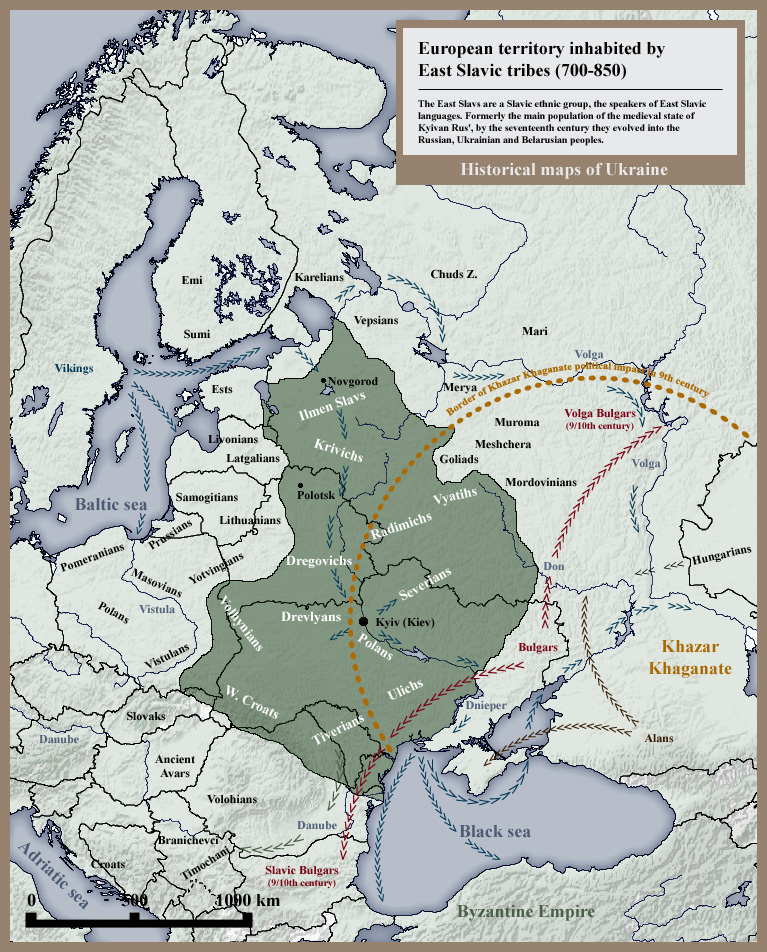 The issue of the formation of the Ukrainian people in the past has found different interpretations in the works of various historians, depending on their political bias. A telling example of this is the comparison of the views of the prominent Russian historian M.P. Pogodin and the father of modern Ukrainian science, M.S. Hrushevsky. “The first of them claimed that after the collapse of Kievan Rus, the population of the Dnieper region moved to the territory of Central Russia and later formed the Muscovite state. In other words, he did not even acknowledge the existence of a separate Ukrainian people. The second believed that the Russian people had no connection to Kievan Rus at all“.
In Soviet historiography of the postwar years, a concept of compromise between the two aforementioned extremes emerged — the idea that a single Old Russian people supposedly gave rise to three related peoples: the Russian, Ukrainian, and Belarusian. This compromise aimed to justify the political concept of the merging of nations with historical “facts.” If there was once a single people who fragmented due to unfavorable external circumstances (namely, the Mongol-Tatar invasion), then after reunification, they would gradually lose their national differences and return to their original unity.
The identification of Kievan Rus as the “cradle” of the three fraternal peoples did not contribute to the scientific study of the origin of the Ukrainian people. S.V. Kulchytsky expresses confidence that “…the five East Slavic tribal unions that formed Kievan Rus could not have merged into a single people in the short existence of this relatively fragile early feudal state. It is likely that the differences between the three modern peoples have their roots in the differences between the tribal unions that existed from the earliest centuries of our era“.
The great Ukrainian historian M.S. Hrushevsky considered the 4th century as the threshold of historical times for the Ukrainian people. “The settlement of Ukrainian tribes in their present territory coincides with the beginning of their historical life. The centuries that directly follow this settlement prepare the state organization, whose history constitutes the main content of the first period of the historical life of the Ukrainian people. Through the efforts of the Kyiv dynasty and its retinue, all Ukrainian tribes and all parts of Ukrainian territory were united into a single political organism, albeit for a short time, and this political unity gave new common features to the culture and social relations of the entire Ukrainian population”.
A similar view on the timing of the formation of the Ukrainian people is held by the esteemed historian and publicist I. Lysiak-Rudnytsky, who notes that “all these Trypillians, Scythians, etc. have very little in common with our nation, no more than, for example, some Ligurians, Etruscans, or Samnites have with the modern Italian nation, meaning only potentially as components of an ethnic synthesis… Researchers today seem to be in agreement in considering the Antes, mentioned by Byzantine chroniclers, as the direct ancestors of modern Ukrainians. That is, the formation of the Ukrainian people was likely largely completed by the middle of the first millennium AD“.
As is well known, one of the main characteristics of any people is its language. As early as the princely era, the folk Ukrainian language was forming in the southwestern lands of the Kyiv state. “This is evidenced by the vocabulary of folklore, the epic poem The Tale of Igor’s Campaign, and the contemporary chronicles of Kyiv and Galicia-Volhynia. The Ukrainian language proved its vitality as the creation of an entire people“.
The spread of Christianity, which became the state religion under Prince Volodymyr in 988, played a significant role in the formation of the Ukrainian people. Gradually penetrating the daily life and consciousness of the people over the centuries, Christianity became a truly national religion of Ukrainians, contributing to the spread of education and culture.
Regarding the material and spiritual culture of the Ukrainian people, despite its evolution over the centuries, certain enduring elements remained (folklore, customs, methods of construction and housing arrangements, pottery-making, and so on).
_____________________________
based on the materials of the resource osvita.ua
________________________________
The Ukrainian Context of Colonizing the Steppe of the Northern Black Sea Coast
To reach the sea and push out the nomads, who had long replaced one another in the Steppe and raided the settled agricultural lands of Ukraine—this was always seen by the Ukrainian elites as their historical mission. Consequently, these elites viewed the vast steppe between the Danube and the Don as a natural zone of their influence, reclaimed from the nomadic hordes. In the east, as early as the princely era, there existed the Tmutarakan Principality in the Azov region, while in the west, the borders of the Kingdom of Galicia-Volhynia at times extended to the mouth of the Danube.
The appearance of the Tatars in the 13th century did not end Ukrainian claims to the Steppe. Scholars record the advance of Ukrainian settlements in the Northern Black Sea region less than 100 years after the Mongol invasion, and perhaps this movement never fully ceased. At the end of the 14th and early 15th centuries, Ukrainian settlers once again established themselves in the region, although briefly. It was likely during this period that Kotsyubiyiv (later known as Hadzhybei, and eventually Odesa) was founded. By 1550, the southern boundaries of Ukrainian lands were perceived as extending “to the shores of the Black Sea, where the Dnipro flows, to the borders of Taurica and Tavan, the Dnipro crossings.” The Ukrainian elite of that time—princes and nobility—steadfastly held this position, and through their influence, so did the Polish-Lithuanian Commonwealth.
At the turn of the 15th–16th centuries, Ukrainian Cossacks joined the struggle for control of the Steppe. Their mastery of the steppe territory became the most effective and appropriate response from the Ukrainian world (and indeed all of Europe!) to the final waves of pressure from the Asian hordes. Initially, they restored the balance, which had tilted in favor of their Muslim neighbors, and eventually gained the upper hand, opening the way for Ukrainian settlers to colonize the Steppe.
The decisive phase of settling modern-day Eastern and Southern Ukraine began in the early 18th century. Cossacks, along with peasants from various parts of Ukraine under their banner, dominated the settlement of this region and firmly established it as part of Ukrainian ethnic territory. The Zaporizhian Cossacks led this effort, capitalizing on their subordination to the Crimean Khanate. From the 1710s, they rooted themselves in the Ochakiv Steppe, the Dniester estuary, and pushed into the Kuban and the lower Danube (settling in Kiliya and Reni).
Moreover, the Zaporizhians began founding their own settlements in Crimea. By the 1720s–1730s, they had settled in the outskirts of Bakhchisarai, Gezlev (Eupatoria), and Kaffa (Feodosia).
The most extensive wave of colonization was launched by the Zaporizhians in the mid-18th century, spreading over a vast territory from the Dniester estuary to the Don. A significant impetus for this expansion was Russia’s attempts to seize their northern lands adjacent to the Hetmanate, Sloboda Ukraine, and Right-Bank Ukraine. The Cossacks countered Russian expansion with swift and effective economic development of the region, supported by forceful methods to oust unwanted settlers organized by the Russian government.
In less than a quarter of a century, the modern southern and most of eastern Ukraine (excluding Sloboda Ukraine) were covered by a dense network of Zaporizhian homesteads, settlements, and small towns. In the east, the Cossacks laid claim to territory extending to the Don, while in the south, they sought to establish natural borders along the Black and Azov Seas.
On the Dniester and in Moldova by 1755, no fewer than 400 Cossacks had settled, and by 1760, 500 were in the lower Bug. In the mouth of the Dnipro, then within the Crimean Khanate, there even existed an administrative unit of the Zaporizhian Cossacks – the Prohnoinska Palanka.
Russia attempted to counter Ukrainian colonization with its own, but lacked the necessary human resources. Instead, it primarily sought to dilute the Ukrainian population with specially attracted settlers from the Balkans. In 1752, New Serbia was established on the northern Right-Bank Zaporizhian lands.
In 1753, to the south of New Serbia, a strip 20 versts wide was designated for the formation of the New Sloboda Regiment. That same year, Slavo-Serbia emerged on the Left Bank between the Bakhmut and Luhan rivers. However, these measures proved unsuccessful, both militarily and economically, forcing St. Petersburg to continually support the new settlements and resolve endless conflicts, including international ones (with Austria, for instance). It suffices to say that New Serbia was guarded by 2,438 Moscow soldiers and Ukrainian Cossacks, while its population numbered only 1,815.
It was thanks to the efforts of the Cossacks that the Northern Black Sea region irrevocably gained a Ukrainian character. The abolition of the Zaporizhian Cossacks by Catherine II did not fundamentally alter this, as everything Russia did in the region was built upon the Zaporizhian foundation and relied on Ukrainian human and material resources.
The region’s economy, network of settlements, and transportation routes developed on the infrastructure created by the Zaporizhians and on their economic experience. Most of the modern cities of Southern and Eastern Ukraine are continuations of old Cossack settlements.
The abolition of the Sich further stimulated the settlement of Ukrainians in the Northern Black Sea region. More than 2,000 Cossacks settled in Balta, on the Tylihul River, and in the lower Dniester and Bug, reaching as far as the mouth of the Danube. Refugees from the Hetmanate and the Right Bank soon followed, and later from Volhynia and Galicia. Thus, long before these lands were incorporated into the Russian Empire, Ukrainian settlers were already developing them and never lost their numerical advantage.
Moreover, St. Petersburg could not manage the former Zaporizhian lands without the former Zaporizhian leadership in administrative, economic, or military spheres. The top of the hierarchy included former Cossack leaders such as Sydir Bilyi, Opanas Kovpak, and Vasyl Cherniavskyi, who headed the nobility of Kherson, Oleksopil, and Samara (New Moscow), respectively. At the turn of the 18th and 19th centuries, the sons of Zaporizhian elders, such as Hryhorii and Matvii Tymkivski, Ivan Myrhorodsky, and Kozma Hniedin (Hnyda), took over official positions. In the 1780s, former Zaporizhians and people from the Hetmanate, the Right-Bank Ukraine, and Sloboda Ukraine made up to 60% of the civil service in the Katerynoslav Vicegerency.
It is quite telling that the local population at the time did not consider this region to be “New Russia.” Even those nobles who originated from Russia contrasted these territories with native Russian lands, writing in letters, for example, “went to Russia” or “arrived from Russia to the Steppe.” Most Ukrainian-born officials, when applying for nobility, referenced the Ukrainian-Russian Treaty of 1654 (the March Articles) as the fundamental basis of their noble rights. This clearly indicates that they maintained not only a sense of distinctness from Russia but also their connection to the broader Ukrainian identity, as well as the continuity of integrating Southern Ukraine into the Ukrainian world.
In fact, until the 1840s, the term “New Russia” was used primarily in an administrative sense, deriving from the “New Russia Governorate.” More commonly, the region was called “the Steppe” and so forth. Only with the development of the “Greater Russian Nation” project was the term “New Russia” artificially given a regional-political meaning. This ideological construct emerged precisely because Russia needed to erase from local memory the notion of the region as part of Ukrainian lands. The empire pursued the same goal during Soviet times—through mass executions and deportations of Ukrainian peasants, the importation of workers from Russia for the newly established factories of Stalinist industrialization, and the fostering of the “Soviet people” under Brezhnev. Yet, all efforts proved unsuccessful.
___________________________
Віктор Брехуненко “Український Південь і Схід”
the resource tyzhden.ua
________________________________
Cossacks in the Black Sea Region: a History of Formation and Struggle
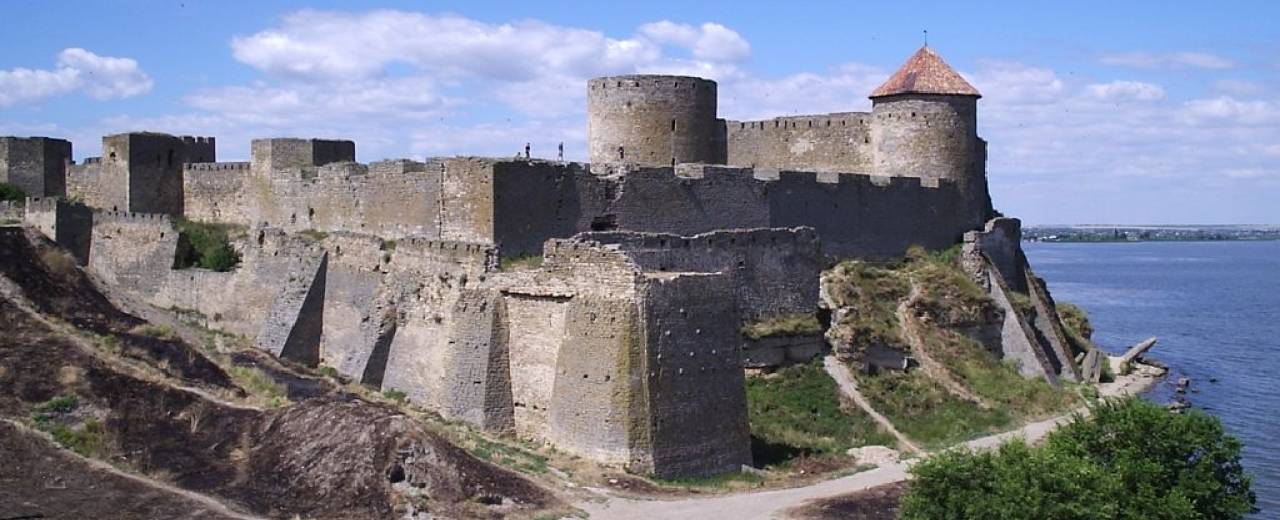 ОOne of the earliest known campaigns of the Cossacks in the Northwestern Black Sea region was a joint expedition with Moldavian warriors in 1541 from Bendery to Akkerman, during which several large Turkish-Tatar garrisons were defeated. In the second half of the 16th century, such raids into the lower Dniester and Danube regions became regular occurrences. In 1574, the Cossacks stormed and captured Akkerman. Particularly successful was their campaign in Budjak in 1576. The Cossacks seized a great amount of trophies during raids on Akkerman in 1577, 1578, 1586, and 1589. In the mid-1590s, Ukrainian Cossacks participated in the Holy League’s struggle — an alliance of several European states — against the Ottoman Empire. The Cossacks launched successful campaigns against Akkerman, Kiliya, Izmail, and Bendery, continuing these efforts almost annually into the early 17th century.
In 1621, they delivered significant blows to Turkish supply lines, through which reinforcements and arms were sent to Ottoman forces at Khotyn. In 1629, Bohdan Khmelnytsky led a Cossack campaign to the Black Sea. With 300 chaikas, the Zaporozhian Cossacks attacked Constantinople and defeated Turkish forces.
The most successful leader in the Cossacks’ struggle against Muslim countries was Ivan Sirko, as attested by the authors of the History of the Rus. Under his command, victorious raids were carried out in 1659, 1664, 1671, and 1673 at Akkerman, including the crushing of Budjak Nogai detachments. After Sirko’s death, Cossack colonel Semen Paliy took up the fight. Historians recount his bravery in a battle against Tatar forces in 1694 on the Kodima River. The Cossack attacks on the Tatars continued into the second half of the 17th century. In the summer of 1709, after the tragedy of Poltava, Ivan Mazepa and Charles XII stopped to rest in the area of modern-day Odesa, near the Kotovsky and Peresyp districts.
 In the second half of 1771, Cossack leader Petro Kalnyshevsky led a campaign to Hadzhybei. At the beginning of 1774, following the conclusion of the Russo-Turkish War of 1768–1774, Hadzhybei-Kochubey was liberated by the Cossacks, but only for six months.
The raids of Ukrainian Cossacks on Turkish territories weakened the Ottoman Empire, which Russia took advantage of. Upon coming to power, Catherine II began implementing a consistent policy of destroying the Cossacks. In 1764, she ordered the elimination of the Hetmanate, and in 1775, she commanded the destruction of the Zaporizhian Sich.
About 10,000 Zaporizhian Cossacks, to avoid repression and serfdom, were forced to leave their homeland and move to the steppe region between the Southern Bug, Dniester, and Danube rivers.
The destruction of the Zaporizhian Sich became a national tragedy for the Ukrainian people. The Tsarist regime destroyed the force that for three centuries had defended Ukrainian lands from invaders. The imperial regime could not tolerate the democratic self-governance of the Cossacks, nor the fact that Zaporizhzhia, in its economic, social, and political dimensions, did not fit into the monarchical feudal system, as it was a center of attraction for anti-feudal elements and a leader of the liberation movement in Ukraine.
The destruction of the main organization of the Ukrainian Cossacks — the Sich of the Dnieper region — did not prevent the emergence of new formations of this type. Like offshoots from a great tree, the Black Sea, Bug, Ust-Danube, Budjak, Azov, and Danube Cossack armies emerged.
During the Russo-Turkish War of 1787–1791, the Black Sea Cossack Army played a highly active role in the fighting in the Northwestern Black Sea region. The Black Sea Cossacks were led by former Zaporizhian officers Sidor Bily, Anton Holovaty, and others. In 1790–1791, the Black Sea infantry and cavalry regiments, along with a Cossack flotilla of 48 “dub” boats, distinguished themselves in battles against Turkish forces on the Lower Danube: in successful engagements with the Turkish flotilla, in landing operations near Kiliya, Tulcea, Isaccea, Braila, at Babadag, Machin, and in the famous storming of Izmail.
However, the Black Sea Cossack Army did not remain long in the region between the Dniester and Bug rivers. In the summer of 1792, the Russian government decided to relocate the Cossacks to the Kuban. Not all of the Black Sea Cossacks agreed to move to the foreign land. Many of them settled in the vicinity of Hadzhybei. They served in the Black Sea Cossack unit, participated in the construction of the port, and contributed to the development of Hadzhybei-Odesa. Some lived in the area of modern Peresyp, others in the Vodiana Balka area, and others in surrounding villages.
Beyond the Danube, in Dobruja, after the Russo-Turkish War of 1806–1812, the Danubian Cossacks established their military-political organization—the Sich—which maintained the internal structure of the Zaporizhian Sich. The Cossacks lived not only in the territory under the authority of the Sich but also in many other settlements of the Lower Danube, including Vylkove and Kiliya. The Sich and its lands enjoyed considerable autonomy. The Cossacks did not pay any taxes and did not perform any obligations, except for military service.
The Zaporizhian and Danubian Cossacks were the first settlers of Odesa. They primarily engaged in fishing or extracted shell limestone from quarries, which they used to build the first city structures.
With the onset of yet another Russo-Turkish War in 1787, the Russian government created the “Army of Loyal Cossacks” (in contrast to the “disloyal” Zaporizhians) in southern Ukraine, which in April 1788 was officially named the “Black Sea Cossack Army”.
In the context of the Russo-Turkish War of 1806–1812 and Russia’s acquisition of Bessarabia, the question of establishing the Ust-Danube Budjak Army from the Danubian Zaporizhians and the local population arose. It was formed rapidly, modeled after the Zaporizhian Army. It included runaway peasants hoping to free themselves from feudal oppression. In 1856, following the dismemberment of the Russian Empire as a result of the Crimean War, the army was renamed the New Russian Army in the Danubian part of Bessarabia, which included some Cossack lands. In 1868, following military reform in the Russian Empire, it was disbanded. The Danube Army was the last Cossack stronghold on Ukrainian territory.
Ukrainian Cossacks played a significant role in securing victories for the Russian army in the Russo-Turkish Wars of the late 18th and early 19th centuries, as well as in the settlement and economic development of the southern region, contributing to the construction of its cities and other settlements.
кандидат історичних наук, доцент,
член громадської організації «Козацьке товариство «Південна Січ»,
________________________________
Khan’s Ukraine
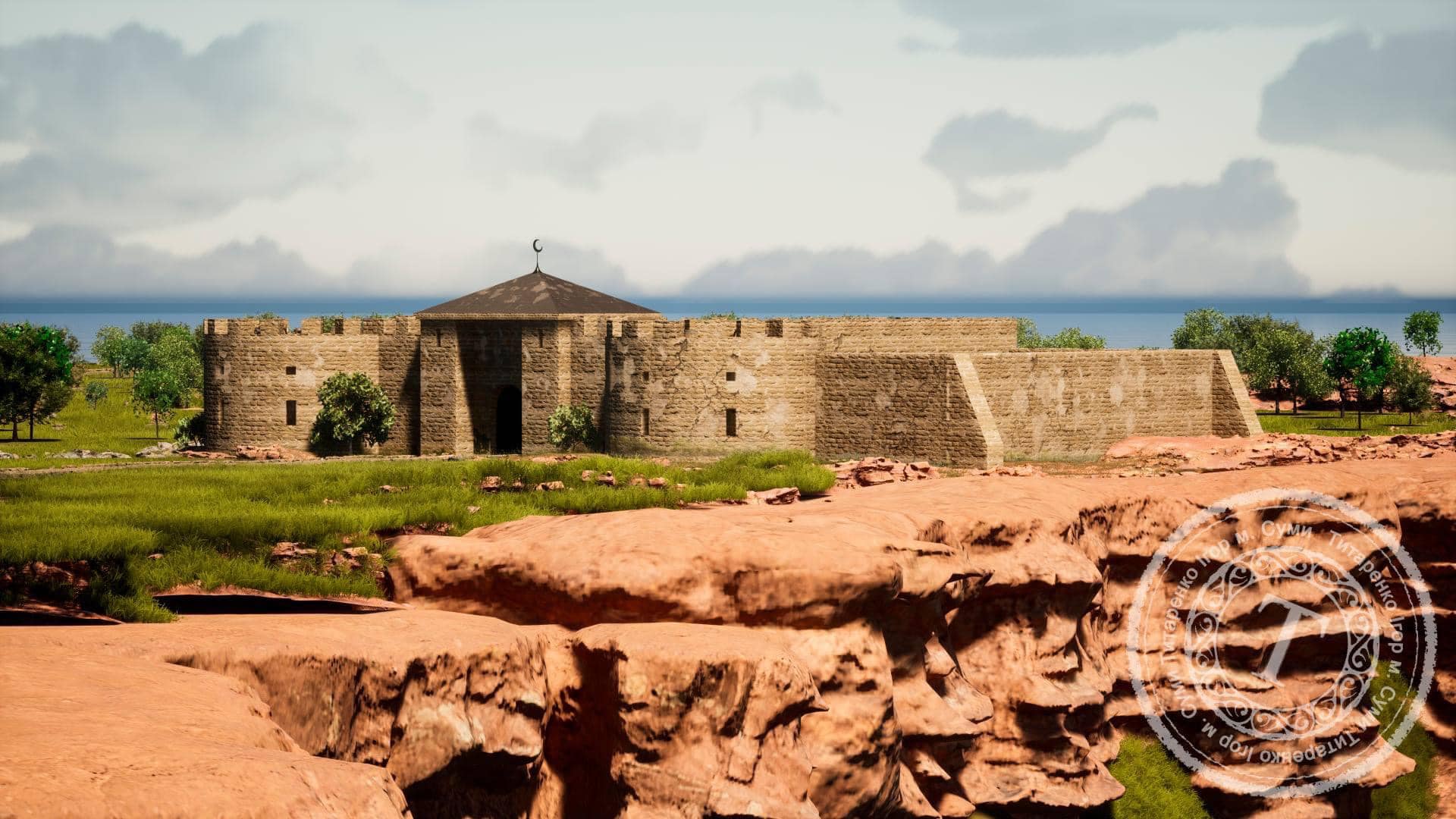
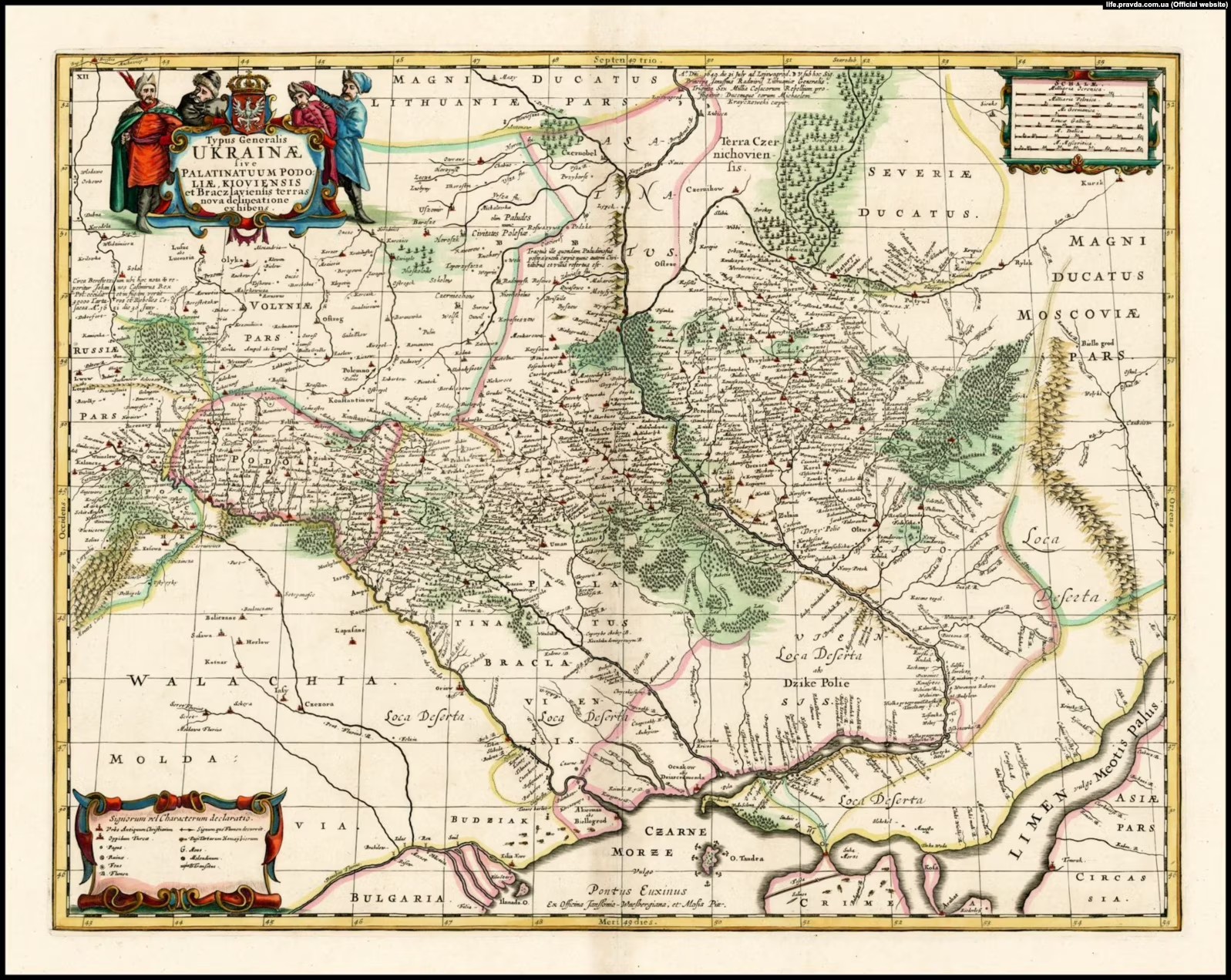 ХThe term “Khan’s Ukraine” refers to the northern part of the Ochakiv land, extending from the Southern Bug along the Kodyma and Yagorlyk rivers to the middle course of the Dniester. In ecclesiastical sources, Khan’s Ukraine is sometimes equated with the entire territory of the Bug-Dniester interfluve. The administrative center of the region can be considered to be Dubossary, Balta, and Holta. Along the Southern Bug, Khan’s Ukraine shared a border with the Zaporizhian Sich, while along the Kodyma and Yagorlyk rivers to the Dniester, it bordered the Bratslav Regiment of the Hetmanate.
The establishment of this territory was initially connected to the acceptance of part of the Cossack army into Ottoman vassalage and its placement in the northern borderlands of the Ochakiv land, primarily along the Dniester, Kodyma, and Bug rivers. The majority of the population in this region comprised Ukrainians, Moldovans, and Danubian settlers. The latter were mostly Bulgarians who had fled in large numbers from the central regions of the Silistra-Ochakiv and Rumelia eyalets to Moldavia, and later migrated along with Moldovan settlers to Ottoman Bessarabia. It is noteworthy that the regions of Moldovan Bessarabia were well-known to the Cossacks due to the campaigns of Tymofii Khmelnytskyi, Petro Doroshenko, and other Hetmans. Some Cossack groups settled in villages along the Dniester border.
The emphasized Christian character of this administrative-territorial formation led to the emergence of the name “Khan’s Ukraine,” which significantly differs from the terminology of the Ottoman administrative division. In official Slavic and Moldovan-Wallachian chronicles, this territory was already referred to as such by the early 18th century, particularly in the correspondence of the Moldovan agent Lupul to the Russian authorities in 1737. As noted by A. Kochubynskyi in his work, “Cossack parties should… carry out attacks into Khan’s Ukraine.” It is worth mentioning that in 18th-century sources of Russian origin, this territory was also known as “Han’shchyna” (the land inhabited by Christian populations under Khan’s administration), “Tatar Wallachia,” “Wallachian Tatar” and even “Khodzhabey Tatar” (due to the significant role of the Khodzhabey fortress, now known as Odesa).
The introduction of traditional Cossack governance among the predominant Ukrainian population in the region explains the presence of the toponym “Ukraine” in its name. Moreover, this is an ancient term that has been used for this region since the times of the Polish-Lithuanian Commonwealth to denote the borders of historical Ukrainian settlement. The person appointed to govern Khan’s Ukraine was referred to as “Hetman,” further confirming the existence of a dominant Ukrainian element in the region. In turn, the term “Khan’s” indicates the political and administrative dependence of the region on the Crimean Khanate, thus emphasizing its antithesis to the neighboring region of “Polish Ukraine.” A particularly interesting example of the combination of Tatar and Ukrainian dominance in the governance of the region was the appointment of a representative from Bakhchisaray to Khan’s Ukraine, holding the title “Hetman of Dubossary.” It should be noted that the terminology such as “Khan’s Ukraine,” “Hetman,” etc., was used only in Slavic and Moldovan-Wallachian sources.
In contrast, official documentation in Ottoman Turkish did not contain any instances of this terminology concerning the region. In Ottoman sources, the name “voivodalık Tombasar” (Tombasar being the Ottoman name for the village of Dubossary – طومباصار, Tombasar) was predominantly used, with this administrative-territorial unit headed by a voivode: “the land of the Voivode of Dubossary” or “the voivode of the side (district) of Tombasar” (Tombasâr cânibi). A more detailed definition of the Ottoman form of governance in these territories, along with the titles and positions, will be provided below.
The presence of border territories between the Ukrainian Hetmanate and the Crimean Khanate led to the emergence of regions similar to Khan’s Ukraine and leaders under the khan’s protectorate. Thus, as early as 1668, Petro Sukhovienko (Sukhoviya) became the Hetman of Ukraine under the protection of the Crimean Khanate. By 1672, there was an Ottoman province in Western Podillia with its center in Kamianets-Podilskyi, where the Ottoman governor resided. In contrast, Eastern Podillia, controlled by Petro Doroshenko, formed a sort of “Ukrainian vilayet” following a treaty to jointly defend Ukraine against Muscovy. Subsequently, we see more than one Ukrainian leader acknowledging dependence on the Ottoman Empire or the Crimean Khanate. The Crimean khans, in the 1670s, acted not only as intermediaries in negotiations between the Ottoman Empire and other states regarding Ukrainian matters but also attempted to pursue an independent policy separate from the Ottoman Empire, exploiting the contradictions between Moscow and Warsaw to subjugate the entire Ukrainian territory or parts of it. Under the influence of pro-sultan, pro-Crimean, and pro-Polish hetmans, the aforementioned territory gradually began to revolve more around the interests of the Right-Bank Hetmanate. Taking into account the conditions of the Bachchisarai Treaty between the Ottoman Empire and Russia in 1681, the southern part of the Right-Bank Hetmanate was initially overseen by Yurii Khmelnytskyi, the “prince of Little Russia and leader of the Zaporozhian Host,” under the sultan’s protection, and from late June 1681, by Moldovan hospodar Georghe Duca, to whom the sultan transferred the “Turkish” part of Ukraine for administration. He facilitated the rapprochement of the territories of Khan’s Ukraine, the Right-Bank Hetmanate, and the left-bank areas of the Dniester, including through policies aimed at settling the devastated Right Bank and restoring the Cossack structure there. Almost simultaneously, in 1681, the Crimean khan, taking advantage of the absence of real power over the southern regions of the Right Bank, imposed taxes for the use of forests, salt extraction, and fishing.
The incorporation of the lands of Khan’s Ukraine into the sphere of interest of Ukrainian leaders continued with the “conquest” in 1683 by pro-Polish Hetman Stefan Kunytsky of a significant territory in the Northern Black Sea region. Despite the international situation following the victory over the Ottoman Empire at Vienna in 1683, in the mid-1680s, the power of the empire and the Crimean Khanate spread over Eastern Podillia and parts of Bessarabia. On one hand, the Crimean Khanate, considering the complicated situation in the Ukrainian Hetmanate, gradually turned the territories of future Khan’s Ukraine into a sort of springboard for supporting the “Ukrainian vilayet,” acting as a factor of control and pressure on the Right-Bank Hetmanate and the Moldovan principality. On the other hand, the leadership of Khan’s Ukraine could act as a representative of the interests of the Ukrainian population before neighboring states. As noted by Oleksandr Ogloblіn, “this Khan’s Ukraine had its Hetman, who was recognized by the Crimean khan and who represented something intermediate between a vassal of the Crimean khan or an official appointed over the local Ukrainian population“.
In the summer of 1684, after the expulsion of Moldovan hospodar Georghe Duca from the Right Bank, Sultan Mehmed IV proclaimed the Cossack colonel Teodor Sulimenko (Sulimko) as the new Hetman of the Turkish part of Right-Bank Ukraine (according to the Zhuravnen and Bachchisarai treaties). He can probably be considered one of the first hetmans of Khan’s Ukraine; he was appointed at the direct suggestion of the Crimean khan and began his activities from the territory of the left-bank Bessarabia, which was under the khan’s control. The hetman’s residence was established in Yagorlyk. The sultan granted Sulimenko “colors, banners, drums, and other insignia” for him and his judges. The main task of the new hetman was to return the Right Bank part of Ukraine that had been lost to the Ukrainian-Polish forces. After unsuccessful attempts by Teodor Sulimenko to capture the Cossack centers of Nemyriv and Bratslav in the fall of 1685, he was defeated in Yagorlyk by the Cossacks of pro-Polish Hetman Andrii Mohyla, captured, and executed. The unfortunate successor of Teodor Sulimenko was Hetman Samchenko. The latter died during another attack on Nemyriv at the end of 1685. Through their reckless actions, T. Sulimenko and Samchenko destroyed the efforts of previous hetmans to colonize the lands of Right-Bank Ukraine.
The new hetman of the Khan’s Ukraine was appointed by the sultan at the turn of 1685–1688. His name was Stecyk (also known by various versions such as Stec, Stecyk Tyahynskyi, Stetsko, or Stepán Yagorlytskyi). Stecyk’s figure is also identified with the Cossack colonel Stepan Ivanovych Lozynskyi, who fought against the Cossack troops of Petro Doroshenko and later served among the colonels of the acting hetman “his royal grace” Ostap Hohol. Stecyk’s residence remained Yagorlyk. From there, he sent out edicts calling on the population of Right-Bank Ukraine to submit to the sultan and khan. Following the example of his predecessors, Stecyk, along with the Tatars, attacked and temporarily captured Nemyriv. Starting in 1690, he came under the control of the Crimean khan, who ordered him to defend the fortress of Soroki from Polish and Cossack troops. Despite significant shifts of Stecyk’s Cossacks to the Polish side, the hetman himself remained loyal to Turkish-Tatar protection. Stecyk’s Cossacks subsequently fought multiple times against the Right-Bank colonels S. Paliy, A. Abazyn, and Samus. During one of the campaigns of the “Polish” Cossacks in the fall of 1695 against the “Stecyk villages” or “khan’s villages” in the Dubossary area, Stecyk was mortally wounded.
In 1695, the new hetman of the Khan’s Ukraine became Petro Ivanenko, appointed by the Crimean khan, who, according to various sources, held this position until 1712. In 1692, former scribe in Ivan Mazepa’s government, Petro Ivanenko (Petryk), opposing the Ukrainian ruler, was elected by the Sich Cossacks to the hetman position. In May 1692, he arrived in Crimea, where, on behalf of the “Duchy of Kyiv, Chernihiv, and all the Cossacks of Zaporizhzhia,” he confirmed a treaty with the khan regarding “eternal peace and brotherhood” and mutual defense against Moscow and Poland. The Crimean khan, in turn, recognized Petryk as hetman of Ukraine and provided him with military assistance to resist the Moscow troops. Petryk’s defeat in the military campaign led to his retreat to Ottoman lands and the placement of him and his army in a designated area along the Dniester.
At the same time as Petryk, we have information about several other hetmans of the Khan’s Ukraine on the border of the 17th and 18th centuries. Thus, in 1698, during the campaign of Left-Bank troops to the Black Sea region, a letter appeared among the Cossacks from the “hetman by the khan’s grace” Ivan Bahatyi. In it, he called on the population of Left-Bank Ukraine to abandon Moscow’s protection and come under the suzerainty of the Crimean khanate. Some assumptions suggest that Ivan Bahatyi and Petro Ivanenko were one and the same person.
After the decision of the Polish Sejm in 1699 to eliminate the Right-Bank regiments, part of the Cossacks led by colonels T. Mayatskyi and F. Shvachka, who were based in the town of Dashkiv (now Vinnytsia region) and its surroundings, came under the protection of Crimean khan Devlet Giray II. Preparing for war with the Turks and Tatars, the Left-Bank hetman government sent special scouts made up of Cossacks to the areas bordering the Southern Bug and Dniester to describe the routes and communications from the mouths of the Dniester and Danube rivers. That same year, under the terms of the Karlowitz Peace Treaty between the Ottoman Empire and Poland, the territory of Right-Bank Ukraine, which was under the sultan’s control, returned to the king’s authority. A special article concerned the “Ukrainian Cossack hetman,” who was in the service of the Ottoman Porte and whose residence was “in Wallachia.” This position was abolished at the request of the Polish side.
By the end of the 17th and beginning of the 18th centuries, the territory of the Khan’s Ukraine entered the complex administrative-territorial structure of the Ottoman Empire, known as the Silistra-Okchakov Eyalet, which was part of the Okchakov Sanjak and later the Bender Pashalik. The territorial boundaries of the Silistra-Okchakov Eyalet extended from the city of Vize in Southeast Thrace to the Dnipro River (Turk. Dnipro – “Ozi,” “Ozen,” from which the Ottoman name of the province derives – Ozi Eyaleti). The sanjaks were divided into judicial-administrative districts known as “kaza,” which included one or more “nahiyah” – administrative regions that grouped villages and estates (manors, homesteads). It is within these layers of Ottoman administration that we find the place of Khan’s Ukraine. Sometimes, Tombasar is noted as the center of judicial-administrative management with an Ottoman judge (qadi). Therefore, it is not surprising that Khan’s Ukraine is identified with the kaza of Tombasar.
The weakness of the Ottomans in controlling these territories and the historically dominant position of the Crimean Tatars in the steppe forced the Porte to transfer a greater part of the lands from the Danube to the Bug to the Crimean khanate on lease terms. Over time, the Porte, having granted significant rights to the Crimean khans for the use of the leased lands, felt empowered for independent management in the Bug-Dniester interfluve through the provincial Ottoman administration in Okchakov and Silistra. Strengthening its position in the provinces, it gradually attempted to unify the management system according to general Ottoman principles. Consequently, reforms in the governance of the provinces were carried out, especially at the borders with their arbitrary bey positions. The principle of the reforms was to impose centralized Ottoman judicial and tax management on traditional Crimean Tatar structures while gradually removing the latter. Naturally, such methods led to resistance against the central Ottoman authority and eventually to uprisings, primarily among the Nogai elite. In making concessions, the Porte established special privileges for the population in the border areas, which eased the financial burden imposed by it. Khan’s Ukraine was one of the last regions to implement the lease system.
Initially, in the 17th century, along the Dniester River, refugees from Moldova and some Bulgarians from Budjak in Lower Danube found refuge. The expansion of the “Halil Pasha Yurdu” territories in the Dniester-Danube interfluve for newly arrived Nogais prompted the relocation of this Christian population from western Budjak to the buffer border zone around the village of Dubossary. The availability of free lands in the Pridnestrovian strip and the relatively lenient laws of the Ottoman Empire towards Christian settlers attracted Ukrainian populations from Bratslavshchyna and Zaporizhzhia Sich to the northern parts of Okchakov land. Especially massive migration movements of Ukrainians were observed in the first half of the 18th century. The colonization primarily encompassed areas along the Kodima River, which continued the resettlement movement in the Dubossary and Yagorlyk regions that had begun in the 17th century.
The issue of the level of oppression of the Christian population in the Bug-Dniester interfluve by the Ottomans, the plundering of this population by the Tatar hordes, or the generally difficult situation of the local inhabitants remains a matter of debate. Considering that the Zaporozhian Cossacks massively accepted Ottoman rule and settled in this region, Ukrainians from Poland sought refuge from the Polish Confederates on these Ottoman lands as well, while Moldavians and Vlachs fled from their voivodes under Turkish protection, and Bulgarians resettled to the Danube and Dniester from the interior regions of the Balkans, it becomes possible to imagine the conditions of the people in Russia or Poland. The borderlands attracted significant human migration, allowing people to move to neighboring territories depending on the political situation.
Surprisingly, the colonization of Khan Ukraine was also facilitated by the fact that the Zaporozhian Sich came under the control of the Russian Empire, and the Cossacks became less of a concern for the Tatars and Turks with their raids. This allowed the latter to focus more on economic activities. During this time, another wave of Ukrainian settlers poured into the southern steppes. In the early 1760s, the Zaporozhian colonel of the Bug-Gard Palanka wrote that in the settlements under Ottoman rule in the Ochakiv region, “more than half of the people are like our Little Russians“. The familiarity of the Zaporozhian Cossacks with the territories of Khan Ukraine was noted by Count X. Münnich during the Russo-Turkish War of 1735–1739. Specifically, he reported that information about the communication routes (in the interfluve of the Southern Bug, Dniester, and Danube) was obtained from those “who knew the area—Cossacks and local residents, especially through the Zaporozhian fishermen and marksmen“.
As a result, by the end of the 18th century, the territories of the Ochakiv land along the rivers Kodima, Yahorlyk, and Dniester, up to the Bender holdings, had become populated by Ukrainian or Cossack, Moldavian, and Bulgarian elements. The number of settlements in this territory steadily increased throughout the 18th century and amounted to up to 30 towns and villages. As the 19th-century historian O. Lebedintsev wrote, “there is no doubt that this [Khan] Ukraine had… a significant population“, and before its incorporation into the Russian Empire, there were already “60 [church] parishes with Orthodox populations“, which led Moldavian metropolitans from the 1760s to add to their title the designation of “metropolitans of the entire Danube and Dniester coast and all Khan Ukraine“. The majority of settlements in Khan Ukraine were undoubtedly located in the northern part of the Ochakiv land, primarily along the rivers Kodima, Yahorlyk, and the Dubossary part of the Dniester. However, it is worth noting the existence of a number of settlements beyond this enclave that were under the authority of the Dubossary voivode, such as the village of Yaske in the lower Dniester.
Khan’s Ukraine, as a border territory with Poland, Moldavia, and the Zaporozhian Sich, held a special place in the Ottoman Empire’s and the Crimean Khanate’s economic lease system. It is necessary to note the existence of quite different methods of administration in the so-called mukataa, compared to the Ottoman territories where centralized authority was established. The diverse confessional and ethnic composition of the population in the border regions prompted the Ottoman authorities to form additional administrative structures according to their traditional governance.
The name of a mukataa territory is usually determined by the name of the administrative center of the territorial unit where it is located or one of the dominant populated areas included in it. The remaining territories with villages, fields, and rivers are referred to as “belonging to [the mukataa].” The name of the settlement by which the mukataa is identified is used more as a “heading” for the corresponding tax source, rather than as its main object of taxation. Before determining the approximate location and territorial coverage of a given mukataa by name, it is always emphasized that it is part of the Sultan’s ‘has’.
In the early 1740s, the process of creating a fully-fledged administrative region, independent of the Muslim administration of the Ochakiv sanjak, was renewed. Christian communities here were organized into a separate administrative-territorial region with its center near the Dniester River in the village of Dubossary (دوبروصاری, Dubrusârı). It is worth noting that in Ottoman-Turkish sources, the Moldavian name of the village Dubossary appears in a slightly modified form, similar to Turkish vocalization—Tombasar. An exception might be a few cartographic works commissioned by the Ottoman military department, where European cartographers mark the well-known name according to the Moldavian model.
The name of the settlement Tombasar, according to Ottoman rules of state governance, transforms into the name of the administrative, judicial, or economic management unit. From the 1740s, the northern part of the Ochakiv land is most often mentioned in sources as a mukataa or has. It was under such combinations with Tombasar that the region’s names existed in Ottoman documentation: “Tombasar mukataası” or “Tombasar Hası mukataası”.
In the second half of the 18th century, during the appointment of administrators in Khanska Ukraine, the town of Tombasar was designated as the center of the territorial-administrative unit known as the “voivodalık,” within which several or even one large land-based mukataa could be included. For example, in 1785, a treasurer named Ibrahim Bey was appointed to the “Tombasar voivodalık” (Tombasar Voyvodalığı’nın Hazinedar zade İbrahim Bey). It is highly likely that this was due to the consolidation of the mukataa of Budjak and the mukataa of Tombasar under the single leadership of the Dubosar voivode within the newly established Bender Pashalik in the second half of the 18th century. An official endowed with the authority to manage the Sultan’s land in the “voivodalık” territorial-administrative unit was known as a “voivode.” The voivode was responsible for collecting revenues from the has lands and later from the mukataa belonging to the Sultan and the higher provincial officials (beylerbeys, sanjakbeys, and the Crimean khan). The voivode held financial, administrative, and policing powers, as well as the authority of one of the officials of the judicial-administrative district, the kaza, where he acted and was recognized as one of the leaders of the local administration. It should be noted that until the 17th century, in smaller administrative units than kaza, known as nahiyes, voivodes appointed by the sanjakbeys also exercised leadership, carrying out the orders of the Sultan or the beylerbey.
Occasionally, references are made to the position of “voivode of Dubosar” alongside that of the “voivode of Moldova” (Tombasâr voyvodası ve Moldova voyvodası), though this in no way implies their equivalence. In Slavic and Moldavian-Wallachian sources, the title of the Dubosar voivode is often rendered as “Hetman of Khanska Ukraine” or “Hetman and Guard of Dubosar,” titles preserved in the region since the first deployment of Cossack detachments there, accepted into Ottoman allegiance. When comparing the title “voivode of the Tombasar mukataa” within the provincial administration of the Ottoman Empire to the title “Hetman of Khanska Ukraine” in the traditional Cossack custom and context, it is important to note that representatives of the Ottoman authority and the Cossack leadership applied these titles to the same person but with slightly different meanings regarding the functions of that official.
Thus, based on Ottoman-Turkish documents, it can be asserted that the lands of the northwestern part of the Bug-Dniester interfluve at the end of the 17th century, as a Sultan’s has, were granted to the Crimean Khan. Economically, these lands were leased out to the Crimean Khan and, under Ottoman administration, were organized as fiscal-territorial units with judicial and fiscal immunity – the mukataa.
There is no information on the administration of Khanska Ukraine in the first half of the 18th century, but it can be traced that it existed throughout the entire century until it came under Russian administration. In particular, the 1714 description of the route from Kyiv to Istanbul mentions the governance structure of this territory and its borders, starting from the fortification of Yahorlyk to the Bender sanjak: “Yahorlyk stands on the Dniester in a valley… and with that Yahorlyk ends the Polish border. It is owned by the Crimean Khan, and Dubosary is two miles from it. As assigned by the Khan, Yahorlyk and Dubosary were governed by a traitor [to Russia] named Plyaka, who was a centurion in the Novoserhiivskyi [regiment] near the Samara River. … Now Yahorlyk is governed instead of Plyaka by the centurion Yahorlyk Cossack named Apostas, and Dubosary is governed by Khvastovsky Cossack Hryhoriy Aleichenko, who previously served under Paliy. … From Yahorlyk to the village of Belyakovka is two miles of hilly road. It is a village of the Bender pasha, standing on the Dniester in a hollow“.
The Crimean Khan invited Christian populations from troubled Russian and Polish territories to Khanska Ukraine, which allowed the northwestern part of Ochakiv land to be populated quickly. In return, the Khan reaped significant economic benefits from the growing revenues of the villages under the control of the Dubosar “Hetman-voivode”.
Khanska Ukraine in the second half of the 18th century was characterized by an increase in population and the stability of this administrative unit. A vivid testament to this is a report from the Zaporizhzhia Sich regarding new settlements along the Kodima River, prepared by the translator Konstantynov at the request of Russian border authorities. During a trip to the fair in Balta in 1763, disguised as a Russian merchant, the Zaporizhzhia envoy reported: “In those slobodas and towns, live Vlachs, Jews, and, in every sloboda, more than half of the population is of Little Russian [Ukrainian] origin. How many Russians are in these areas and towns cannot be determined. In all these new slobodas, the inhabitants live without any imposed obligations due to the novelty of these settlements. In the older slobodas: Holma, Prilyoty, and the town of Balta, the inhabitants are under the jurisdiction of the Moldavian [Dubosar] Hetman, from whom they are taxed a tenth of their livestock and industrial income annually“.
The Crimean influence in Khan’s Ukraine strengthened in the 1750s with the appointment of Yakub Ağa, a close subordinate of the Crimean Khan and a former interpreter, to the position of hetman. According to some sources, his full name was Yakiv Izmailovych Rudzewicz. As Dubosar voivode, he continued to cooperate with Russian intelligence on the border, as he had done during his service at the Bakhchisarai court. This ensured his loyalty to the Russian border authorities and earned him a steady pension from Russia. The Crimean Khan, unaware of Yakub Ağa’s treasonous activities, continued to support him, considering him one of his closest and most loyal subordinates. Moreover, when provincial authorities in the Silistria-Ochakiv Eyalet received reports of Yakub Ağa’s espionage, he was accused of treason, but the Crimean Khan defended his interpreter and sent him to Dubosary as his trusted appointee.
In the 1760s, the Russian border authorities established closer ties with Voivode Yakub Ağa, using him as a key intermediary in relations between Russia and the Crimean Khanate, allowing him to benefit from both sides. For example, during the 1763 uprising in the village of Holta, where the Polish, Ottoman, and Russian borders converged, the local kaymakam, an Armenian named Gabertov, fled to Russian territory, but Count Rumyantsev returned him to the Khanate, facilitating direct communication with the Dubosar Hetman. The meeting between the count and the hetman took place in the town of Balta. Hetman Yakub explained his appointment to the border region of Khanska Ukraine by the Crimean Tatars’ concerns over the construction of the Russian fortress Orlov across from the Tatar town of Holta. Strengthening his position, Yakub appointed his brother as kaymakam in the village of Kryve Ozero, an important point on the Kodima route midway between Orlov and Balta, which allowed control over the entire northern border of Ottoman territories along the Kodima River down to its confluence with the Bug River.
Thus, during the frequent changes of khans in Crimea, Russian intelligence sought to cooperate as closely as possible with Hetman Yakub as a confidant, ensuring a constant source of information. This, in turn, led to effective decisions in the inevitable conflict between the Russian and Ottoman Empires. The continuation of relations between the Russian administration in Oryol and Hetman Yakub, which began in 1763, faced no difficulties. Moreover, the Russian administration no longer opposed resettlement “toward the Crimean side” and allowed the free movement of Ukrainian Cossacks. This intensified intelligence activities by sending “officials to the Turkish region under honorable cover for reliable reconnaissance“, which provided much greater opportunities to ascertain the population along the Kodyma route. The Russian authorities justified the establishment of Christian settlements on the Tatar side not only by the trade profits but also by stating that “during military events, we can reasonably expect that Christian settlers, due to shared faith, will be more favorable to us [Russians] than to the Turks and Tatars“.
In addition, Polish magnates on the border, though suffering from the flight of Ukrainians to Khan’s Ukraine and the Dniester region, established direct ties with the Dubăsari voivode to gain direct access to Bendery and Ochakov, bypassing transport near Oryol. To this end, the ruler of Uman, Vincent Potocki, advised the Tatar administration to strengthen the aforementioned Wallachian settlement of Holta at the confluence of the Bug and Kodyma rivers, opposite the mouth of the Synyukha River. By 1763, the Polish officer Bastevik, while at the khan’s court, reported that “the khan informed him of plans to settle the Wallachians in a settlement on the Crimean side near the Bug River“. That same year, reports from Oryol noted that Captain Burlaka was founding a settlement with the khan’s permission “near the mouth of the Kodyma River, downstream of the Bug, opposite the Oryol settlement, where he was allowed to settle Wallachians and Jews of the merchant class, but Turks and Tatars were not allowed to reside there, except for travelers, to avoid conflicts with Russia … A fair was planned in the newly established settlement“. According to reports from Petro Kalnyshevsky, the Koshovyi Otaman of the Zaporizhzhya Sich, to Hetman Kyrylo Rozumovsky in 1764, across the Southern Bug River there were: “1) the settlement of Holta, since 1762, located by the Bug River at the Russian border, opposite the settlement of Oryol (now Pervomaisk in Mykolaiv Oblast), with 30 houses; 2) the second settlement – Kryve Ozero – near the Kodyma River, opposite the Polish settlement of Kryve Ozero, about 20 versts from the Russian border, settled in 1762, with 40 houses; 3) Yaseneva settlement – upstream on the same Kodyma River, opposite the large Polish settlement of Yaseneva, about 60 versts from the Russian border, settled since 1761, with 20 houses; 4) Holma settlement, upstream on the Kodyma, opposite the Polish town of Holma, about 70 versts from the Russian border, settled about 10 years ago, with around 300 dwellings; 5) Pereloty settlement on the Kodyma, about 30 versts from the Russian border, settled about 10 years ago, with over 100 inhabitants; 6) Balta city, opposite the Polish town of Paliyiv Ozero, about 80 versts from the Russian border, upstream on the Kodyma; settled over 15 years ago, with more than 500 dwellings. In these settlements and the city, Wallachians, Jews, and, in fact, more than half of the people in each settlement are of our Little Russian [Ukrainian] origin … In all the new settlements, the inhabitants live free of obligations due to the novelty of these colonies. In the older settlements – Holta, Pereloty, and Balta – the inhabitants are under the authority of the Wallachian Hetman, to whom a tenth of all income from livestock and industry is paid annually“. Later, the Zaporizhzhya elders of the Bugo-Gard Palanka reported the founding of other farming points: Hydyrim, Bobrynets, Ananyev, Gandrabury, and others. The active colonization of Khan’s Ukraine and its economic development contributed to the economic revival and growth of surrounding areas in modern southern Ukraine, particularly the fort of Khadjibey (Odesa).
Polish magnates on the borderlands, which they owned on the left bank of the Bug and Synyukha rivers, often attempted to establish their settlements and fortifications on the Polish side opposite Oryol as early as 1761. However, since the Polish-Russian border was not officially established, these efforts were met with resistance from the Russian border authorities. In 1763, Russian intelligence reported that “the Poles established a ferry 100 fathoms from the Synyukha River, upstream along the Bug, and built thatched huts and stables.” The same intelligence reported that “the population of Polish origin (meaning Ukrainian peasants) was growing along the Synyukha River.” Given the already existing Ottoman and Russian settlements, as well as the additional Polish “reinforcement“, it is clear that the region of Khan’s Ukraine became a powerful international triangle of complex relations, a point where the interests of the Ottoman Empire, Poland, and Russia collided and intertwined. The greatest irritation in Russia was caused by the establishment of direct transit from the Polish city of Uman to Ochakov, which caused economic losses to the Russian treasury, as it disrupted Russian dominance over trade routes passing through Russian customs (usually via Oryol).
In addition to the route near the Holta settlement, access from Poland to the Ochakov region also existed through Kryve Ozero, Paliyiv Ozero, and Balta. A trade route to Ochakov had passed through Paliyiv Ozero for several centuries, along the “Tatar territory of Tiligul”. However, due to the instability on the border at that time, the so-called “Bender Route” was more frequently used, starting from Russian territory “through the Saint Elizabeth fortress and reaching the border, from there through the Tatar areas to Bendery“. Control over the strategically important transport hubs was exercised through the appointment of officials at customs in Holta, Balta, and Yahorlyk, with most of them coming from Hetman Yakub’s family or his trusted friends – usually Crimean natives.
The Ochakiv lands gained increased economic appeal following the large-scale popular uprising in Polish Ukraine in 1768. The events impacted Turkish territories, particularly in the villages of Balta and Holta, which consequently spurred the beginning of the Russo-Turkish War of 1767–1774. The state of war, disrupting the use of trade routes to Ottoman territories through Poland, led to a revival of southern trade routes toward Moldavia and the inner Ottoman possessions of Rumelia. Concurrently, the infrastructure of the Ochakiv lands developed, and new settlements formed around the main routes, often at the sites of former postal stations in the central part of the Bug-Dniester interfluve (for instance, the village of Kuyalnik, which arose from a former postal station). There was a notable increase in resettlement to Khan’s Ukraine due to the establishment of a route to Moldavia and Bendery along the flow of the Kodima River, a key transportation artery in the region. The significance of the “Bendery route” through the central part of the Ochakiv lands increased substantially after the emergence of several new settlements in this remote region, far from administrative centers.
Thus, the northern border territories of the Ochakiv lands gained considerable importance in the political, and especially economic, relations between the Ottoman Empire, Poland, and Russia. Establishing proper control over these border territories and limiting Ottoman influence in the strategic interests of the Crimean Khanate led to the appointment of one of the Khan’s most trusted confidants to manage Khan’s Ukraine. This individual turned out to be the translator Yakub-aga.
As a result of the Russo-Turkish War of 1767–1774, the Ochakiv lands remained under the control of the Ottoman Empire, while Crimean governance in Khan’s Ukraine was abolished. The central administration of the Ottoman Porte was re-established within this region, with Ottoman administrative structures restored in the territorial boundaries of the Tompasar muqata’a through the creation or re-establishment of the administrative-territorial unit “kaza Tompasar”. In terms of fiscal administration, the appointment of a local treasurer (defterdar) highlighted the region’s importance for the Ottoman Empire, which expected to gain new economically significant labor resources.
During the Russo-Turkish war, the population of Khan’s Ukraine decreased by half, but thanks to resettlements from inner Bessarabia to the Dniester and the stationing of Cossacks in winter quarters in the Kodima region, the Ottoman administration managed to maintain the region’s status as an administrative unit (kaza). Particularly striking were the large-scale movements of Moldavian and Bulgarian populations to the Dubossary region from the border territories of “Halil Paşa Yurdu”, lands in Moldavia prepared for the settlement of new Nogai-Tatar hordes from Crimea and Kuban, who refused to accept Russian citizenship. The chaotic nature of these migrations from Moldavia and Wallachia to the Tompasar region (Tombasâr cânibi) during the interwar period became so severe that, as they began to lose control over the Bug-Dniester interfluve in 1791, the Ottomans insisted on preventing the unauthorized relocation of Ottoman Christian subjects under Russian administration. The focus was primarily on maintaining settlement boundaries in the lands of Bessarabia, Moldavia, and Dubossary.
The administrative subordination of the former Khan’s Ukraine, or now the re-established kaza Tompasar, underwent changes during the general reform of the provincial administration of the Ottoman Empire. Given the vast size of the Silistria-Ochakiv Eyalet, a separate administrative unit with distinct management emerged in the northern provinces—Bendery Pashalik. The territory of “kaza Tompasar” and “kaza Kaushany” were incorporated into this unit. The latter had also been organized within the muqata’a Halil-Paşa Yurdu and muqata’a Bessarabia as “kaza Kaushany”, following the liquidation of Crimean administration in Bessarabia.
The brief interwar period (1774–1791) of direct Ottoman governance ended with the signing of the Treaty of Jassy in December 1791, followed by the implementation of Russian administration in the former regional center of Dubossary. Therefore, it can be assumed that the creation of Khan’s Ukraine was motivated by the specific ethnic composition of the region’s population, but the nature of its administration reflects the priority given to the potential for political and economic gains by the Tatar leadership. The existence of Khan’s Ukraine under the jurisdiction of Bakhchisarai allowed the Crimean Khan throughout the 18th century to maintain key positions in the political relations between the Ottoman and Russian Empires. After the destruction of the Crimean Khanate by Moscow and the liquidation of the Bakhchisarai court, the existence of Khan’s Ukraine itself came to an end.
___________________________
ХАНСЬКА УКРАЇНА В ІСТОРІЇ СХІДНОЇ ТА ПІВДЕННО-СХІДНОЇ ЄВРОПИ (кінець XVІІ–XVІІІ ст.)
Бачинська Олена (м. Одеса)
Доктор історичних наук,
професор Одеського національного
університету ім. І. Мечникова
Середа Олександр (м. Коломия)
Кандидат історичних наук,
науковий співробітник Інституту
сходознавства ім. А. Кримського НАН України
________________________________
The Development of Odesa: Architects and Builders of Ukrainian (Cossack) Origin
In 1797, an imperial decree noted that Ukrainian Cossacks not only settled in the territory of the former Hadzhybei fortress (including Peresyp) but also “established farms and built their own homes.” According to incomplete data from Odesa historians I. and H. Sapozhnikov, between 1794 and 1820, 635 Black Sea Cossacks and their relatives lived in Hadzhybei and Odesa, a considerable number for a city of only a few thousand at that time.
The author of the plan for Odesa’s development was Andrian Hrybovsky, a descendant of the Cossack nobility and a state secretary to Catherine II. Among the descendants of the Cossacks, we can mention Yelysei Slabchenko, an ordinary stonemason in the farms near Odesa and a worker in Odesa’s marble workshops. He was the father of the prominent Ukrainian historian Mykhailo Slabchenko. Mykhailo recalled helping his father with his difficult work from an early age.
It was the Ukrainian Cossack community that provided Odesa with its first builders. One notable example is the extensive Shostak family. One of its members, Antin, worked as a military engineer in southern Ukraine at the end of the 18th century and into the 1810s. Together with F. Devolan, he surveyed the local harbors in 1793 and selected the site for the future city. In the early 19th century, he lived in Odesa and, as a private building contractor, constructed the Great Mole in the Odesa port,
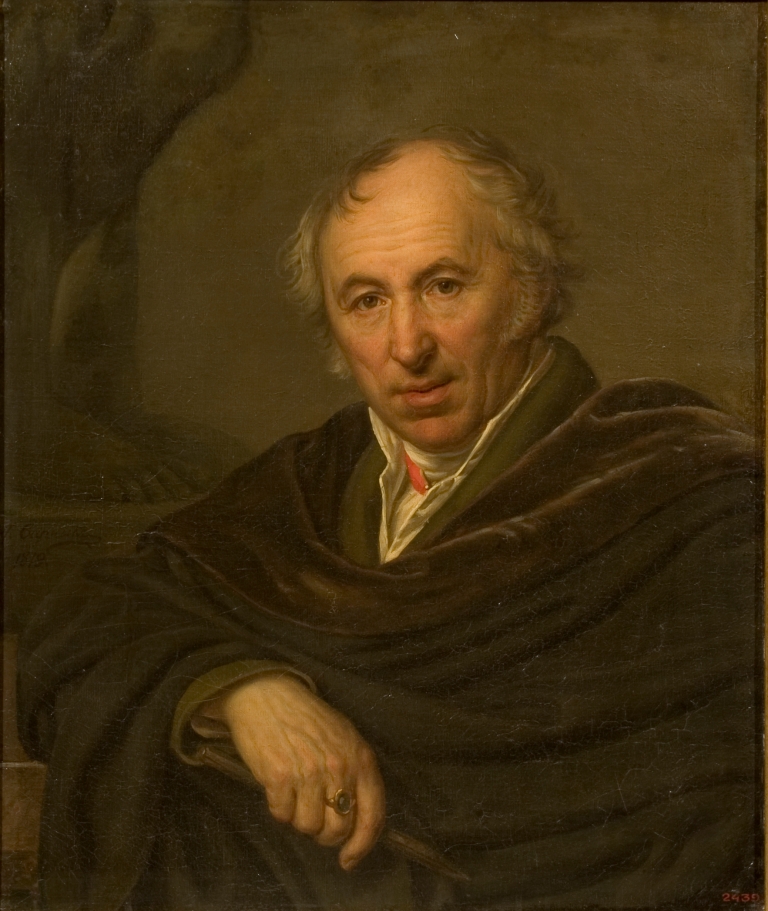 Another descendant of the Cossacks, the famous sculptor, academician, and professor Ivan Martos, created one of Odesa’s modern symbols between 1823 and 1828 — the bronze statue of the city governor Armand de Richelieu. Today, this monument, along with the nearby statue of Empress Catherine II, symbolizes two vectors of the city’s development: European and imperial-Asian. The Frenchman, standing with his back to Catherine II, seems to indicate to modern Odesans how Europe might view them if they follow the ideas of the Russian empress (in 2023, Odesans made their choice, and the monument was dismantled). Ivan Martos’ son, Oleksiy, was one of the first Ukrainian-centered historians of the 19th century and a passionate supporter of implementing Ivan Mazepa’s plans.
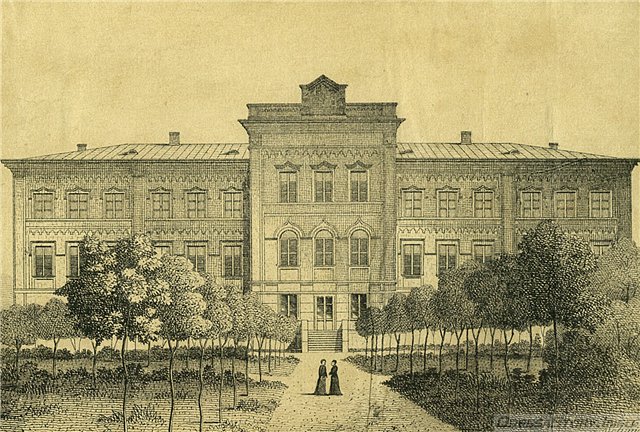
In the second half of the 19th century, three Ukrainian architects continued the legacy of these artists. Panteleimon Yodko worked as the architect for the Richelieu Lyceum and the Novorossiysk University. His designs in Odesa included the Astronomical Observatory, buildings on Staroportofrankivska and Koblevska Streets, a three-story wing of the consistory in the courtyard of an estate on Sofiivska Street, and many other structures. Some of the buildings designed by P. Yodko have not survived, but the house at 48 Bohdan Khmelnytsky Street still reminds us of this Ukrainian architect today.
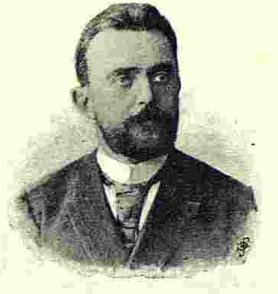 Many buildings in the center of Odesa, particularly on Rishelievska, Yamska, and Ekaterininska Streets, were built by Dmytro Telezhynskyi.
However, the greatest contribution to Odesa’s architecture among Ukrainian architects in the second half of the 19th century was made by Ivan Yatsenko, an auxiliary technician in the construction department of Odesa’s city council (since 1888). Among the dozens of structures he erected, notable ones include charitable centers, churches, the city mud baths and children’s resort in the park on the Khadzhibey Estuary, the residential building of the editor of the “Odessky Listok” newspaper, Navrotsky, on Langeronivska Street, and the “Versailles” Hotel at the corner of Hretska Street and Krasnyi Lane. Symbolically, I. Yatsenko also built a residential building on one of the few streets in Odesa that marked the Ukrainian presence here — Malorosiiska Street.
The first quarter of the 20th century gifted Odesa a whole pleiad of outstanding Ukrainian architects. Among them, particular respect is due to Fedir Pavlovych Nesturekh (Neshturkha) and Yakiv Matviyovych Ponomarenko, who openly demonstrated their dedication to Ukrainian identity and culture, which did not hinder them from holding prominent positions in Odesa’s social hierarchy.
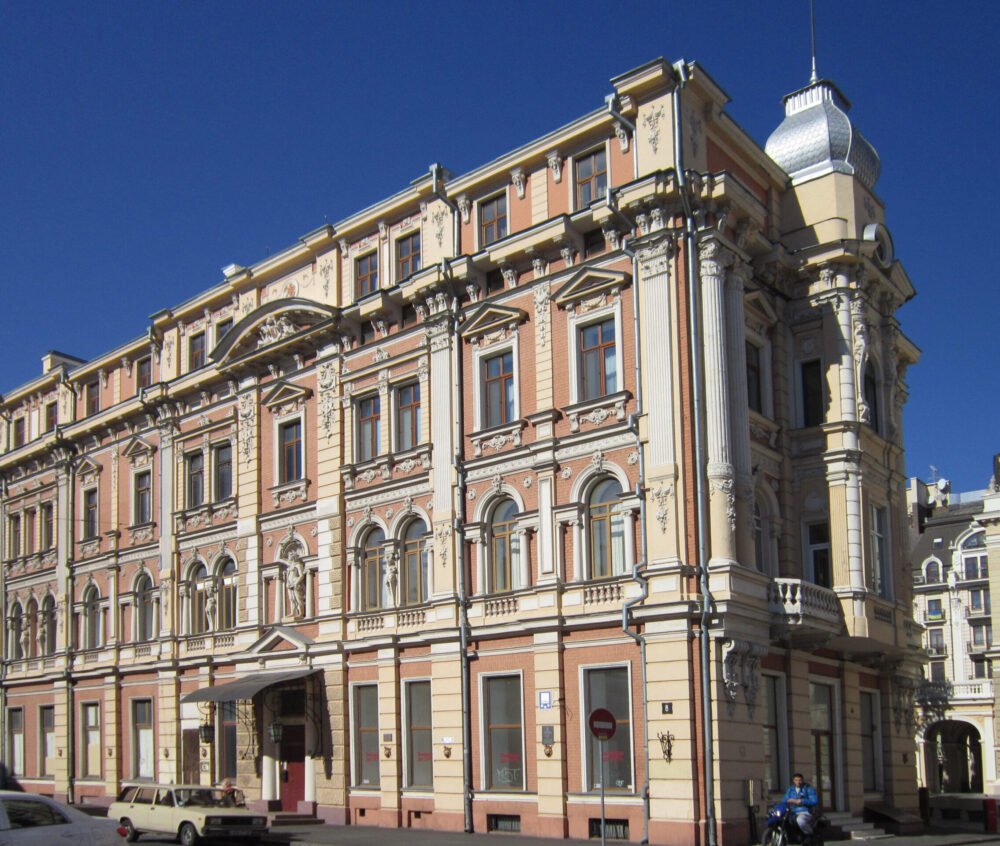
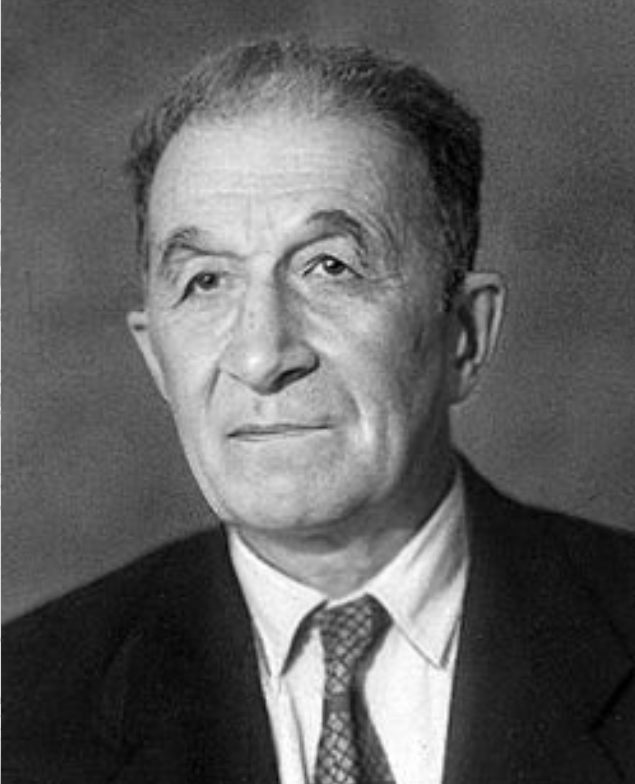 Fedir Nesturkh was born in Odesa into a family of printers, descendants of Ukrainian Cossacks from the Neshturkh family. After studying at the Saint Petersburg Academy of Arts and working as the city architect of Pskov in 1900, he returned to Odesa, where he worked as a supervisory engineer for the city mayor until 1902, and from 1902 to 1922 served as the city’s chief architect. He developed mandatory building regulations for Odesa, meticulously reviewed all project documentation to improve construction quality (for instance, in 1911, he reviewed 1,100 construction applications and completed 1,100 tasks for the city council), organized technical supervision over private construction, and reorganized supervision over municipal construction. He studied international experience in library and hospital construction in Germany, as well as the construction of markets, slaughterhouses, and refrigeration facilities. Nesturkh employed forms of neo-Baroque, modernized historical styles, and Neo-Renaissance, among others. Listing all of F. Nesturkh’s buildings in Odesa (most of which still exist) would take several pages, so here are the key ones: the Ambulance Station in Valikhovsky Lane, the City Public Library on Khersonska Street, the psychiatric hospital building in Slobidka, sea baths and bathing facilities at Bolshoy Fontan, the city baths in Otrada, the fruit passage at Pryvoz Market, and the building for the Higher Women’s Courses on Torhova Street. He also built the city lighting station and the city gas plant, rebuilt the Sibirjakov Theater (now the Odesa Academic Ukrainian Music and Drama Theater named after V. Vasylko) after a fire, and participated in the restoration of the city’s opera house. He was a member of many societies (he headed the architectural department of the Odesa branch of the Russian Technical Society and the Odesa Society of Architect-Artists), attended numerous conferences, and actively published in the press.
Fedir Nesturkh was one of the most active figures in Odesa’s Ukrainian cultural organizations—the first in the Russian Empire—such as “Prosvita,” the “Ukrainian Club,” and “Ukrainian Khata,” where he gave lectures and participated in musical evenings. For his colleague Ivan Lypa, he designed and built a hospital in the village of Dalnyk. Unsurprisingly, F. Nesturkh greeted the 1917 Ukrainian Revolution with enthusiasm. He was among those who believed that Ukraine should develop as an independent state. The architect dreamed of building a national library for Ukraine, one that would surpass even the public library he had previously designed.
Passersby who walk past plaques bearing F. Nesturkh’s name (especially the aesthetically notable metal memorial plaque on one of the buildings at Pryvoz Market) should remember Fedir Nesturkh as a Ukrainian who contributed significantly to the creation of Odesa’s modern architectural image.
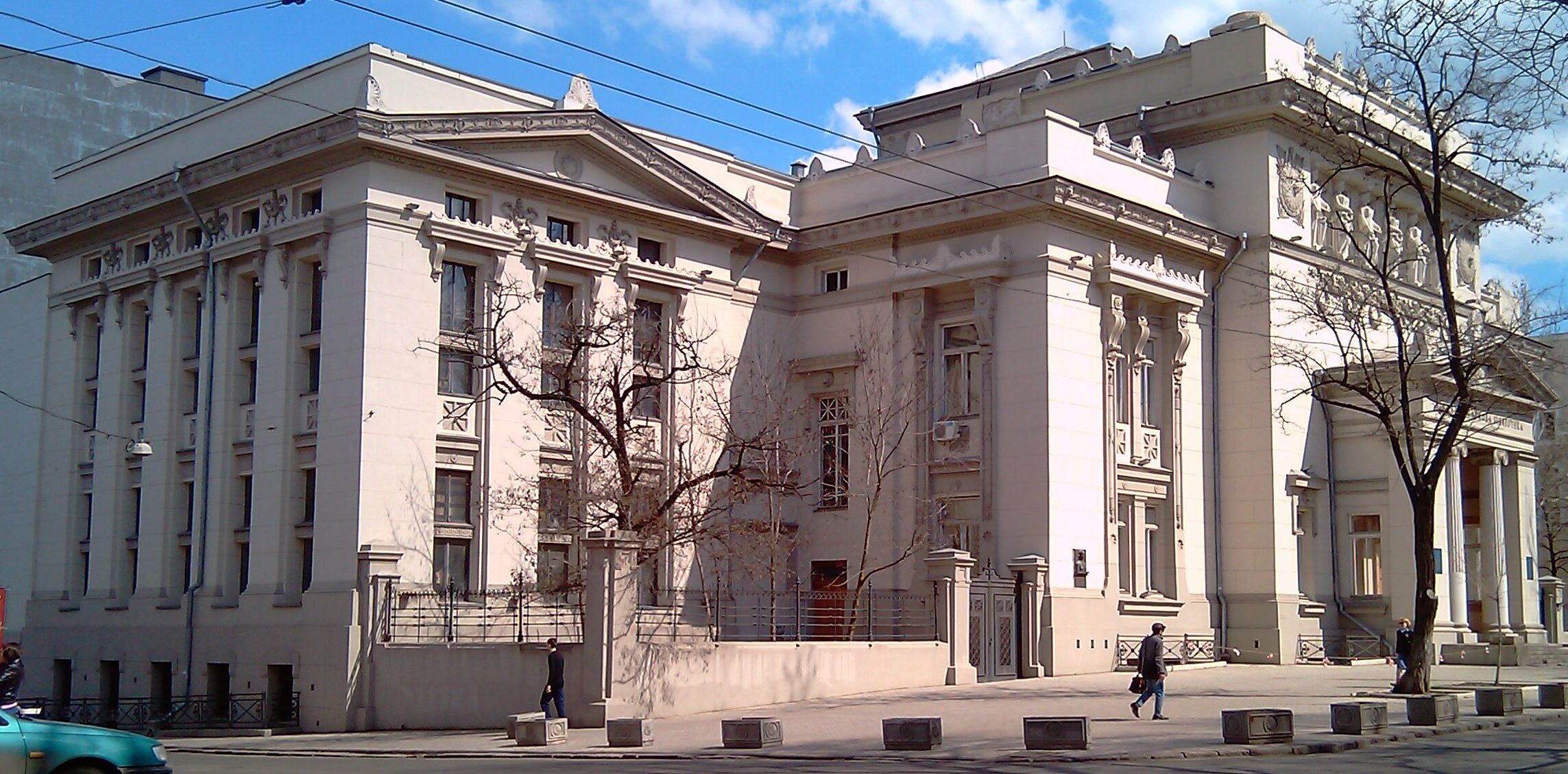
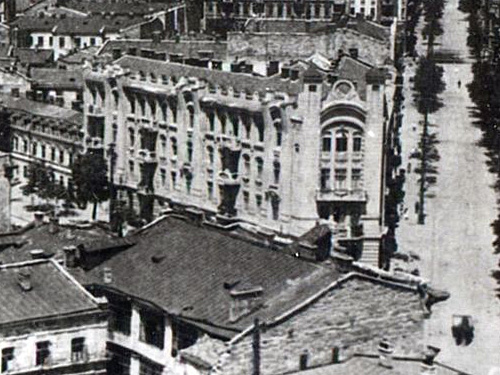 The son of an icon painter, Yakiv Ponomarenko, devoted himself not only to architecture but also to teaching at the Odesa Art School. He applied stylistic forms of decorative and early modernism and was the first in southern Ukraine to turn to modernized forms of Ukrainian national architecture. His greatest achievement was the construction of Odesa’s first multi-building residential complex on Pyrohivska Street in 1912-1913. Ponomarenko worked side by side with F. Nesturkh, not only in artistic societies and the city administration but also in the aforementioned Ukrainian organizations, where he held leadership positions. A vivid illustration of the artist’s connection to Ukrainian culture is his Ukrainian-language letters to the prominent Kyiv-based Ukrainian artist and educator Petro Kholodny, who served as the Minister of Education in the government of the Ukrainian People’s Republic (UNR). These letters are preserved in the Kyiv Institute of Manuscripts of the National Library of Ukraine named after V. Vernadskyi. From them, we learn that Ponomarenko planned to erect a monument on the grave of the Odesa-based Ukrainian historian and patriot Ivan Bondarenko, who was hounded by chauvinists and tragically died. The architect’s fate was similar. In the 1920s, he was arrested by the Bolsheviks and perished in prison. In their quest to destroy a Ukrainian patriot, much like their modern-day counterparts, the Ukrainophobes of that era sacrificed a valuable specialist.
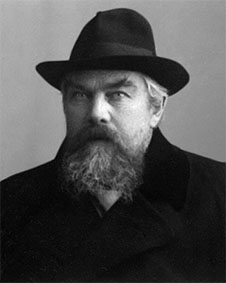 Another member of the “Prosvita” society and city administration architect, Lev Prokopovych, distinguished himself mainly by constructing numerous Orthodox churches (something that should not be forgotten by their current owners — Moscow priests, who actively promote Ukrainophobic propaganda). His projects included the Pantaleon Athonite Courtyard on Vokzalna Square, the Church of Gregory the Theologian on Staroprifrankivska Street, the Illinsky Church of the Athonite Courtyard on Pushkinska Street, and the reconstruction of the Transfiguration Cathedral. The building of the Theological Seminary is also his work. Until recently, it housed the library of the Odesa Agricultural Academy. Currently, after a hostile takeover by Russian chauvinists from the “Union of Orthodox Citizens,” it has been handed over to the Moscow Patriarchate’s Orthodox Church to be used as a temple. Prokopovych also built residential houses, the most notable being a two-story house with an attic on Rishelyevska Street, which became the printing house of Yevtym Fesenko. Thus, Prokopovych significantly contributed to the development of the Ukrainian movement in Odesa, as this printing house became a solid foundation for Ukrainian cultural life. In the late 19th and early 20th centuries, a large portion of Ukrainian literature was published here. In 1918, the first Ukrainian banknotes were also printed in this location.
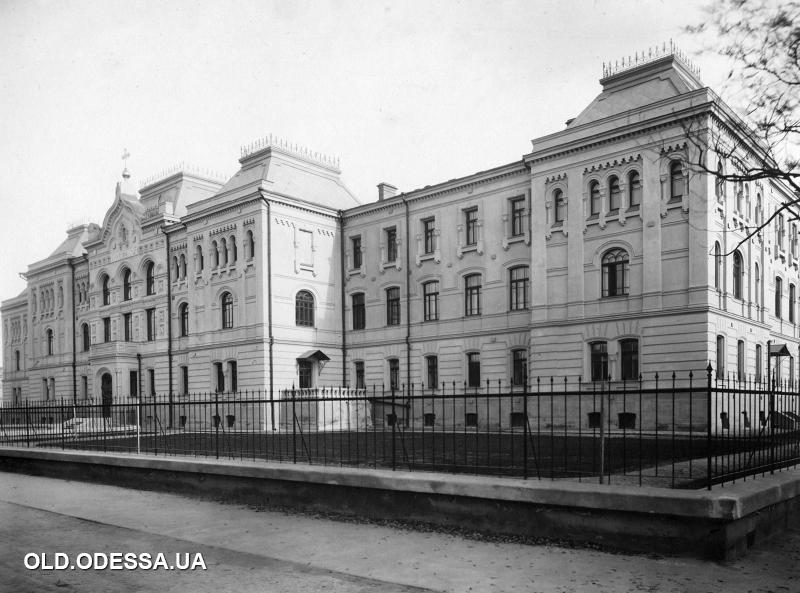
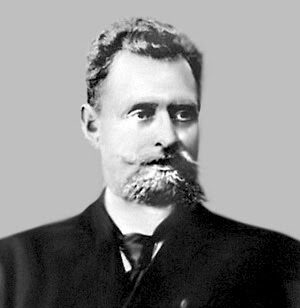
A well-known figure is Yuriy Dytrenko, a native of Odesa, architect, and colleague of Y. Ponomarenko and L. Prokopovych at the Odesa Drawing School. Under the projects and supervision of Y. Dytrenko, churches, charitable houses, reading rooms, racetrack stands, a complex of buildings for the psychiatric hospital in Slobidka-Romanivka, the city bacteriological station on Khersonska Street, the Accounting Bank at the corner of Pushkinska and Hretska Streets, and the “London” hotel on Prymorsky Boulevard were constructed. He oversaw the construction of the City Opera House. Yuriy Dytrenko is also the author of the city auditorium for public readings on Staroprifrankivska Street. Until recently, this location housed the I. Franko Library, but it was nearly impossible to hear Ukrainian spoken by its staff. The library frequently hosted Ukrainophobes, such as regional deputy Kosmin, who donated only Russian-language literature to the collection. The situation has since been “corrected” — a memorial plaque has been installed at the library in honor of merchant H. Marazli, and the library will soon be renamed after him.
Unlike the proponents of historical Russification of Odesa, I will not engage in omissions and will mention a fact from Y. Dytrenko’s creative biography that cannot be a source of pride for contemporary Ukrainians: at the end of the 19th century, a monument to Catherine II was erected according to his design. This is the same monument that was restored in 2007 by modern followers of Ukraine’s reintegration into Russia (and was dismantled in 2023). However, most contemporary Odesans are unaware of, and historians consciously omit, an unpopular and inconvenient fact for many: in 1917, after the February Democratic Revolution, the same Y. Dytrenko, along with Y. Ponomarenko and the prominent Odesa architect B. Edwards, positively resolved the issue of dismantling the monument as a symbol of imperial Russia, in accordance with the decision of the city Duma and administration. In the wave of rising democratic sentiments, the monument became covered with a layer of witty, albeit sometimes obscene, expressions of public opinion, often alluding to the empress’s promiscuity. As always, funds were lacking, and the authorities frequently changed. Thus, the monument was draped to avoid issues. Only in 1920 did the Bolsheviks dismantle the monument, effectively carrying out the decision of the democrats from 1917.
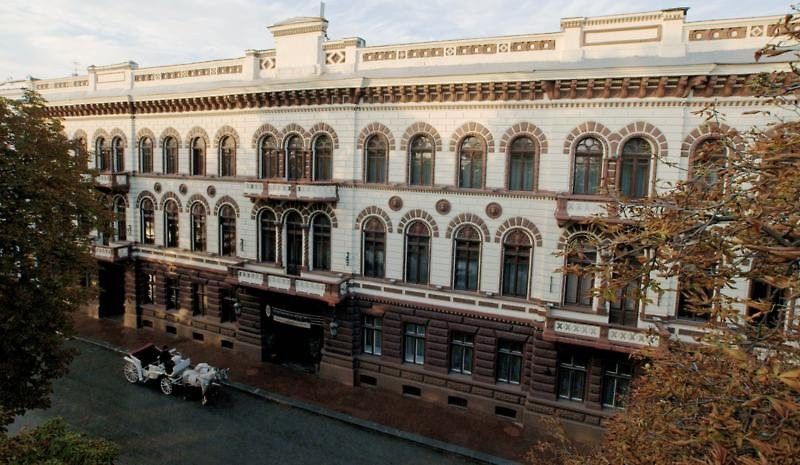
Ukrainian motifs can also be traced in the works of some non-Ukrainian architects from Odesa. For instance, the aforementioned Odesa native B. Edwards (whose father was English and whose mother was possibly Ukrainian) created monuments to the prominent patron of Ukrainian culture O.M. Polю in Kryvyi Rih, M. Gogol in Kharkiv, an obelisk to Bohdan Khmelnytsky in the fortress of Kodak, a stele to Prince Sviatoslav at the Nenasytetskiy rapids of the Dnipro, and a monument to the Zaporozhian Cossacks who settled in Kuban in 1792.
We have only mentioned the contributions of Ukrainians to the development of Odesa’s historical center before the 20th century. However, it is also important to note that Odesa continued to be developed significantly by Ukrainian architects and ordinary builders. It is worth mentioning the first post-war chief architect of Odesa, Andrii Lysenko. This tradition continues to this day.
_____________________________________
based on the materials of:
“Як нащадки козаків Одесу будували…”
Олександр МУЗИЧКО, кандидат історичних наук, доцент
the resource “Україна Incognita“
________________________________
Ukrainian Influence on the Development of Odesa: Entrepreneurship, Culture, and Community Activity
In 1793, as a result of the partition of the Polish-Lithuanian Commonwealth, Kyiv, Volhynia, and Podillia—regions rich in grain—came under Russian control. During the time of the Commonwealth, Ukrainian grain was exported to Europe through Gdańsk, but from around 1800, it began reaching European markets via Odesa. This marks the beginning of the Odesa phenomenon. “Within about 20 years, Odesa became the largest city in Ukraine and the fourth largest in the Russian Empire. And all this was due to Ukrainian grain. The Russian Empire had nothing to do with it. Peasants from Kyiv, Volhynia, and Podillia, and later those from the steppe regions of Kherson and partly Moldovan peasants from Bessarabia, grew the grain on which Odesa thrived. Yes, the city’s growth coincided with its time under the Russian Empire, but the first grain from Russia arrived in Odesa only during the famine of 1833—from the Volga region”, states Taras Honcharuk, an authoritative Odesa historian, Doctor of Historical Sciences, and Professor at Odesa National University named after Mechnikov.
In the 19th century, Odesa played an important role in the revival of the Ukrainian national movement. Ukrainian-language publications began to emerge in the city, including the fairy tale “Marusia,” published in 1837—the first work in Ukrainian on Odesa’s territory. However, French was the first language to be printed in the city (starting in 1830), asserts Ukrainian historian Volodymyr Poltorak. Among those who printed in Ukrainian in Odesa was Yakym (Yukhym, Yefim) Fesenko, a native of Chernihiv, who began this craft in 1883. “He is an example of a kind of miracle or dream for that time. A demonstration of how an ordinary peasant could come to the city and, through his talents, create a serious enterprise”, the historian explains. Fesenko never shunned the Ukrainian language and continued to print in it despite all the prohibitions: from 1863, Ukrainian could not be used for textbooks, and from 1876, it could only be employed for ethnographic records.
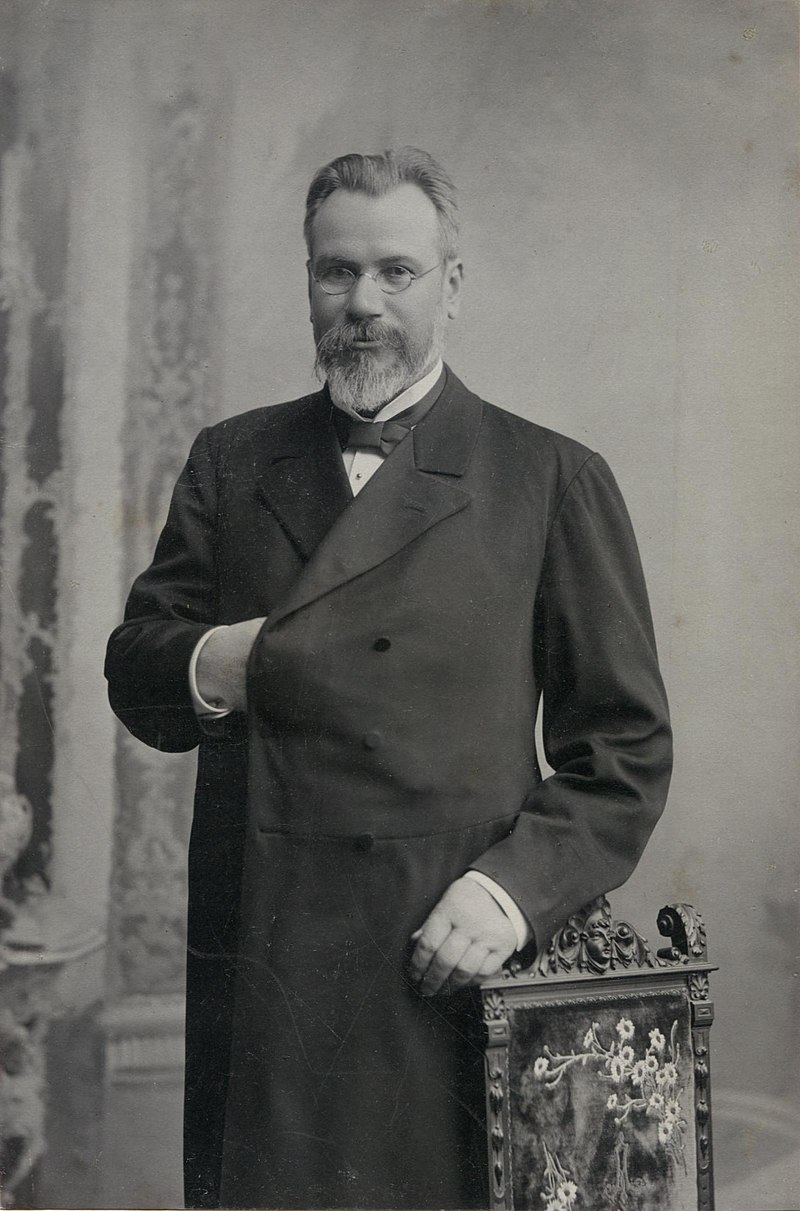 Yukhym Fesenko was born on April 1, 1850, in the village of Holovenky in Chernihiv Oblast to a family of poor Cossacks. On January 2, 1869, with food for three days and three rubles, Fesenko left his parental home. He walked to Nizhyn and then to Kyiv. Initially, he had to work in Kyiv. After saving enough money, he set off for Odesa. Fesenko found a job at the oldest Odesa printing house, run at that time by Emmanuel Petrovich Frantsov, the owner’s son. Soon, he became Frantsov’s partner and later decided to open his own business. In 1883, Fesenko opened his printing house in the Mavrokordato building on Hretska Street. Initially, the printing house consisted of only seven workers and two owners—Yukhym Fesenko himself and his wife, Vera Feodosiyivna. Business flourished. Fesenko recognized development opportunities, took calculated risks when necessary, and successfully seized the chance to secure large orders and expand his enterprise. Soon, the printing house moved to a two-story building at 47 Rishelievska Street. The renovation was carried out by architect L. F. Prokopovych, who specialized more in church architecture. Later, under his projects, two tenement houses were built for Fesenko at 6 and 8 Vidradna Street, during the design of which the builder employed elements of Neo-Gothic architecture, quite unusual for his work. Subsequently, Fesenko added a third floor, purchased new equipment, which he and his sons carefully selected and bought in Europe. By the early 20th century, Y. I. Fesenko’s typographic lithography had become a well-known publishing house in Odesa. Its products were published in thousands of copies and widely distributed. Fesenko’s publishing house gained fame throughout the Russian Empire. Its products received four award medals at international exhibitions, including the first prize at the World Exhibition in Milan in 1897 for the lithographs presented. The nature of the published products was diverse: from luxurious, expensive books and icons to the first notebooks published by Fesenko lined for writing and small inexpensive prints. Fesenko published popular prints in the Ukrainian style, postcards with the lyrics of folk songs and music notes illustrated by artist A. Zhdakh, and books with ethnographic and everyday content.
 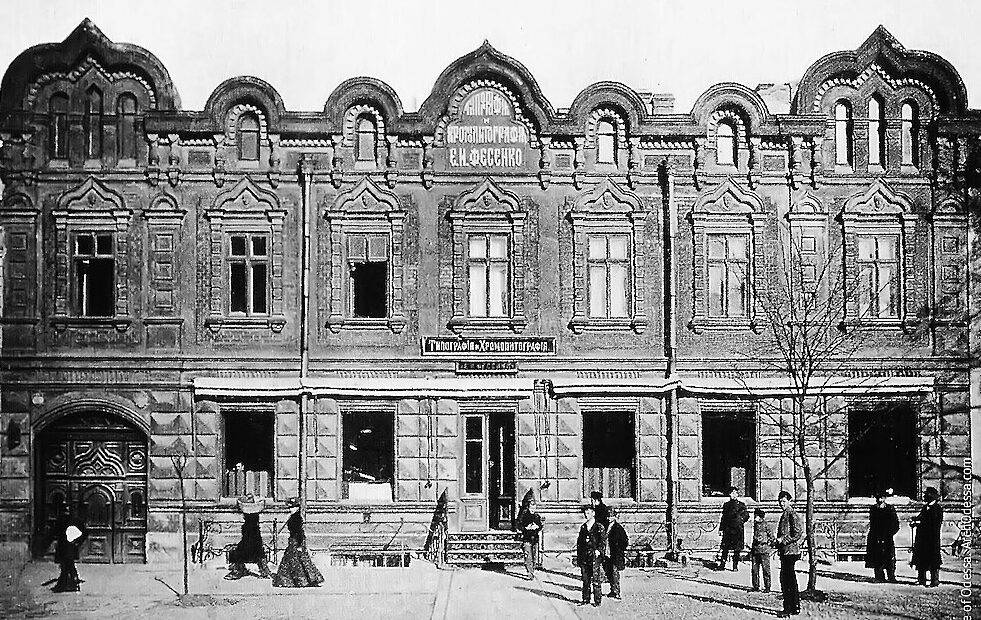 The publisher made a significant contribution to the development of Ukrainian culture. Yukhym Fesenko had a particular fondness for Ukrainian literature. The majority of Ukrainian publications in Odesa before 1917 came from Fesenko’s printing house, many of which he funded himself. For example, to mark the 75th anniversary of T. H. Shevchenko’s birth, the Odesa printer published the play “Nazar Stodolya” and the poems “Kateryna” and “Moskal’s Well.” Fesenko mostly released affordable editions, using cheap paper and simple graphics for illustrations. The books were sold in all bookstores. Information about the prices of publications was printed on the covers of the books: “Moskal’s Well” cost 7 kopecks, while “Nazar Stodolya” cost 15 kopecks. Meanwhile, the average monthly salary in the Russian Empire in 1889 was about 13-16 rubles. His books and icons were distributed in Serbia, Bulgaria, the Caucasus, Central Asia, Sinai, Jerusalem, Greece, Mount Athos, and even in Rome. Fesenko cared for his workers’ working conditions, helping them with personal problems; for instance, he paid for weddings and regularly provided his employees with his own dacha with full board. Under Soviet rule, in 1919, the enterprise was nationalized, but Yukhym Fesenko remained its director until his death in 1926. Until 1944, the printing house operated as an independent enterprise, after which it was transferred to the Book Factory. In 1965, following reorganization, the “Odesa City Printing House” was established based on this workshop. On April 28, 2016, in accordance with Ukraine’s law “On Condemning the Communist and National Socialist (Nazi) Totalitarian Regimes and Prohibiting the Propaganda of Their Symbols” and Ukraine’s decommunization policy, several streets in Odesa were renamed. In particular, Fesenko’s memory was honored, and the former Petrovskyi Street was renamed in his honor. “It is truly a pity that Odesa lost his printing house because it is a unique example of this Ukrainian dream, how a person came here with empty hands as a young man and created such a printing empire”, said Volodymyr Poltorak.
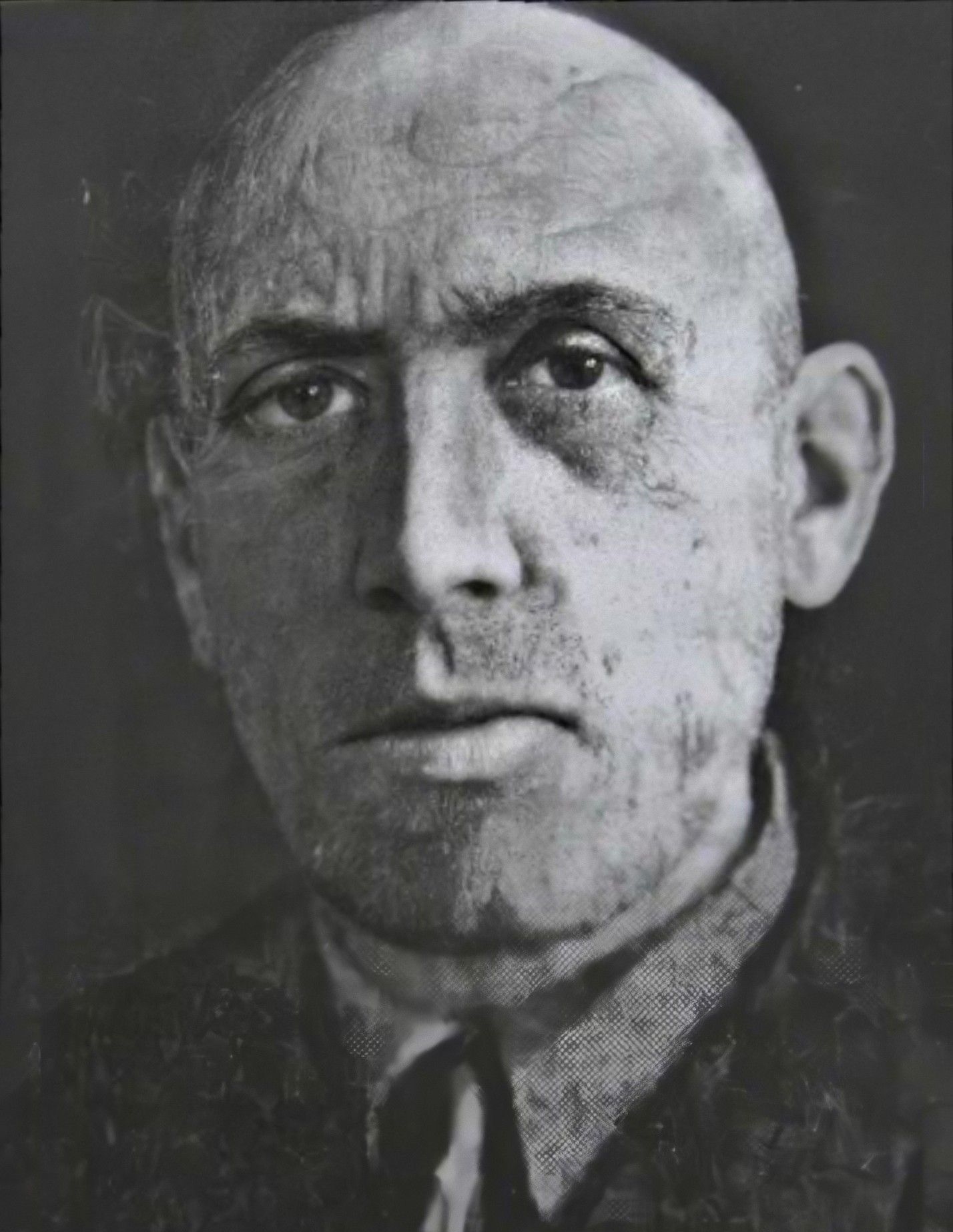 The history of another descendant of the Cossacks is also connected to Odesa, but this story is very tragic. It is about the historian Mykhailo Slabchenko. His father worked as a stonemason in Nerubaiske, and young Mykhailo helped him during his childhood. “Mykhailo Slabchenko studied at a seminary, was expelled from there, went to work in a printing house on his own, and passed the exams for the Novorossiysk Imperial University (now Odesa National University named after I. Mechnikov) externally.” In the 1920s, during the Soviet era, Slabchenko taught history at the Odesa Institute of People’s Education (now South Ukrainian National Pedagogical University named after K. Ushynsky). In 1930, Mykhailo Yelysiyovych was arrested. To protect his son Taras from repression, the historian immediately confessed to the charges“, says Odesa local historian Andriy Dembitsky. Slabchenko was sentenced as part of a massive show trial called the “Union for the Liberation of Ukraine”. According to the Soviet security services, this organization, along with Western intelligence agencies and Ukrainian emigrants, was preparing uprisings and revolts against Soviet power. Forty-five defendants received varying prison terms, ranging from 10 to 2 years, but many were re-arrested and sentenced again after their release. Slabchenko was among them—he was released in 1936, but less than a year later, the historian was arrested again and sent to prison for 10 years. In 1937, his son, Taras Slabchenko, was also arrested and executed. Mykhailo Slabchenko returned to Ukraine only in 1947, settled in Pervomaisk (Mykolaiv Oblast), and died in severe poverty in 1952.
At the end of the 19th and the beginning of the 20th century, Odesa became one of the centers of the Ukrainian national movement. In 1905, the first and largest society of “Prosvita” was established in Right-Bank Ukraine, of which the architect Nestrukh (Neshturha) was an active member. “The Ukrainian idea in Odesa might not have been very widespread, but it was very concentrated. At the turn of the 19th and 20th centuries, Odesa was perhaps the most Ukrainian city in Ukraine—the first society for Ukrainian culture, ‘Prosvita,’ was opened in Odesa in 1905. Of course, the ‘Manifesto’ of Nicholas II played a huge role, as it allowed many things after 1905, but the local authorities of that time were also quite loyal to Ukrainian thought and culture. The city governor, Pavlo Zelenyi, effectively lobbied for the creation of ‘Prosvita“, says Odesa local historian Andriy Dembitsky. A publication released in 1908 from the printing house of Yu. Fesenko contains a report from the Odesa branch of the ‘Prosvita’ society for the year 1907, read at the general assembly in April 1908. It provides brief information about the scientific papers presented, literary-vocal and children’s evenings held, commemorative events honoring Taras Shevchenko, and other cultural activities, as well as information about the reading room, library, and bookstore of ‘Prosvita,’ the publication of books, membership numbers, and the society’s financial resources. It includes a list of papers read in 1907, financial reports, and “The List of Members of the ‘Prosvita’ Society in Odesa”.
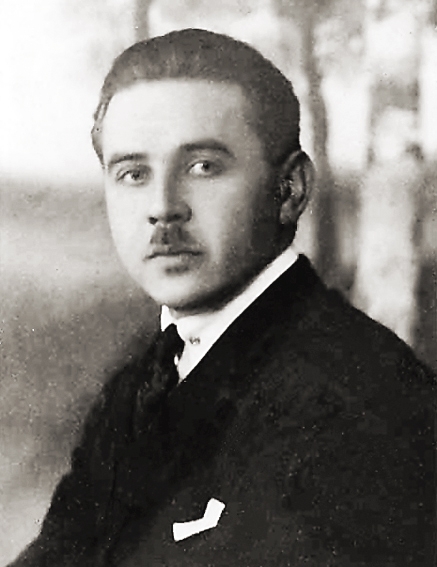 Many names of Ukrainian political and public figures are associated with Odesa—many were later repressed, some went abroad, and others died during the war with the Bolsheviks. For example, Andrii Nikovsky, the future Minister of Foreign Affairs in the government of the Ukrainian People’s Republic. Nikovsky was born in a nearby village, later studied at the university in Odesa, served as the secretary of Odesa’s “Prosvita,” and became involved in politics after the revolution. He emigrated to Poland with the government of the Ukrainian People’s Republic, returned to Soviet Ukraine in 1923, and in 1930 received an 8-year prison sentence as one of the leaders of the “Union for the Liberation of Ukraine.” He died in 1942 in Leningrad during the blockade.
In Odesa, from 1908 to 1917, the future Prime Minister of the Ukrainian People’s Republic, Volodymyr Chekhovskyi, lived after being exiled to Vologda. He taught at a gymnasium, a commercial school, and a technical institute, and after the 1917 revolution, he became a member of the Odesa City Duma from Ukrainian parties. In April 1918, he began working in the government of the Ukrainian People’s Republic and remained in the government of Hetman Pavlo Skoropadskyi. From December 26, 1918, to February 11, 1919, Chekhovskyi served as Prime Minister and Minister of Foreign Affairs of the Ukrainian People’s Republic. After the Bolsheviks’ victory, he stayed in Ukraine, was arrested in 1929, and executed in 1937.
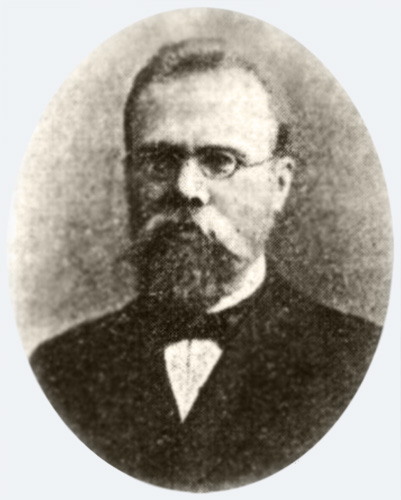 From 1893 until the revolution, Ivan Lutsenko lived in Odesa. He was a doctor and a public, political, and military figure in Ukraine. He actively participated in the work of “Prosvita,” later headed the Odesa Ukrainian Club, and published the first Ukrainian-language newspaper in the city, “Narodna Sprava.” In 1917, Ivan Lutsenko led the Ukrainian Party of Socialist Independents, joined the Central Rada in 1918, and in 1919, he died during battles with the Bolshevik army or was executed in their captivity.
From the late 1870s, Petro Klymovych lived in Odesa. He studied at the law faculty of Novorossiya University, worked as a member of the Odesa City Administration under Mayor Pavlo Zelenyi, and was one of the organizers of “Prosvita.” In 1918, he served as the manager of the Ministry of Finance in the government of the Ukrainian People’s Republic, then returned to Odesa, where he was executed by the Bolsheviks in 1920.
Sergiy Shelukhin lived in Odesa from 1902. Until 1917, he served as a member of the Odesa District Court, General Judge, and Senator of the Civil Department. After the revolution, Shelukhin became the General Judge of the Central Rada, then a Senator, and even the Attorney General of Ukraine. Later, he worked as the Minister of Judicial Affairs and the Minister of Justice in the government of the Central Rada and the Directory. After the Bolsheviks’ victory, he emigrated and died in Prague in 1938.
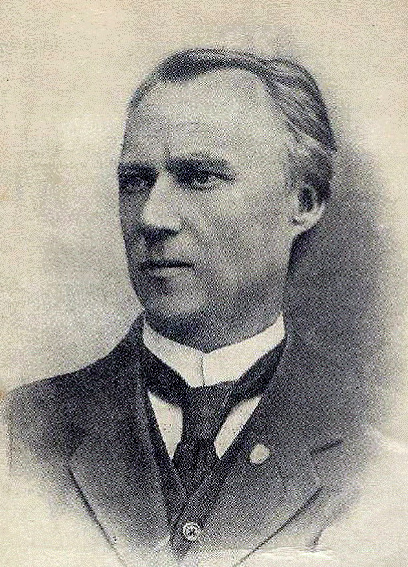 From 1902 to 1918,Ivan Lypa lived in Odesa. He was a public and political figure, a writer, and the Minister of Religion in the Ukrainian People’s Republic. Born in Kerch, he studied in Kharkiv, and in 1893, he founded the secret society “Brotherhood of Tarasivtsi,” an organization that declared the struggle for the liberation of the Ukrainian people. Lypa was arrested and released only a year later, during which he lived under police surveillance for three more years. In Odesa, Lypa collaborated with “Prosvita” and practiced medicine. By the time he moved to Odesa, he was already a well-known doctor. He was the initiator of building a modern hospital in the Dalnytska area (Dalnyk was part of Odesa at that time). “He was generally an advocate for the spread of such popular democracy in the sense that the people should receive more rights and opportunities. Essentially, this was an anti-monarchist trend that was perceived in the Russian Empire as oppositional“. According to the Vernadsky National Library, Ivan Lypa’s home in Odesa became a center for the cultural movement in Southern Ukraine. Notable figures such as V. Semylenko, H. Khotkevych, H. Chuprynka, O. Oles, O. Makovey, M. Voronyi, and others visited him. After the revolution, he moved to Kyiv, worked in the government of the Ukrainian People’s Republic, and after the Bolshevik victory, he emigrated to Poland.
Ivan’s son, Yuriy Lypa, participated in the civil conflict, and when he was forced to leave the city, he wrote a series of stories about revolutionary Odesa—Ukrainian-language chronicles of that time. “Bunin wrote ‘Cursed Days’ from the perspective of a Russian White Guard, Babel romanticized banditry in ‘Odesa Stories,’ while Yuriy Lypa approached this issue from a Ukrainian perspective“, said historian Volodymyr Podolyak. According to the historian, Yuriy Lypa was one of many authors creating Ukrainian texts. He gained popularity in emigration. By 1944, he had produced a large number of political texts while continuing to practice medicine like his father. In his publications, he justified Ukraine’s geopolitical mission and confidently stated that without Odesa, Ukraine could not exist as a great state. In his view, Ukraine needed to be connected to the Middle Eastern regions through Odesa.
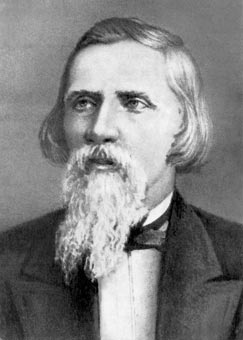 In Odesa, the composer and poet-translator Petro Nishchynskyi lived and worked. He composed music for theatrical performances and taught music at the private Randal boarding school. At that time, Yevhen Chykalenko, the future public figure, philanthropist, and one of the initiators of the convening of the Central Rada, was studying there. Nishchynskyi translated the Odyssey and Iliad into Ukrainian, and the translation of the first work was published in Lviv under the pseudonym Petro Bayda. The historian and future president of the Ukrainian People’s Republic, Mykhailo Hrushevskyi, wrote a favorable foreword to the Odyssey. However, the translation proved to be tragic for Nishchynskyi. According to researchers, the composer was initially transferred from Odesa to Berdyansk with a salary reduction, and after the book was published, he was dismissed.
In Odesa, the troupe of Marko Kropyvnytskyi, a prominent Ukrainian playwright, theater director, and actor, often toured. Today, Kropyvnytskyi is not only associated with Ukrainian art but also with Ukrainian toponymy, as a major city now bears his name. Kropyvnytskyi’s main contribution to the Ukrainian nation was that he created the first professional Ukrainian theater. “Marko Kropyvnytskyi did a great thing. With all our history and archaeology, we probably wouldn’t have achieved such popularization of Ukrainian culture as Marko Lukić Kropyvnytskyi did with his theater“, said historian Dmytro Yavornytskyi. While there were many amateur theaters before, the first professional troupe, later called the “Theatre of Coryphaeuses“, was created by Marko Kropyvnytskyi. In 1881, Kropyvnytskyi managed to get the last restriction of the Ems Decree lifted, allowing plays to be performed in the Ukrainian language, thus expanding the use of Ukrainian. In addition to being a brilliant actor, director, and playwright, Kropyvnytskyi was an excellent singer. He was a great manager and an equally great teacher. He trained a whole generation of Ukrainian star actors, including Panasy Saksahanskyi and Mykola Sadovskyi (Tobilevych). Incidentally, in 1907, Sadovskyi opened the first permanent professional Ukrainian theater in Kyiv. Before that, the Russian Empire had forbidden the opening of permanent Ukrainian theaters. The Russian press was enthusiastic about Kropyvnytskyi and wrote: “There are no actors on the Russian stage equal to Kropyvnytskyi and Zankovetska.” In 1982, UNESCO recognized Kropyvnytskyi’s troupe as the first professional troupe in Ukraine, and we date the beginning of Ukrainian professional theater to October 27, 1882, when “Natalka Poltavka” was performed in Yelisavetgrad.
Mariia Zankovetska often visited Odesa, and commercial theaters staged”Natalka Poltavka” and “Svatannia na Honcharivtsi”. If such performances took place and the reviews were positive, it means there were enough educated and wealthy people in Odesa who were interested in Ukrainian culture.
__________________________________
based on the materials of resources “Радіо Свобода” and “Суспільне-Одеса“
About the Ukrainian language:
The Origin of Ukrainians:
A Brief History of Ukraine:
_______________________________
The text was translated from Ukrainian by Artificial Intelligence