Previous section (click the link to return):
←4.1.Odessa (Odesa). Period 1794-1822♦
←4.2.Odessa (Odesa). Period 1823-1899↓
←4.3.Odessa (Odesa). Period 1900-1914↓
←4.4.Odessa (Odesa). Period 1914-1917↓
←4.5.Odessa (Odesa). Period 1917-1920↓
←4.6.Odessa (Odesa). Period 1920-1991↓
←3.1.Northern Black Sea Region XV-XVIII centuries♦
←3.2.Hocabey-Khodzhabey (Khadzhibey). Period of XV-XVIII centuries↓
←3.3.Khadzhibey-Odessa. Period XVIII century. Northern Black Sea Region XVIII century↓
←2.1.Kotsubey (Kochubiyiv). Period XV century. Eastern Europe II-XV centuries♦
←1.1.Ancient cities in the place of modern Odesa♦
Independent Ukraine. 1991-2024: An Annual Chronicle of the Struggle for Its Civilizational Choice. Watch the video below↓
The video is provided in Ukrainian, but if desired, you can enable subtitles (the “Subtitles” option) in any language that is convenient for you (the “Settings” option)
Ukraine: The Restoration of Independence. The First Decade
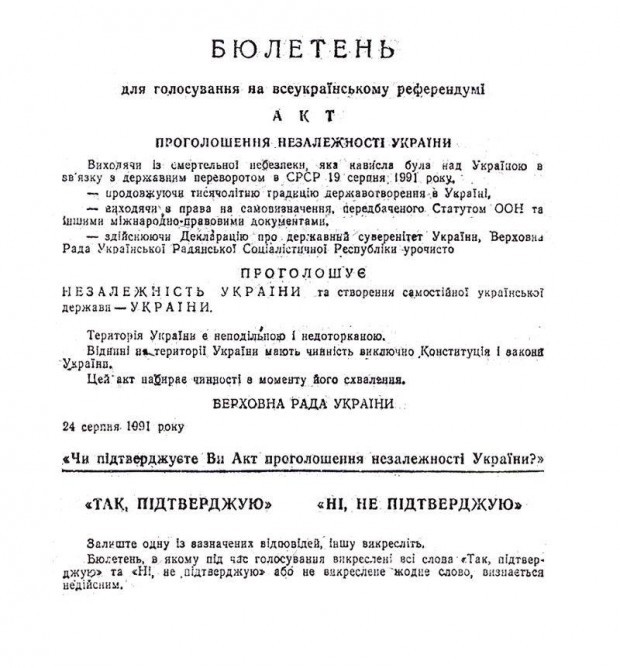
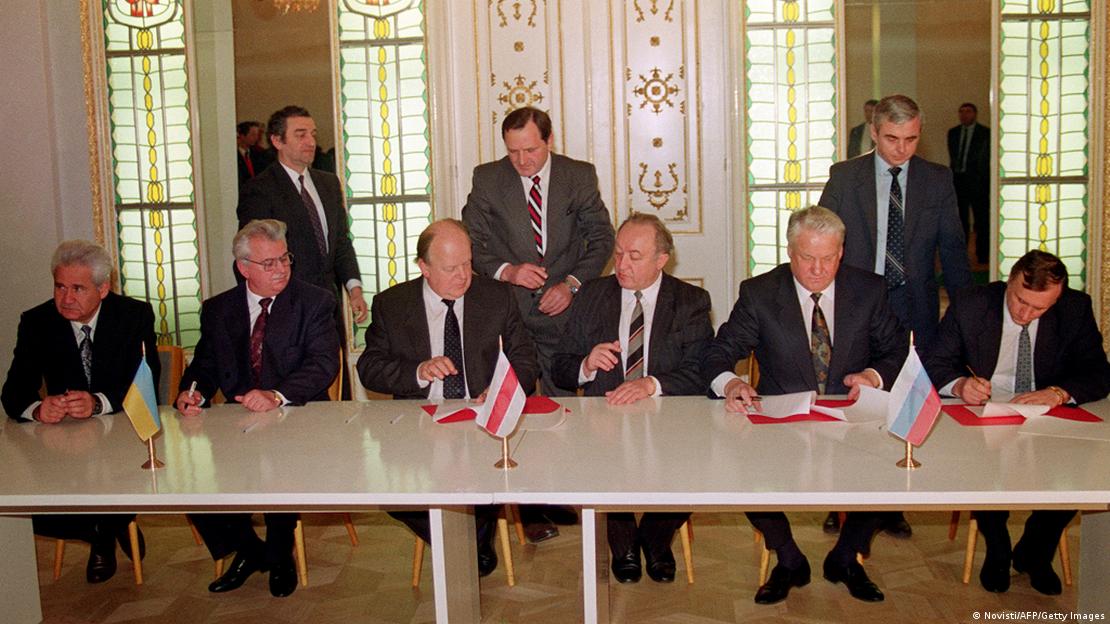
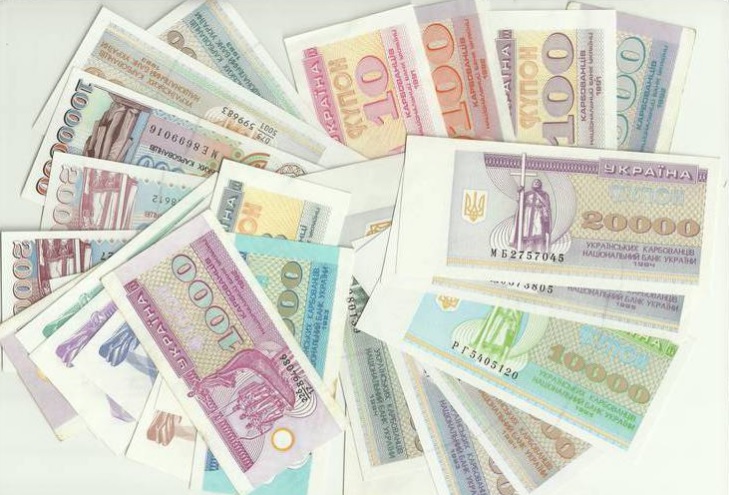 On October 8, 1991, the Verkhovna Rada passed the law on citizenship, and on November 14, the law on the state border. In the all-Ukrainian referendum on December 1, 1991, 90.3% of the population supported independence, and simultaneously, Leonid Kravchuk was elected as the first president of the state, keeping the “party of power” in control. Just a day later, on December 2, independent Ukraine was recognized by Canada and Poland, and within the next two months, 90 other countries followed suit. On August 24, 1991, a resolution “On Military Formations in Ukraine” was adopted, and on December 6, the law “On the Armed Forces of Ukraine” was enacted, leading to the swearing-in of the first military personnel under the new oath. This event is now celebrated as the Day of the Armed Forces of Ukraine. On December 8, in the Belovezhskaya Pushcha, the leaders of Belarus, Russia, and Ukraine signed the Agreement on the dissolution of the USSR and the creation of a new association, the Commonwealth of Independent States (CIS). On January 25, 1992, Mikhail Gorbachev resigned from his position as the first and last president of the USSR. In January-February 1992, Ukrainians approved their flag, the small coat of arms, the melody of the national anthem, and began building an independent state and a market economy. In 1992, Ukraine became a member of the International Monetary Fund. In 1994, the United States, Russia, and the United Kingdom provided Ukraine with “security guarantees” in exchange for giving up the world’s third-largest nuclear arsenal (the Budapest Memorandum). Ukraine joined the Treaty on the Non-Proliferation of Nuclear Weapons and by 1996 had relinquished its strategic nuclear weapons. Like other former socialist countries, Ukraine found itself in a severe economic crisis. However, unlike others, it was unable to quickly and effectively implement market reforms while simultaneously trying to fulfill burdensome social obligations to the population, resulting in the country being stuck in a transitional phase for several decades. The industry found itself in a deadlock, unable to afford energy modernization while remaining dependent on Russian energy supplies. During Kravchuk’s presidency, the country’s GDP fell by half (56%), similar to the decline seen during the Great Depression in the United States. The hyperinflation of the first years of the karbovanets reached thousands of percent. Ukraine managed to avoid military conflicts that erupted in other post-Soviet republics, but it failed to seize the opportunities that arose during the collapse of the USSR due to the unpreparedness of the new political elites, the shortsightedness of the establishment, the romanticism of national movements, sabotage by the old elite, and the adaptability inherent in Soviet consciousness.
The worsening socio-economic situation in the country led to the first political crisis of the young state—early presidential elections in 1994, which were won by Leonid Kuchma, the former director of Yuzhmash and prime minister, a representative of the “red directors.” The composition of the Verkhovna Rada was also renewed for the first time. The Communist Party of Ukraine won the most seats—96, followed by the People’s Movement with 20, the Peasant Party with 18, and the Socialist Party with 14. Oleksandr Moroz was elected as the Chairman of the Verkhovna Rada of Ukraine, indicating the dominance of left-wing forces. The new parliament approved Vitaliy Masol as prime minister. Kuchma’s first presidency was marked by some stabilization in the country, not so much due to effective reforms but rather by freezing the situation. In 1994, peasants received the first land shares for use, but the full property rights to the land took decades to be granted. In 1999, Collective Agricultural Enterprises (KSP) were finally liquidated. In 1995, the Crimean crisis was resolved, and separatist efforts by local deputies were curbed. On June 28, 1996, the Constitution of Ukraine was adopted, the country’s fundamental law, which established a presidential-parliamentary form of government; in September, the National Bank of Ukraine conducted a monetary reform, introducing the national currency—the hryvnia. Thanks to Kuchma’s “multi-vector” foreign policy course, Ukraine managed to become a member of the Council of Europe in 1995, sign the Strategy for Integration into the EU in 1996, and the NATO-Ukraine Charter on a Distinctive Partnership in 1997. On the eastern front, in 1997, the Black Sea Fleet was finally divided, with 18% going to Ukraine, while Russia retained a naval base in Sevastopol until 2017. In exchange, Ukraine received recognition of its independence and state borders under the “Treaty of Friendship.” Due to the privatization of leading enterprises (denationalization), the main sectors of the economy fell into the hands of a small number of new oligarchs (Pavlo Lazarenko), old “red directors” (Yukhym Zviahilsky), people close to the power circles (Viktor Pinchuk), and representatives of Russian capital (Vadym Novynskyi). As a result, competition decreased both in the domestic market and in the import of products in certain industries (for example, fuel and lubricants).
In March 1998, the parliamentary elections were held for the first time under a mixed (proportional-majoritarian) system, with 225 deputies elected in single-member constituencies and 225 through party lists in a nationwide multi-member constituency. Based on the election results, the four-percent threshold was crossed by the Communist Party of Ukraine (24.65%), People’s Movement (9.4%), the electoral bloc of socialists and the Peasant Party “For Truth, for the People, for Ukraine!” (8.6%), the Green Party (5.4%), the People’s Democratic Party (5%), the All-Ukrainian Union “Hromada” (almost 4.7%), and the Progressive Socialist Party of Ukraine (4%). Ivan Plyushch was elected as the Chairman of the Verkhovna Rada. In the 1999 presidential elections, Kuchma won the second round, securing the support of oligarchs and repeating Yeltsin’s 1996 success as the only alternative to the communists. The leader of the national-democratic forces, Vyacheslav Chornovil, tragically died before the elections. During Kuchma’s second presidency, with the help of young reformers, Prime Minister Viktor Yushchenko and his deputy Yulia Tymoshenko, some economic growth was achieved, mainly due to the partial legalization of the shadow economy. The formation of a parliamentary majority by deputies from 11 parliamentary groups and factions, as well as independents who supported Yushchenko’s government, also positively influenced the acceleration of state-building processes and the implementation of reforms.
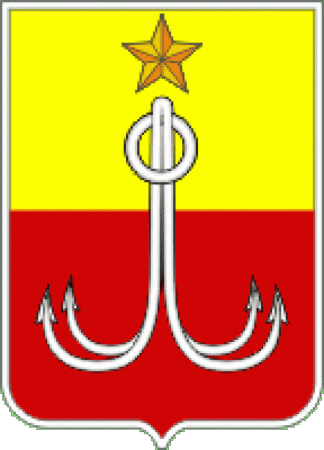 Odesa. Period 1991-1999
1991 – Present time – Ukraine
1991 – Present time – Odessa Region
On December 1, 1991, a nationwide referendum was held in Ukraine regarding the declaration of independence. According to the referendum results across the entire Odesa region, out of 1,412,228 respondents (75.01%), 1,205,755 (85.38%) voted in favor of independence, 163,831 (11.6%) voted against, and 42,642 ballots were deemed invalid.
Many industrial enterprises were forced to close following Ukraine’s declaration of independence, while others operated at only a fraction of their capacity. This was due to the disruption of economic ties with the former Soviet republics, insufficient support from the government, and a lack of ability to adapt to new economic conditions. For example, this was the case with the “Krayan” plant (formerly the January Uprising Plant).
Between 1991 and 2008, the leadership of Ukraine dismantled the Black Sea Shipping Company.
Thus, in the early 1990s, Odesa experienced a true clinical death—enterprises shut down, and Odesa residents, left without jobs, sold goods at markets and traveled as “shuttle traders” to Romania, Poland, and Turkey. In just one weekly trip, these “shuttle traders” could earn a fortune for those times—between $100 and $300! This “shuttle trade” gave rise to Ukraine’s largest market—”Seventh Kilometer“, which in the beginning resembled a chaotic collection of various stalls and shacks.
Often, trade in Odesa took on bizarre forms—unfortunate entrepreneurs offered each other nonexistent “rotaries”—trains loaded with oil and resold mythical “red mercury.” The “brigades”, in turn, practiced their craft—scamming entrepreneurs by selling them nonexistent goods and “putting the squeeze” on poor souls who were in debt. Colorful characters appeared on the streets of Odesa—young men dressed in bright tracksuits, sneakers, and short leather jackets—the attributes of the criminal “capitalism” that emerged after the collapse of the planned economy—racketeers. Odesa was divided into zones of influence among the subordinates of Karabas—criminal organizations led by Stoyan, Stas, Galushko, Angel, Tomal, Bacillus, and other “authorities”. By early 1992, bandits were extorting over 90% of entrepreneurs in Odesa! Even the vendors selling posters in the underground passages near the train station and the beggars near Privoz had their “protection.” Entrepreneurs who were denied access to the sweet pie of former state-owned property quickly found a new source of billion-dollar profits—insurance à la “MMM”. All over Odesa, advertisements for insurance companies “Pilgrim” and “Solo” were posted. The vulgar founders of these “pyramids” promised investors up to 100% profit per month! As a result, the company owners and those investors who managed to withdraw their money before the financial pyramids collapsed were the winners. A saying began to circulate in Odesa: “For a good laugh, get insured with the ‘Solo’ firm”.
In 1995, the Odesa City Council decided to restore some of Odesa’s streets to their historical names. In total, over 80 streets and parks were renamed during that time.
During the 1998 elections, there was a crisis over the position of mayor in Odesa. The confrontation occurred between Ruslan Bodelan and Eduard Gurvits. The parties did not shy away from anything: intimidation, assassination attempts, and even murders were employed. For example, in February, the chairman of the city election commission, Leonid Kapelyushny, was shot. A few days after this event, the head of the Zhovtnevyi District Executive Committee, Ihor Svoboda, was kidnapped near his home. Later, law enforcement officials claimed he had been killed, but the body was never found. President Leonid Kuchma appointed Mykola Beloblotsky as acting mayor. Eventually, Ruslan Bodelan became the mayor.
On April 1, 1999, a monument to the “12th Chair” was unveiled in Odesa, which later became one of the most beloved locations for tourists from all over the world.
READ MORE→
_______________________________
The text was translated from Ukrainian by Artificial Intelligence