
Previous section (click the link to return):
←4.1.Odessa (Odesa). Period 1794-1822♦
←4.2.Odessa (Odesa). Period 1823-1899↓
←4.3.Odessa (Odesa). Period 1900-1914↓
←3.1.Northern Black Sea Region XV-XVIII centuries♦
←3.2.Hocabey-Khodzhabey (Khadzhibey). Period of XV-XVIII centuries↓
←3.3.Khadzhibey-Odessa. Period XVIII century. Northern Black Sea Region XVIII century↓
←2.1.Kotsubey (Kochubiyiv). Period XV century. Eastern Europe II-XV centuries♦
←1.1.Ancient cities in the place of modern Odesa♦
World War I
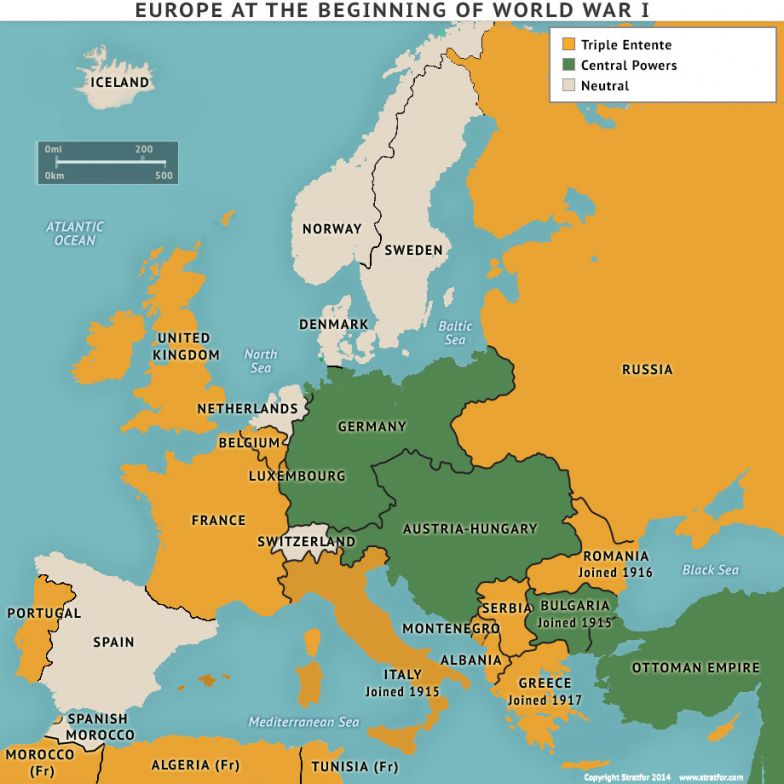
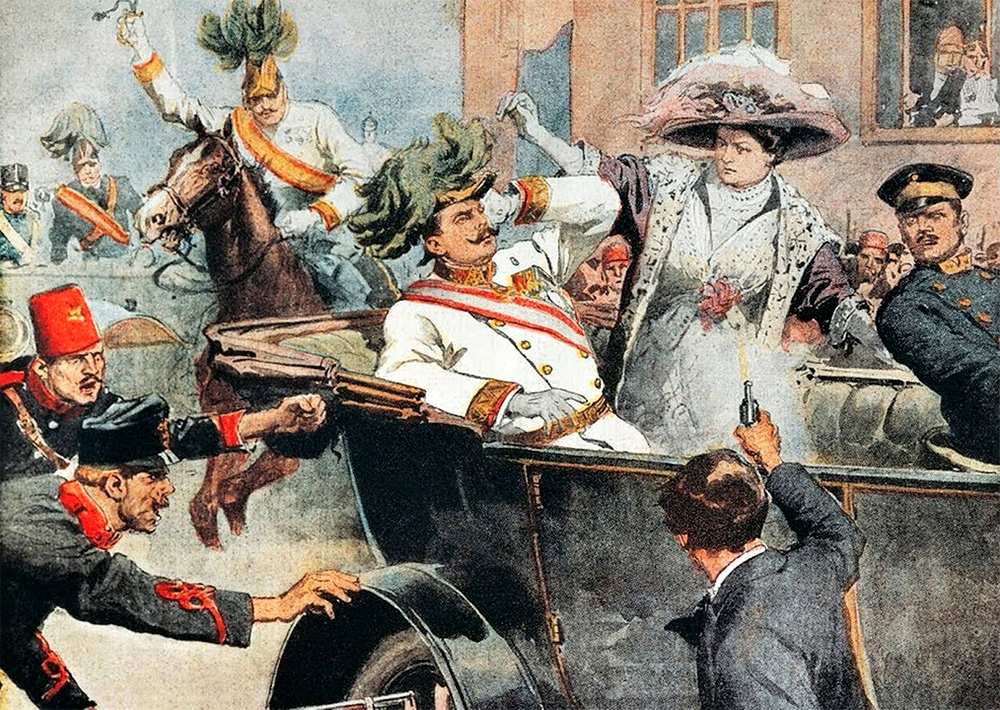 World War I was a global conflict that primarily took place in Europe from July 28, 1914, to November 11, 1918, involving 38 nations with a combined population of 1.5 billion. Known at the time as the Great War or the “War to End All Wars,” it led to the mobilization of over 70 million military personnel, including 60 million Europeans, making it one of the largest and deadliest conflicts in history. Historians estimate that up to 8.5 million soldiers and 13 million civilians died during the war. A series of genocides resulting from the war and the related 1918 Spanish flu pandemic added millions more deaths worldwide. The conflict had a decisive impact on the history of humanity in the first half of the 20th century.
On June 28, 1914, Gavrilo Princip, a Bosnian Serb who was a Yugoslav nationalist and member of the Serbian military society “Black Hand,” assassinated Austro-Hungarian heir Archduke Franz Ferdinand in Sarajevo, sparking the July Crisis. In response, Austria-Hungary issued an ultimatum to Serbia on July 23. Serbia’s response did not satisfy the Austrians, leading them to take military action. A web of interconnected alliances escalated the crisis, turning a local dispute between two Balkan countries into a major international crisis involving most European nations.
By July 1914, the major powers of Europe were divided into two coalitions: the Triple Entente, consisting of France, Russia, and Great Britain, and the previously established Triple Alliance of Germany, Austria-Hungary, and Italy. The Triple Alliance was purely defensive, allowing Italy to stay out of the war until April 26, 1915, when it joined the Allied Powers following a deterioration in its relations with Austria-Hungary.
he Russian Empire considered it necessary to support Serbia and approved a partial mobilization after Austria-Hungary shelled the Serbian capital, Belgrade, located just a few kilometers from the border, on July 28, 1914. On the evening of July 30, full Russian mobilization was announced; the following day, Austria-Hungary and Germany did the same. At the same time, Germany demanded that Russia demobilize within twelve hours. After Russia failed to comply with this demand, on August 1, 1914, Germany declared war on the Russian Empire, thereby proclaiming its support for Austria-Hungary, which followed its ally’s example on August 6, 1914. France began full mobilization in support of the Russian Empire on August 2, 1914.
Ultimately, World War I resulted in the division of the European continent into two major rival alliances:
-
- The Allied Powers, which primarily included the United Kingdom of Great Britain and Ireland, the United States, France, the Russian Empire, Italy, Japan, Portugal, Greece, Serbia, and Montenegro;
- The Central Powers, which primarily included the German Empire, the Austro-Hungarian Empire, the Ottoman Empire, and Bulgaria.
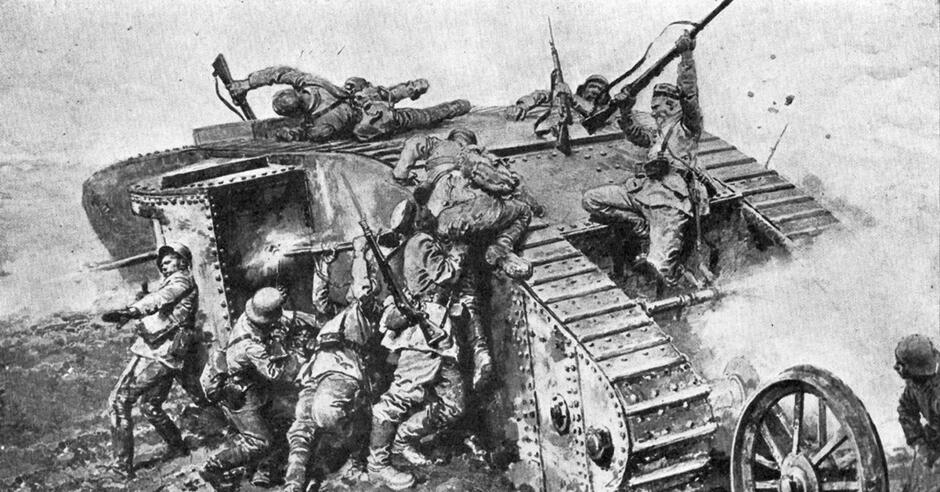 Germany’s strategy for a two-front war against the French Republic and the Russian Empire involved quickly concentrating the majority of its army in the West to defeat France within six weeks and then shifting forces to the East before Russia could fully mobilize. This strategy later became known as the Schlieffen Plan. On August 2, Germany demanded free passage through Belgium, which was crucial for achieving a swift victory over France. After Belgium refused, German forces invaded on August 3, and the same day, Germany declared war on France. The Belgian government invoked the Treaty of London of 1839, and in accordance with its obligations under the treaty, the United Kingdom declared war on Germany on August 4. On August 12, both the UK and France declared war on Austria-Hungary; on August 23, Japan sided with the United Kingdom, seizing German possessions in China and the Pacific. In November 1914, the Ottoman Empire entered the war on the side of Austria-Hungary and Germany, opening fronts in the Caucasus, Mesopotamia, and the Sinai Peninsula. The war spread to the colonial possessions of each empire, extending the conflict to Africa and across the globe.
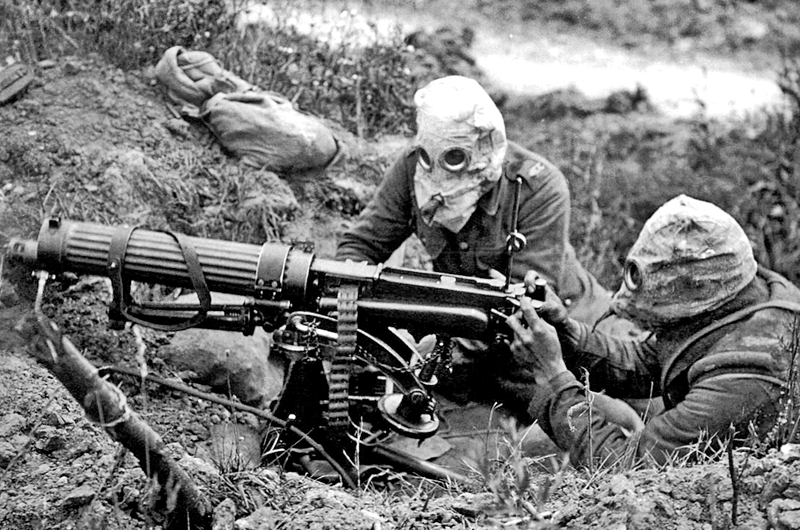 Germany’s advance into France was halted at the Battle of the Marne, and by the end of 1914, the Western Front had settled into a war of attrition, characterized by long lines of trenches that remained largely unchanged until 1917 (in contrast, the Eastern Front saw significantly larger territorial exchanges). In 1915, Italy joined the Allied Powers and opened a front in the Alps. Bulgaria joined the Central Powers in 1915, while Greece joined the Allies in 1917, expanding the Balkan theater of the war. The United States initially remained neutral, but even while neutral, they became a crucial supplier of military equipment to the Allies. Eventually, after the sinking of American merchant ships by German submarines, Germany’s declaration that it would resume unrestricted attacks on neutral shipping, and the discovery by U.S. intelligence of Germany’s attempts to incite Mexico to wage war against the United States, the U.S. declared war on Germany on April 6, 1917.
Though Serbia was defeated in 1915, and Romania, which had joined the Allied Powers in 1916, was defeated in 1917, none of the major powers officially exited the war until 1918. The February Revolution of 1917 in Tsarist Russia led to the replacement of the monarchy with a Provisional Government, which was later overthrown and replaced by the Soviet Socialist Republic, which signed the Treaty of Brest-Litovsk with the Central Powers in March 1918, ending Russia’s participation in the war. At that point, Germany was able to transfer a large number of troops to the Western Front. Using new tactics, the German Spring Offensive of 1918 was initially successful. The Allies retreated and refrained from counterattacking. The last German reserves were exhausted, while 10,000 fresh American troops arrived daily. The Allies pushed back the Germans in the Hundred Days Offensive, a continuous series of attacks that the Germans could not counter. The Central Powers withdrew from the war one by one: first Bulgaria (September 29), then the Ottoman Empire (October 31), and Austria-Hungary (November 3). With the defeat of its allies, a revolution at home, and the military’s unwillingness to continue fighting, Kaiser Wilhelm abdicated on November 9, and Germany signed an armistice on November 11, 1918, ending the war.
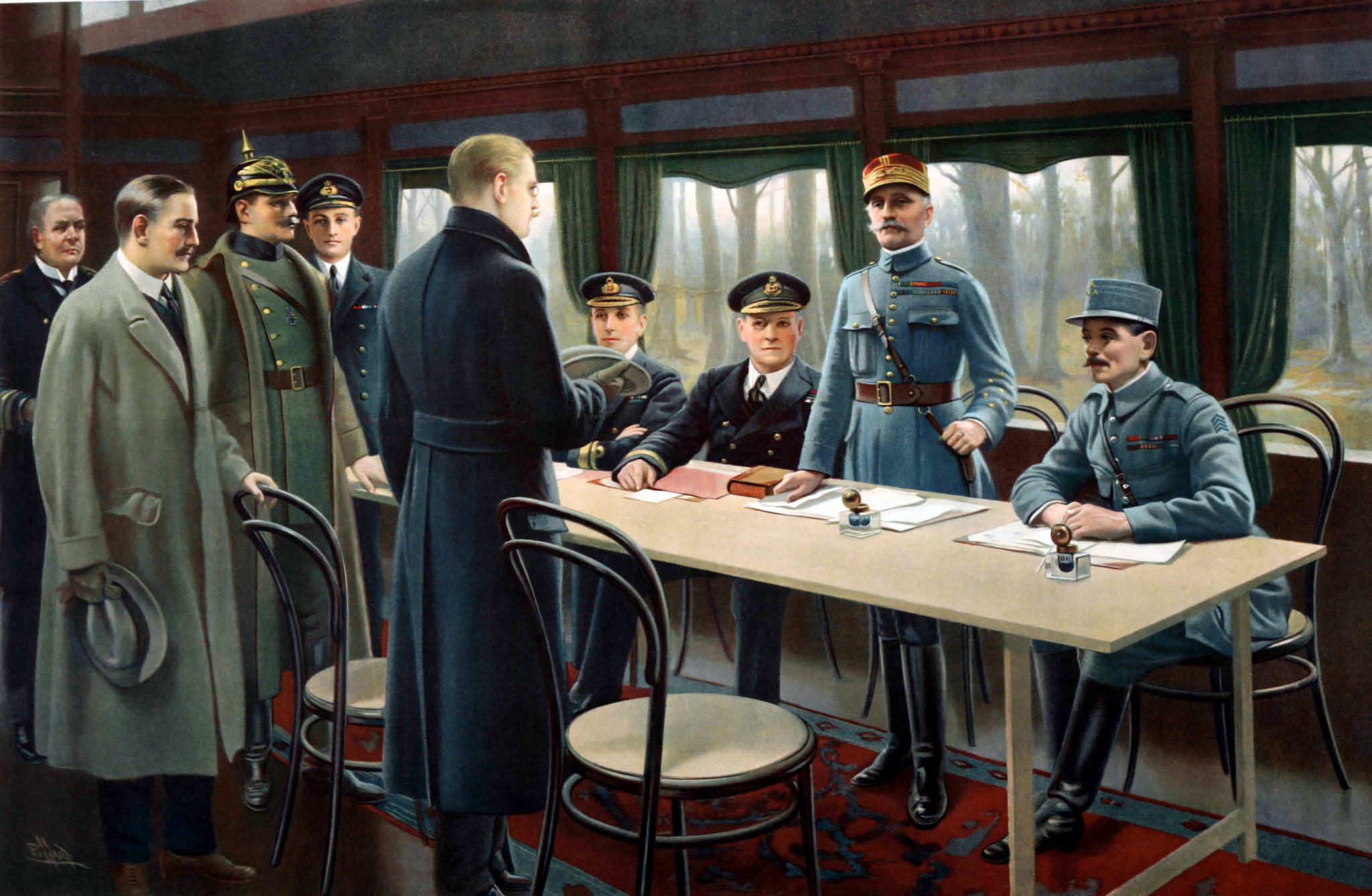 World War I marked a significant turning point in the political, cultural, economic, and social climate of the world. The war and its immediate aftermath led to numerous revolutions and uprisings. The Big Four (the United Kingdom, France, the United States, and Italy) imposed their terms on the defeated states through a series of treaties negotiated at the Paris Peace Conference of 1919, the most well-known of which was the Treaty of Versailles with Germany. As a result of the war, the Austro-Hungarian, German, Ottoman, and Russian Empires ceased to exist, and numerous new states emerged from their remnants, including the Czechoslovak Republic, Estonia, Finland, Latvia, Lithuania, the Polish Republic, and the Kingdom of Serbs, Croats, and Slovenes. Germany lost its colonial territories. The immense cost of waging the war also laid the groundwork for the dissolution of the British Empire. However, despite the ultimate victory of the Allies and the creation of the League of Nations during the peace conference, intended to prevent future wars, World War II began just over twenty years later.
 Odessa (Odesa). Period 1914-1917
1791 – 1917 – Russian Empire
1803 – 1917 – Kherson Governorate
1827 – 1917 – Odesa District
1856 – 1917 – Own City Administration
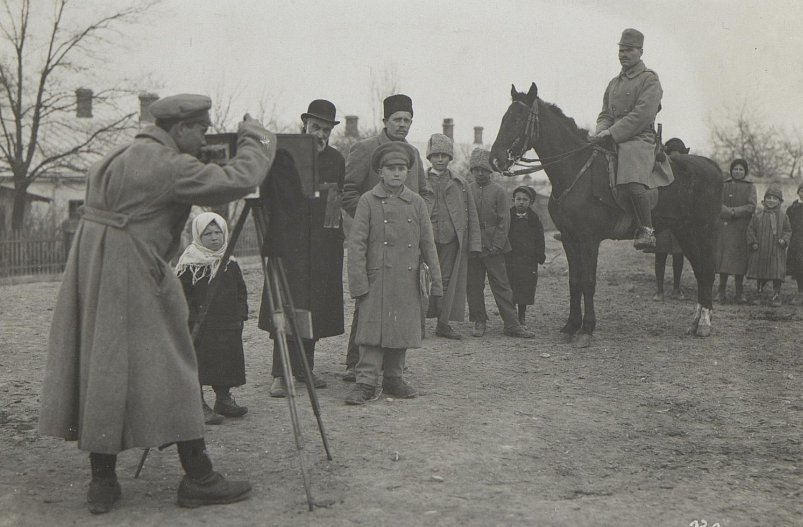
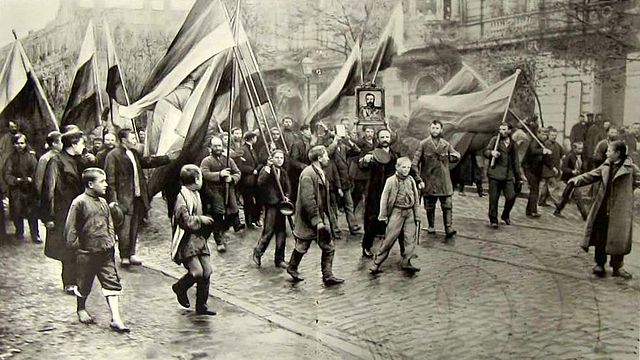
On the day the Russian Empire declared war on August 1, 1914, Odessa was shaken by a massive patriotic demonstration. Thousands gathered at Soborna Square and marched through the city’s central streets. The people of Odessa expressed their loyalist sentiments with great enthusiasm, praising the Empire and the Emperor, carrying portraits of Emperor Nicholas II and King Peter I Karađorđević of Serbia, and vowed to fight for victory for their homeland and their brothers—the Serbs. However, as the war dragged on and after the hardships of the winter of 1914-1915, the mood in Odessa changed. The rationing system, the disappearance of food, mobilization, and various restrictions became a heavy burden for the residents of Odessa. The war and mass mobilization into the Russian army altered the social structure of the city.
Odessa’s production facilities were retooled for military needs. Before 1914, Odessa’s industry was dominated by textiles, food processing, and woodworking, but in 1914, metalworking began to take precedence. Some metallurgical plants increased their production by 200%. From 1914 to 1916, about 60 new enterprises in Odessa were established to work for the front (“Shrapnel,” “Shell,” “Grenade” …), and 70% of all enterprises in Odessa started producing for the front. During 1915-1916, the production cost of Odessa’s factories more than doubled. The Anatra Aviation Plant (the third-largest aviation plant in the Empire, employing 2,000 workers and staff) expanded significantly. The plant assembled combat aircraft, both of French designs and original plant designs (“Anatra-D,” “Anadis,” “Khioni-4”), producing up to 1,200 combat aircraft between 1914 and 1918. The Odessa Military Aviation School trained up to 100 pilots annually. In 1916, there were about 110,000 workers in Odessa, of whom only 35-37,000 were factory workers. The largest enterprises in Odessa included the Ship Repair Plant of the Russian Steamship and Trading Company (ROPiT)—around 2,000 workers, the Jute Factory—1,800 workers, the I. Hen Agricultural Machinery Plant—1,350 workers, the K. Ravensky Plant—1,300 workers, the Bellino-Fenderich Society Plant—over 1,000 workers, and the Odessa Railway Workshops—2,000 workers.
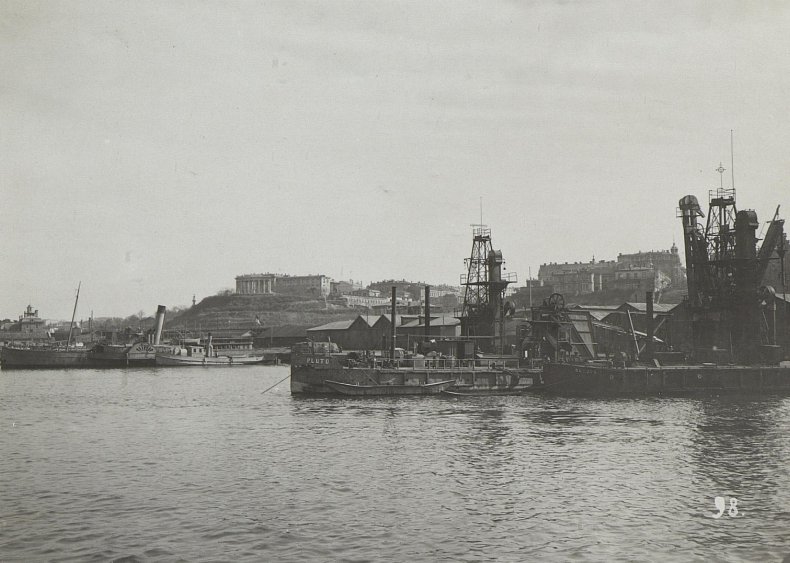
In 1914-1915, Odessa was not threatened by enemy ground forces, as it was far from the front lines. However, the city was vulnerable from the sea, prompting the urgent creation of minefield zones in Odessa Bay. On October 17, 1914, the Russian merchant ships Yalta and Kazbek struck mines near Odessa. The Ottoman Empire and the Kingdom of Bulgaria joined forces with Germany against the Black Sea Fleet. The Ottoman fleet, strengthened by two modern German ships—the battlecruiser Goeben (renamed Sultan Yavuz Selim) and the cruiser Breslau (renamed Midilli)—gained an advantage in the Black Sea. The Russian Army’s high command tasked the Black Sea Fleet with preventing a landing on the Black Sea coast. The most vulnerable area for a landing was identified as Odessa. To defend this area, coastal fortifications were revived, and the laying of minefields began. A defense squadron for the northwestern region of the Black Sea and Odessa was formed in Odessa Bay, consisting of the gunboats Donets and Kubanets, the minelayers Beshtau and Dunay, and the battleship Sinop.
On the night of October 29, 1914, Ottoman torpedo boats Gayret Vatan and Muavenet Milleti approached the port of Odessa. Around 3 a.m., two ships appeared near the Vorontsov Lighthouse, sailing with all their navigation lights on. Due to the foggy night, identification occurred only when the enemy ships had already entered the harbor of the Odessa port, where Donets was anchored at the outer end of the breakwater, Beshtau was mid-breakwater, and Kubanets was between the Military and Platonovskyi piers. The Ottoman ships opened fire on the gunboat Donets, which suffered an explosion and began to sink rapidly. Lifeboats from Kubanets and Beshtau were sent to rescue the crew of Donets. The Ottoman torpedo boat Muavenet opened fire on Kubanets, then moved to the Oil Harbor, where it shelled port facilities. Shells damaged the steamships Vityaz, Portugal, Oxus, and others. The tram station, a sugar factory in Peresyp, and an oil tank in the Oil Harbor were also damaged, though the spilled oil did not ignite. After completing the shelling of the Oil Harbor, the torpedo boat returned to the breakwater but came under fire from Kubanets (with two hits reported). Continuing to fire at the port while on the move, the torpedo boat disappeared into the fog. The Ottoman torpedo boat Gayret sailed to the center of the harbor and opened fire on Beshtau, sinking a coal barge with two shots, with one shell hitting a French ship. This torpedo boat shelled the port for a while before disappearing into the sea after Kubanets opened fire. The Russian navy’s casualties were as follows: 12 killed and 12 wounded on Donets; 1 killed and 2 wounded on Kubanets; 2 killed and 3 wounded on Beshtau; and 11 killed and 24 wounded on port ships, in the port area, and in the city. The remains of the fallen were buried in the Second Christian Cemetery of Odessa.
The gunboat Donets was raised in December 1914, repaired, and put back into service. During World War I, it participated in combat operations and later fought on the side of the Reds, Whites, and Allied forces during the Civil War. From April 1919, the gunboat was part of Denikin’s naval forces, but in May 1919, it sank during a storm near the Tendriv Spit.
In 1915, a German cruiser transferred to the Turks hit a minefield and sank near Odessa. That same year, Odessa became the base of a military transport flotilla formed from requisitioned merchant ships (up to 100 vessels). Vice-Admiral Khomenko was appointed commander of the transport flotilla. Additionally, in Odessa, there was a requisition of automobiles “for the needs of the front” and the mobilization of private horse stocks.
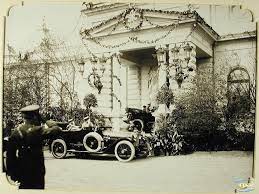 In mid-April 1915, Emperor Nicholas II visited Odessa. He attended a military parade at Kulikovo Field, visited the Cathedral, a military hospital, and the local Red Cross, and hosted a “high breakfast” for the city’s elite. Almost a year later, on May 10, 1916, the emperor visited Odessa again, this time with his wife, the heir, and their four daughters. He once again attended a military parade, visited the officers’ hospital in Kuyalnik, and participated in planting trees on the new Nicholas Boulevard.
Between 1914 and 1917, the indigenous population of Odessa had grown to 505,000–520,000 people. A census in December 1915 showed that instead of the expected 648,000 Odessans (the population recorded in 1913), the city had 505,000 residents. The decline in population was due to the expulsion of Germans, Austrians, and Turks from the city, the mobilization of up to 80,000 Odessans into the army, and work-related migrations. At the same time, Odessa saw an influx of refugees from the Polish and Baltic provinces, Galicia, Western Volhynia, and Western Belarus in 1915–1916, with up to 20,000 people arriving. Military camps for prisoners of war from the Austro-Hungarian army (mostly Czechs, Slovaks, Galicians, and Croats) were organized in Odessa, housing up to 5,000 people. In 1916, the Serbian Volunteer Division was formed in Odessa from prisoners of war and refugees of Serbian nationality. Odessa also hosted the largest military training garrison on Ukrainian lands, with 70,000 to 100,000 personnel. Odessa firmly held its position as the largest city on Ukrainian lands and the third largest in the entire empire, with a real population reaching 630,000 people.
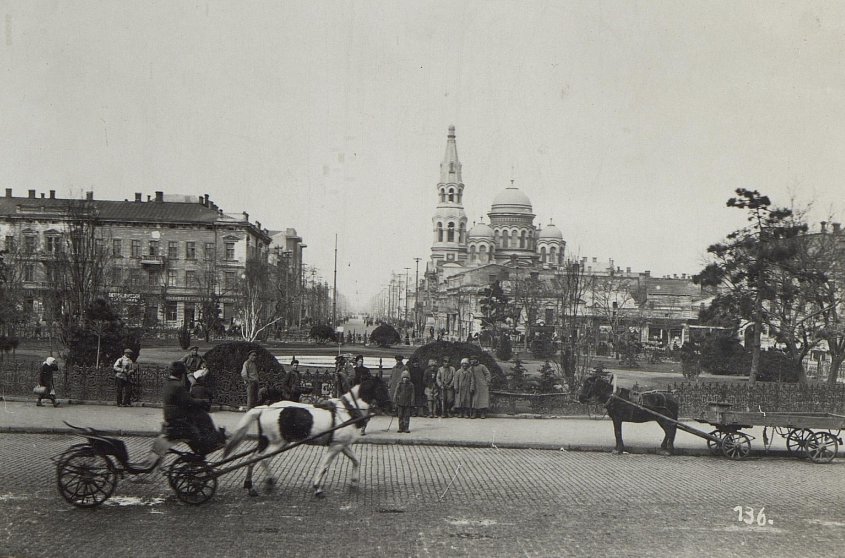
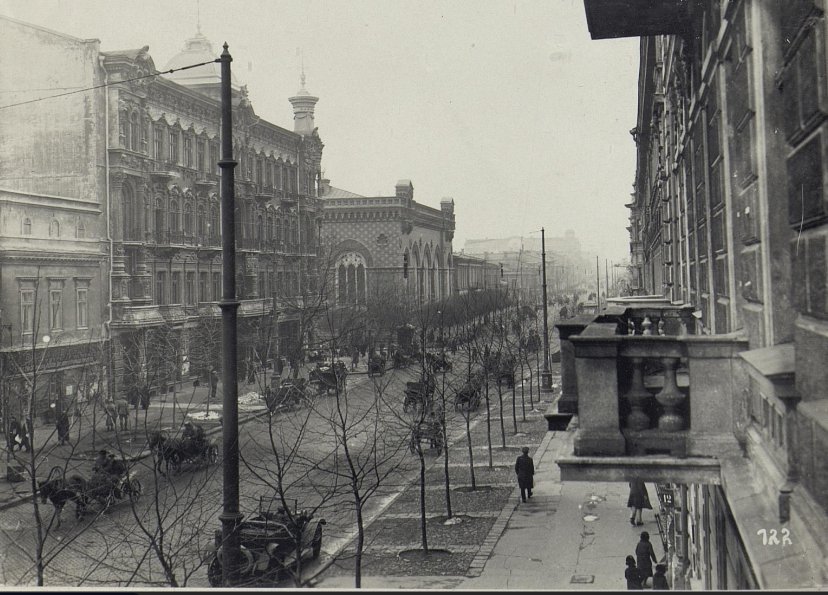 With the onset of the world war, inflation began to rise, living standards declined, and shortages of essential goods (salt, sugar, matches) intensified. In 1914, a “dry law” was established in Odessa (as in the entire Russian Empire), and by 1916, sugar was sold only with ration cards. Prices surged by 10-15% in 1914 and another 30-35% in 1915. Meat prices jumped by 50%, and medicine prices by 100%. By 1915, it was impossible to feed a family on a worker’s or a lower-level employee’s salary of 40-45 rubles. It wasn’t until 1916 that a decision was made to raise employees’ salaries to 75 rubles. In 1915, Odessa experienced an outbreak of typhus. From the autumn of 1916, the city’s power station and boilers began operating intermittently. When electricity was available, it was only until 11 p.m. In early 1916, the people of Odessa received tragic news—the beloved figure of early 20th-century Odessa, Serhiy Utochkin, had died in the capital.
At the same time, Odessa saw successful summer resort seasons in 1915 and 1916. The influx of vacationers increased because the war made it impossible to vacation at European resorts. During this time, the Russian public discovered the healing muds of the Kuyalnyk Estuary, and for the first time, Kuyalnyk mineral water became available for both treatment and sale. A large rehabilitation complex for wounded officers was organized at the Kuyalnyk resort. In non-military production, Odessa’s factories experienced a decline of more than 40% from 1915, leading to the closure of several enterprises. From November 1916, the crisis caused a reduction in industrial production by more than 50%, leading to the closure of several Odessa enterprises and a reduction in production at most others. In 1915, the imperial government allocated 5.5 million rubles in loans to support Odessa’s livelihood.
Since the start of the war, the Ottoman Empire closed the straits to Russian ships, causing the Odessa port to cease operations, maritime trade to stagnate, and the production based on imported raw materials to decline. The worsening living standards, defeats at the front, and societal instability, starting in the summer of 1915, led to the revival of the strike movement among Odessa workers, which had stalled in 1914. Workers at the Odessa port and the ROPiT ship repair plant were at the forefront of this movement. From 1915, the government and employers were forced to meet some of the workers’ demands: wage increases to combat inflation and social insurance for workers. However, the strikes did not cease; while 12 strikes were recorded in Odessa in 1915, the number rose to 26 by 1916. On May 1, 1916, a May Day demonstration of workers took place in Odessa. From 1916, strikes in Odessa increasingly took on a political character. In early 1917, students at the Novorossiya University went on strike.
The war hit the economy and rights of the German colonists of Odesa hard. Actions by the “Committee for the Struggle against German Domination” led to the prohibition of teaching in German and restrictions on land ownership by German colonists. In 1914-1916, all enterprises and institutions owned by German, Austro-Hungarian, and Turkish nationals in Odessa were closed, and about 5,000 such individuals were expelled from the city. All German names in the city and province, and all settlements with German names, were replaced with Russian names in 1914-1915. To enforce a blackout, the general governor issued an order at the end of 1914 prohibiting illuminated advertisements in the city; windows facing the sea had to be tightly shuttered in the evening, and evening and night walks along the sea were banned.
At that time, Odessa was characterized by a high level of crime, especially economic crimes and million-ruble scams known as “pany” (railroad, philatelic, sugar, medical, military, vodka…). As a center of commercial, banking, and industrial capital, Odessa attracted numerous seekers of “easy money.” Speculation during the war years placed a heavy burden on ordinary Odessans. In 1915-1916, the Odessa police repeatedly conducted raids on speculators and deserters. Due to the introduction of martial law in Odessa and the increase in punishments for criminal offenses (up to the death penalty), a crisis occurred in Odessa’s “thieves’ world” in 1915, leading to the “voluntary evacuation of thieves from Odessa.” In the Odessa region and the city itself, from 1914 to 1916, a group led by the “people’s avenger” or simply a criminal bandit Hryhoriy Kotovsky operated, attacking estates, wealthy merchants, and industrialists.
With the onset of the war, the bourgeoisie of the Odesa region rapidly developed into a powerful political and economic force, striving to achieve their goals of bourgeois total domination by exerting pressure on the monarchical authority. The moderately oppositional bourgeoisie actively concentrated its efforts not only by forming political parties but also by creating parallel power structures, economic, and administrative frameworks. In these years, branches such as the Military-Industrial Committee (established in Odesa in March 1915), Zemgor—the All-Russian Union of Zemstvos and Cities (established in Odesa in September 1914), and the Society for Supplying the Population with Essential Goods gained particular influence in Odesa. The Military-Industrial Committee created worker departments (groups) that attempted to align the labor movement with the interests of the bourgeoisie. The City Duma (a form of democratic municipal self-government) had considerable influence in Odesa. Most members of the Duma advocated for the inviolability of the monarchical regime, the preservation of the empire, national inequality, and the continuation of the world war. Representatives of the Jewish faith in Odesa were not allowed to hold leading positions in municipal government or manage city utilities, even though Jews made up about 32% of the city’s population. From 1913 to 1917, Odesa had a notably right-leaning City Duma, headed by Boris Pelikan, the leader of the local Black Hundreds and titular councillor, who was also the city governor.
The state power in Odessa was represented by the city governor, Ivan Sosnovskyi, who was the chamberlain of the imperial court and an actual state councillor. He governed Odesa from November 1911 to January 1917. Although Hretska Street was renamed Sosnovskyi Street on February 17, a special investigative commission in April 1917 exposed the corruption schemes under his administration of Odesa. On February 17, Major General Nicholas Knyazhevych (former governor of the Taurida Governorate) was appointed the new city governor of Odesa, but he never reached the city due to the October Revolution. From early February 1917, General Vladimir Yesaulov served as the acting city governor. The military governor of the Kherson Governorate during the world war was General of the Infantry Mikhail Ebelov.
With the onset of the world war, the activities of “leftist” socialist parties in Odessa were practically paralyzed. The country was engulfed by “sour” patriotism, bordering on chauvinism, which strengthened the influence of “right-wing” parties and the authority of the tsarist government. The Odessa Committee of the Russian Social Democratic Labour Party (RSDLP) was crushed in August 1914, with its activists expelled from the city, imprisoned, exiled, emigrated, or conscripted into the army. Until 1917, the Odessa RSDLP organization, which had about 50 members, was unable to organize any work in Odesa. The few anarchist groups in Odessa were also practically inactive, remaining deeply underground. Among the socialist parties, only the Socialist Revolutionaries (SRs), who supported the war policy, managed to maintain their influence among the masses. At the beginning of 1917, the SRs were the most powerful party in the Odesa region, thanks to their groups within the peasant and intellectual communities.
The Constitutional Democratic Party (Kadets), a bourgeois party, had significant influence among the intelligentsia of Odessa, especially among students and professors, and it allied itself with the small People’s Socialist Party. The “Union of October 17” (the Octobrists), a party with some influence among the large bourgeoisie, also held some sway. The Odessa bourgeoisie and intelligentsia formed their democratic views in 3-4 secret Masonic lodges in the city.
 Numerous supporters in the Odesa region, ranging from lumpens to landowners, backed the “Black Hundred” right-wing organizations (which had up to 10,000 members in Odesa): the “Union of the Russian People,” the “Union of True Russian People,” and the “Union of Michael the Archangel” (the latter was led by the city governor Boris Pelikan). One of the leaders of the Black Hundreds was landowner Vladimir Purishkevich from the Akkerman district, a member of the State Duma. The Black Hundreds opposed democracy, social changes, and national equality, and they especially persecuted Jews and “Ukrainian separatists.” The “Southern Monarchical Union” also aligned with the right-wing movement in Odessa. Socialist Jewish parties, including the “Bund,” “Sierp,” “Poalei Zion,” the Socialist Zionist Workers’ Party, and the Jewish People’s Party, predominantly held influence in Odessa.
Regarding the Ukrainian movement in Odesa and the Odesa region, the authorities intensified restrictions and persecutions. Censorship prohibitions on Ukrainian language publications continued, and even cultural and educational Ukrainian organizations were shut down. The only legal organization allowed in the Odesa region was the musical-dramatic association “Ukrainian Hut” (founded in 1911), whose cultural and educational activities involved more than 200 members. In 1914, the Ukrainian magazine “Osnova” was published (three issues). Ukrainian activists from the banned “Hromada” and “Prosvita” organizations, who later played a significant role in Ukrainian history, gathered around “Ukrainian Hut” and “Osnova”: Ivan Lypa, Andriy Nikovsky, Serhiy Shelukhin, N. Chekhovsky, Ivan Lutsenko, Vsevolod Golubovych, and Ivan Bondarenko. Ukrainian patriots maintained close connections with the Polish community in Odesa.
The period of the Russian Empire in the history of Odesa is coming to an end, and at this stage, several conclusions can be drawn about this period. See the video below:
The video is provided in Ukrainian, but if desired, you can enable subtitles (the “Subtitles” option) in any language that is convenient for you (the “Settings” option)
READ MORE→
_______________________________
The text was translated from Ukrainian by Artificial Intelligence