Style: Stalinist Neoclassicism
Architects:
E. S. Baumstein, A. S. Nazarets (construction)
R. A. Vladimirskaya (reconstruction)
The construction dates:
1936 (construction)
1939-1940 (reconstruction)
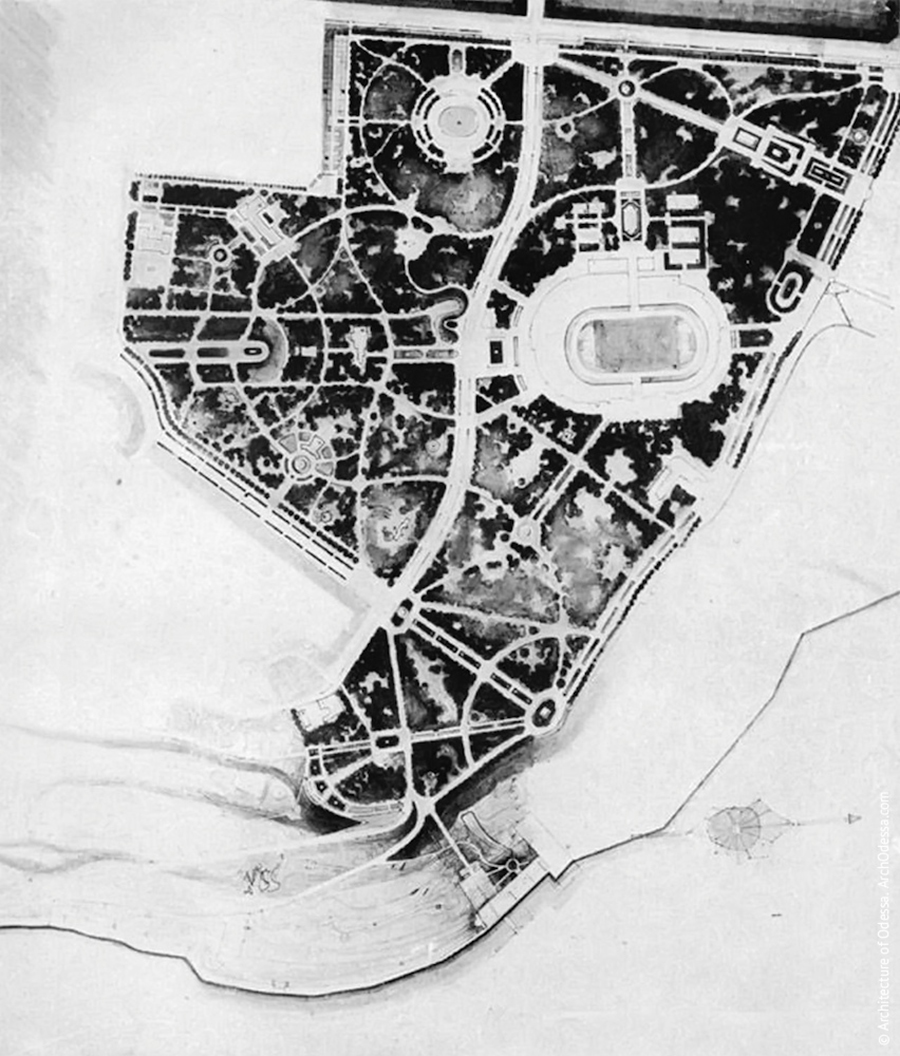
At the beginning of the last quarter of the 19th century, the City Council repeatedly raised the question about constructing of a small pond with the outlines of the Black Sea near the entrance to the Sabanskaya Alley (similar ponds are found in a number of Black Sea cities, for example, Varna). Along the shore of the pond supposed to be arbors, buffets, and benches.
One of the local newspapers features the following note: “In the Alexander Park, the construction of a pond has already begun … The shape of this pond will depict outlines of the Black Sea and the Sea of Azov with the Crimean Peninsula. The depth of the pond will be 1 1/2 arshins, the area is 1500 square fathoms. Arbores, a buffet, and benches will be located in the order of cities on the shores of the Black Sea and the Sea of Azov and will be called by names of these cities. The idea is very original and brilliant”.
However, as Kataev accurately describes, this idea was killed and buried literally in the bud. Nearly two weeks later, the same newspaper wrote: “Recently we reported that the pond in the Alexander Park will be in the shape of the Black Sea and the Sea of Azov … Now it turns out that the head of the construction of this park, a member of the City Council, has changed his opinion. This pond will have the most ordinary shape. Not to mention the unpleasant shape of the pond, it also will not satisfy its useful purposes: ice skating and ice-making in winter will be not possible here. The place for the pond was chosen poorly, it should have been dug much higher”.
According to Valentin Kataev, the municipal meager budget was enough only to “dig a fist-shaped hole in exact accordance with the map”. And then even that did not get very far and this hand-made “Black Sea” remained unlined and dry forever”. Yuri Olesha adds that they played football at that ditch, which called “Black Sea”. The famous literary historian Rostislav Aleksandrov wrote: “Here, in the Black Sea, big football stars raised as a V. Zinkevich, T. Koval, V. Kotov, M. Malkhasov, I. Tishkin … Here the star of sports happiness Alexander Zlochevsky, the idol of Odessa fans and the hero of many legends was born …”.
Therefore, “The Black Sea” from immemorial time was owned by a team of players who called themselves chornomorets, which tells about the name origins of the main Odesa football team. Like a football field, the Black Sea was comfortable: it was surrounded by flat slopes and it returned to the players a ball itself. The Chornomorets team mainly included harbor workers, young fishers from Langeron and the inhabitants of the old customs.
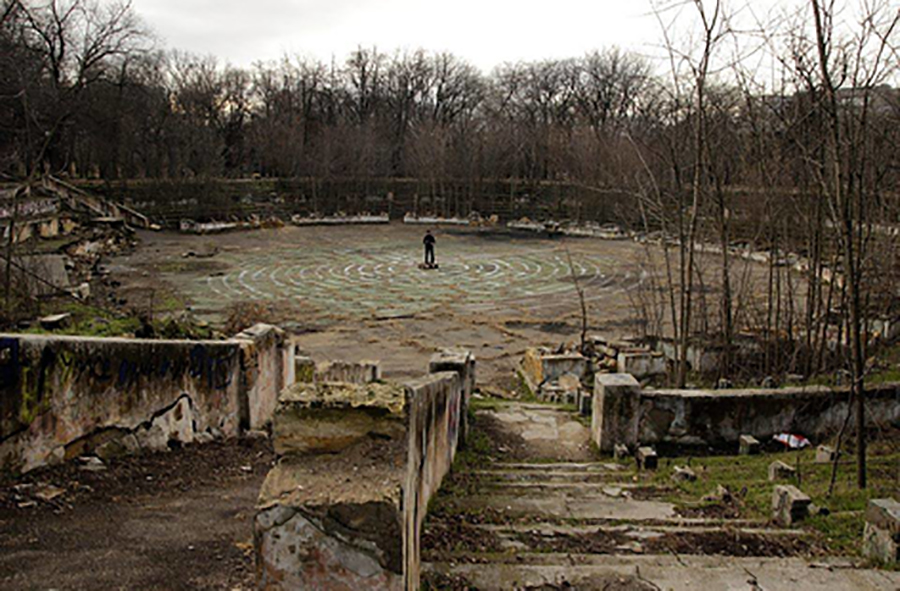
However, against the original plans, in 1936 the Chernomorets Stadium was not built in the Black Sea, because it was too small. “The Black Sea” then served as the foundation of the coming Green Theater. According to an inclusive program of park development, both the stadium and the theater were erected almost at the same time. An interesting fact, on December 23, 1927, at a meeting of the city development committee, the city authorities responded: “There are no suggestions, this pit is a decoration of the park”. Based on that,the destruction of the “Black Sea” in the early Soviet period history was not included in the plans of its directorate.
The monograph of V. I. Timofeenko, the greatest historian of urban planning of Odesa, that was published in 1983, in Kyiv, conduct evidence that the “Central Stadium” was built by the project of architects A.Dubin, N. Kanevsky, and R. Vladimirskaya in 1936, and the Green Theater was designed and built by E. Baumstein, A. Nazarets, and R. Vladimirskaya. Rachel Vladimirskaya is the only participant in both projects. For many years she was one of the most prominent figures in the scientific, historical and regional section of “Odessika” in the Scientists House. She often performed at “Odessika” with information about details of the Odesa development in the 1930-s, including information about the design and construction of the stadium and the Green Theater.
The official opening of the 1936 summer season in the Park of Culture and Recreation was planned on May 12. The stadium also was supposed to open on this day, but for many reasons – technical and organizational, the grand opening took place on May 18. The new sports facility received the name of S. Kosior, who was at the grand ceremony together with E.Veger (later both of them were repressed). The celebration ended with a football match between the national teams of Odessa and Dnipropetrovsk, in which Odessa won with a minimum score of 1-0, although they outplayed the guests on every level. Soon the national team of the city hosted here the teams of Tiflis, Batumi, and other teams.
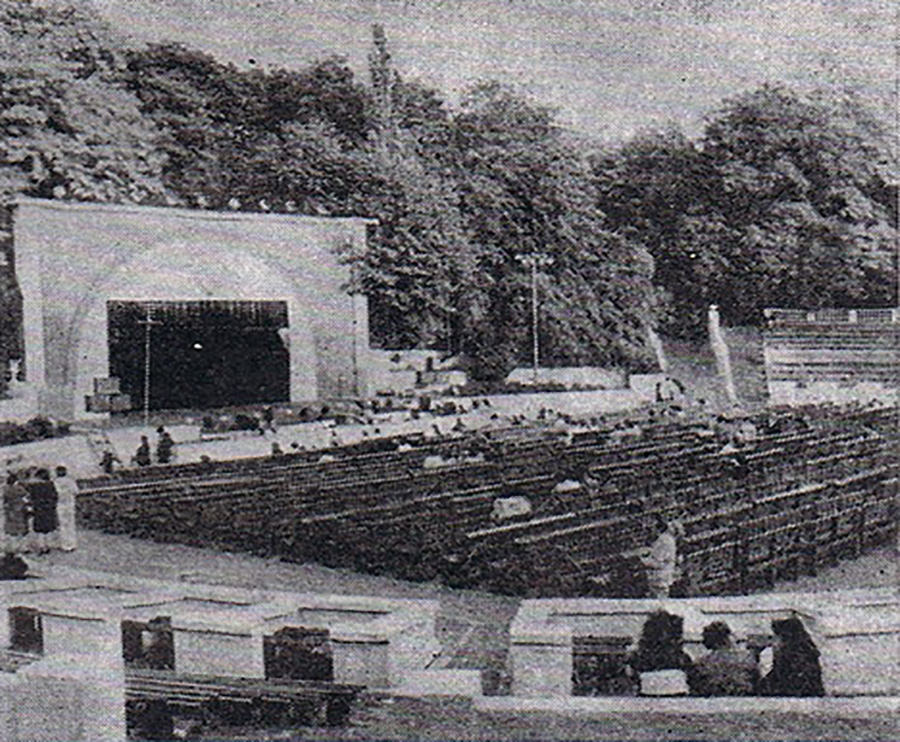
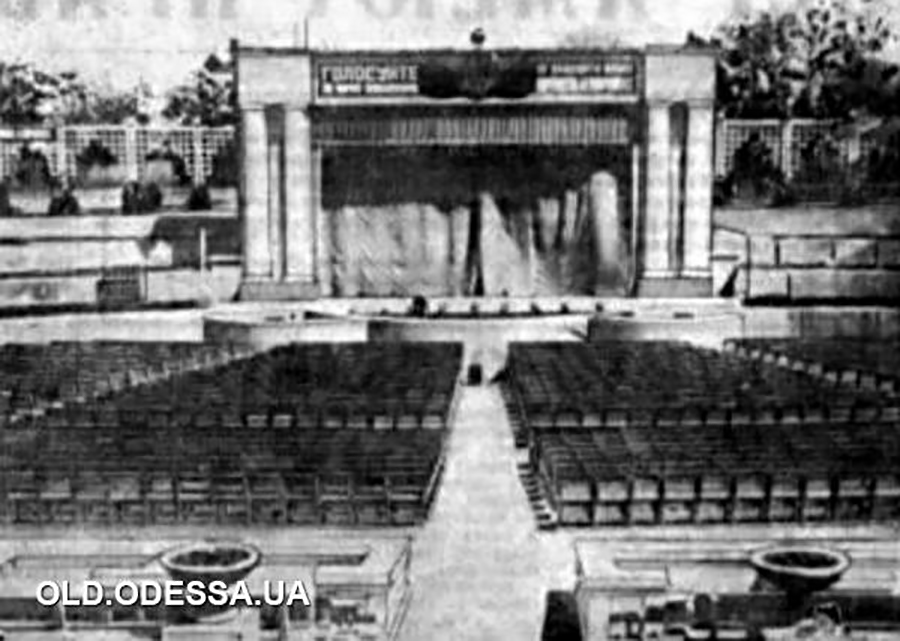
The opening of the Green Theater was scheduled for June 1, because they did not manage to equip it by the middle of May. In the “Black Sea Commune” by April 9, 1936: “The arrangement of the green theater is intensively developing. Here begins the backfill of the pit. On June 1, the open-air theater for 3,500 spectators should be opened. ” This information once again confirms that the “Black Sea” survived safely until that time and that the future theater was constructed in that place. Besides, “Green Theater” -is a name that appeared by itself, informally. Experts of onomastics called that kind of names as “local placename”. On May 18, the “Black Sea Commune” clarified: “The stages for 3500 viewers will be located in an amphitheater. A large “shell” for a symphony orchestra for 70 musicians is being built. “Shell” will connect with the proscenium, which provides seats for 400 people at the same time. The theater should be prepared for June 1”.
However, the theater opening took place much later, on June 11, 1936. The day before, Boris Steinberg – director of the park and the most knowledgable manager, commented this event: “Today the summer theater, so-called Green Theater, with 3,500 seats is opening. The first program of the theater includes a folk art show, amateur performances of the city and the region. During the summer, the Green Theater will host symphony concerts, concerts of the regional philharmonic, performances of the Leningrad theater, the Red Army Dance and Song theater, variety shows, and others”. The opening ceremony on July 11 was in the spirit of the Stalin era: fireworks, parades, the choir in traditional Ukrainian costumes – 250 participants, an orchestra – 100 musicians, the songs International and Homeland, what was performed by factory choirs of Marty, October Revolution, Lenin factory; seven thousand spectators, a huge portrait of the “father of nations”, lowered onto the stage from a height and others.
Besides the ambitious ceremony, the construction itself (in fact, the stadium too) was not extraordinary at all. This was a functional, convenient, large summer theater with an original technical solution that imitates the techniques of ancient theaters and significantly decreases construction cost. But that’s all.
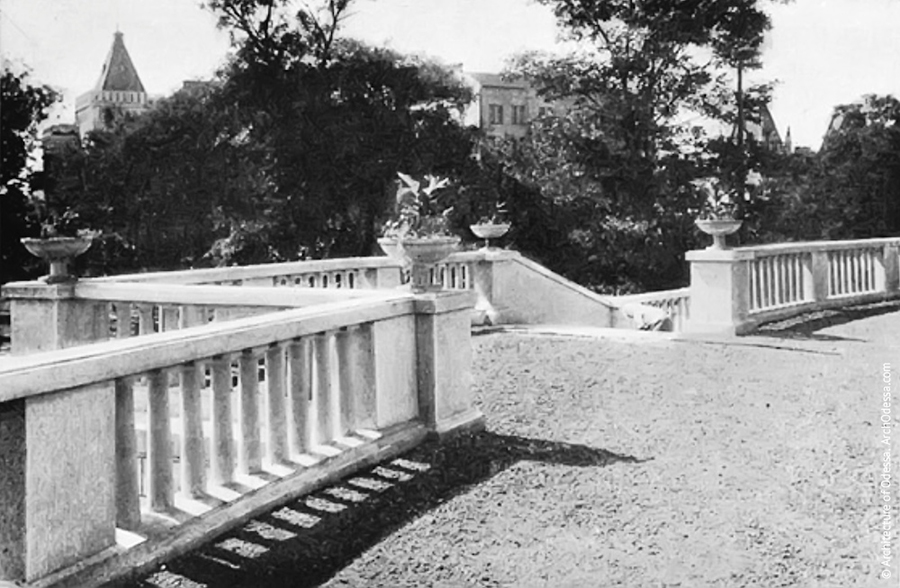
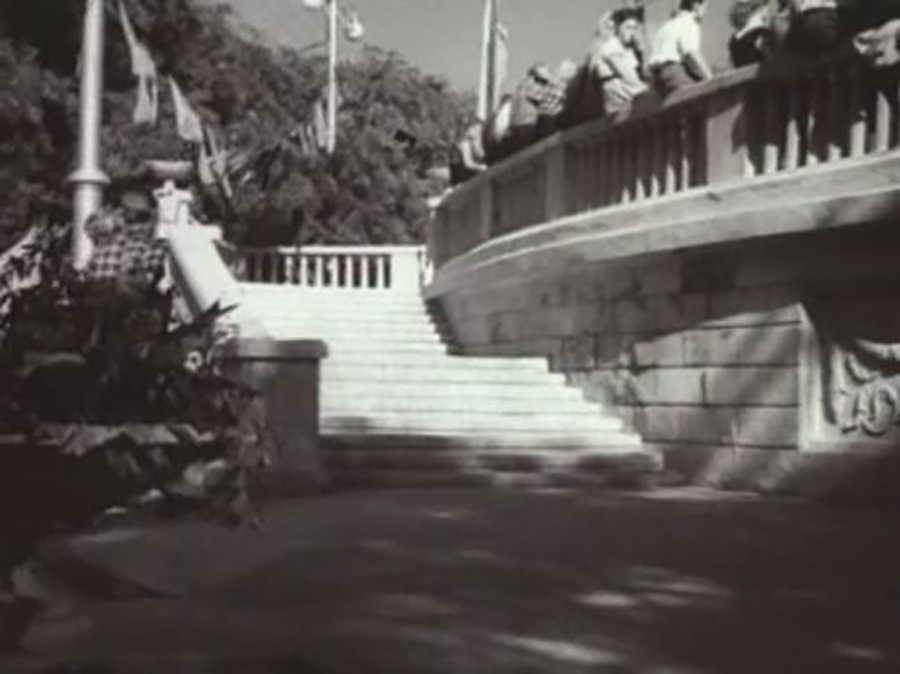
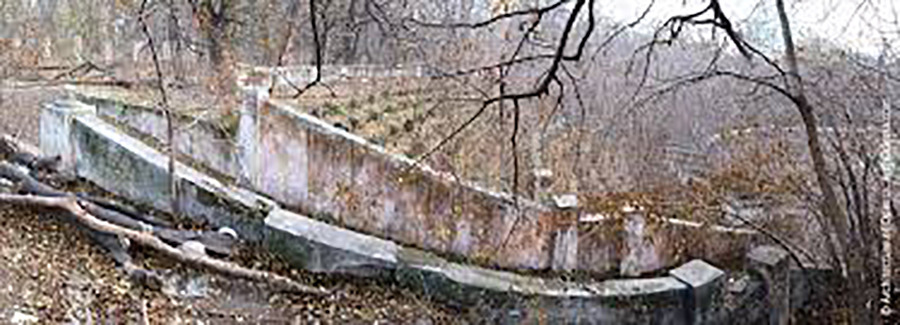
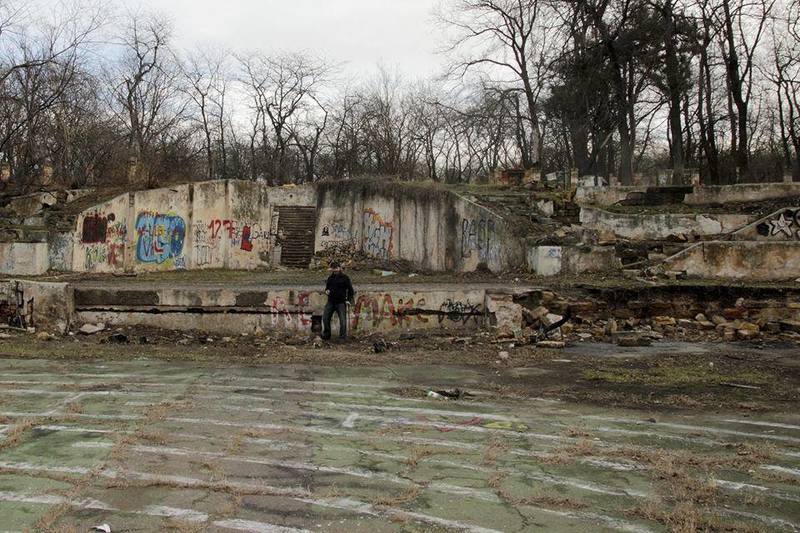
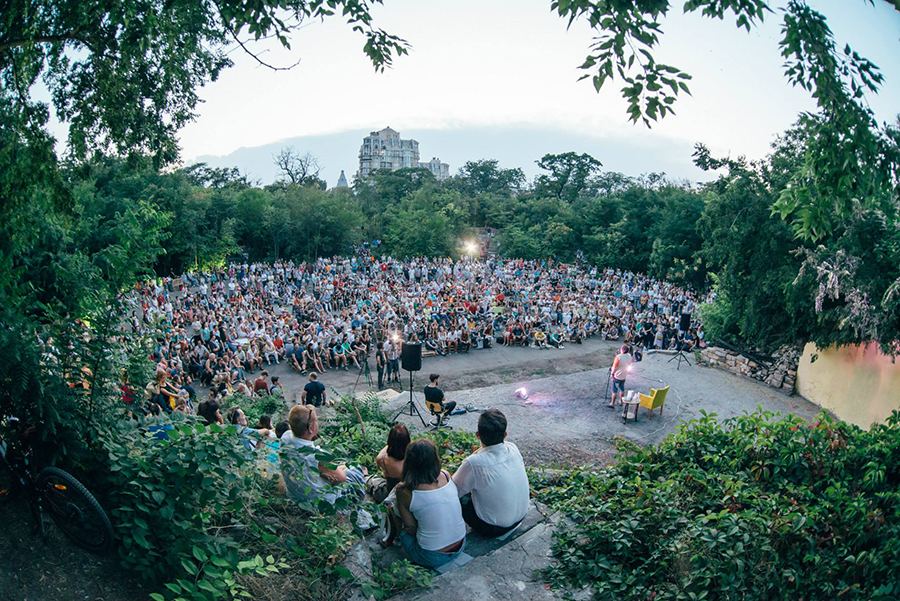
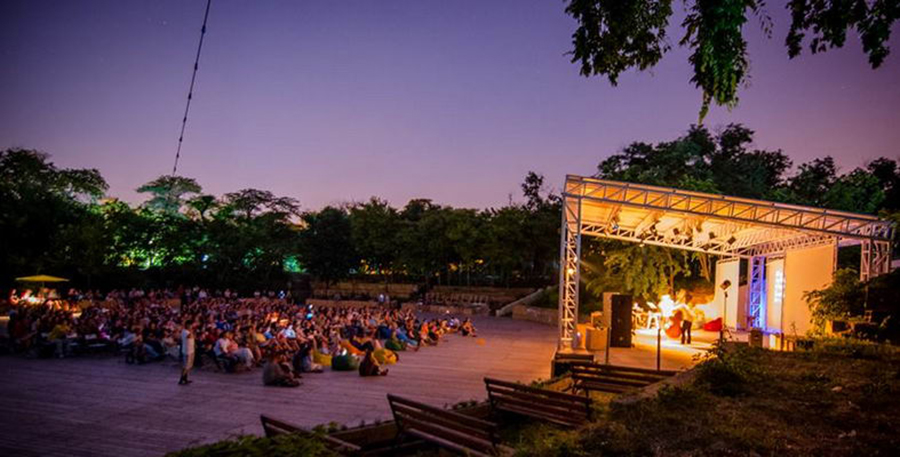
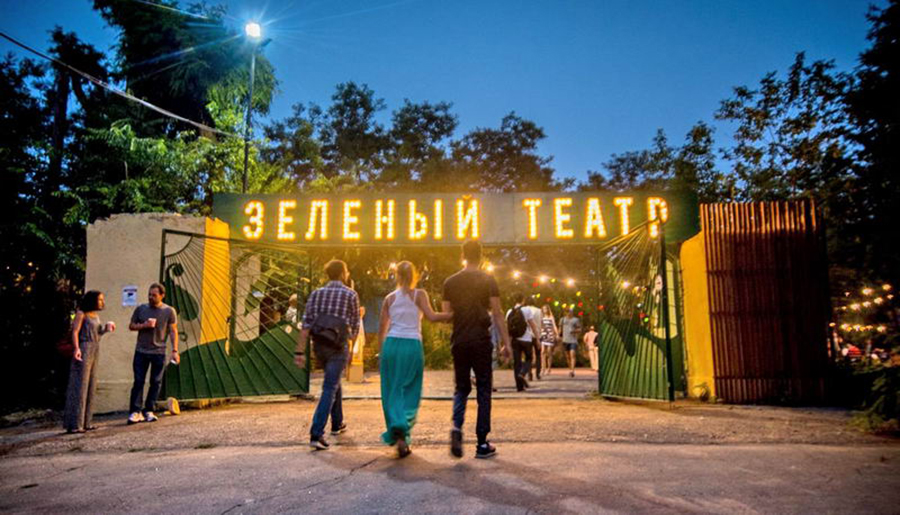
However, the Green Theater is the only Odesa construction, that was similar to ancient Roman amphitheaters. Of course, the theater had much more modest sizes that ancient amphitheater, but at the city level, that theater was truly unique. The central section of the theater is a large circular parterre, that surrounded by a cascade of seating “tribune”. The complex is surrounded by a high fence with stone columns and is equipped with three entrances.
The Green theater began to work as the theater from July 14, 1936.
The life of the theater began here. In more recent, post-war times, the Green theater become a place for concerts of the many then stars, whose names were known by the entire country.
So the Green Theater widely promoted not only ideological functions of the formally “amateur”, “Soviet”, “proletariat” creativity but also informally advertised pop genres as jazz, pop miniature, pantomime, circus art, and others. And this is his undoubted contribution to the cultural history of the city. However, the mass shows eventually have moved to a spacious Chornomorets Stadium and at the same time, small performances have moved in the City Garden and the star of that stage slowly faded.
PHOTOGRAPHS
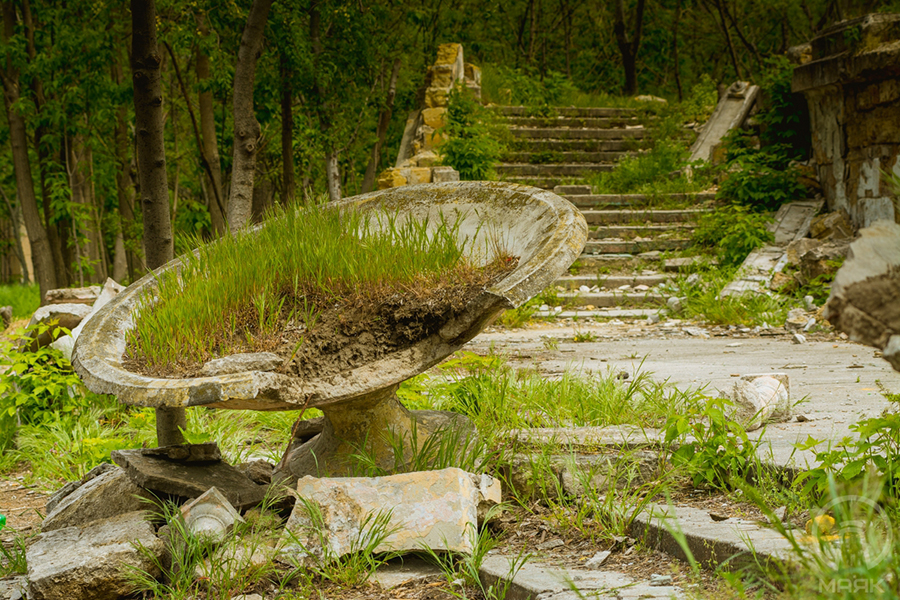
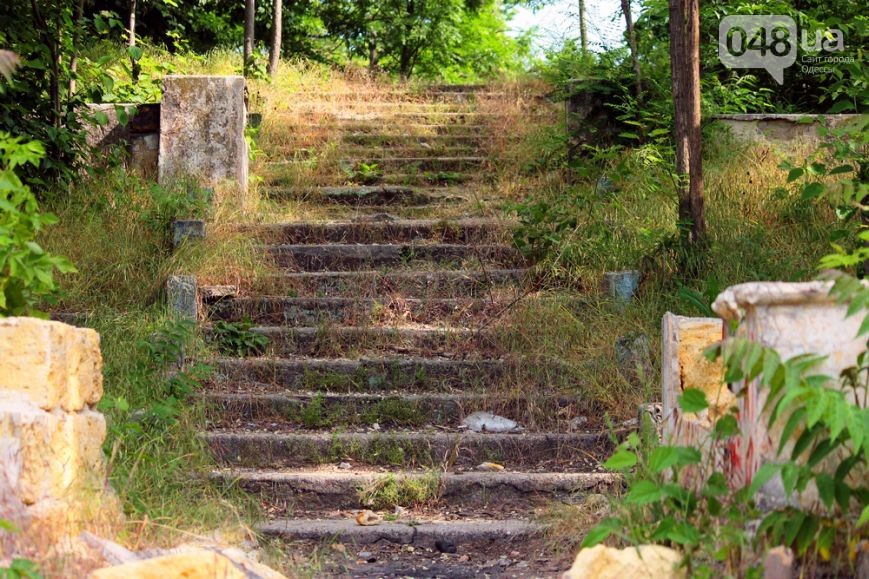
GREEN THEATER IN DIFFERENT PERIODS OF HISTORY